By Daniel Bampoe
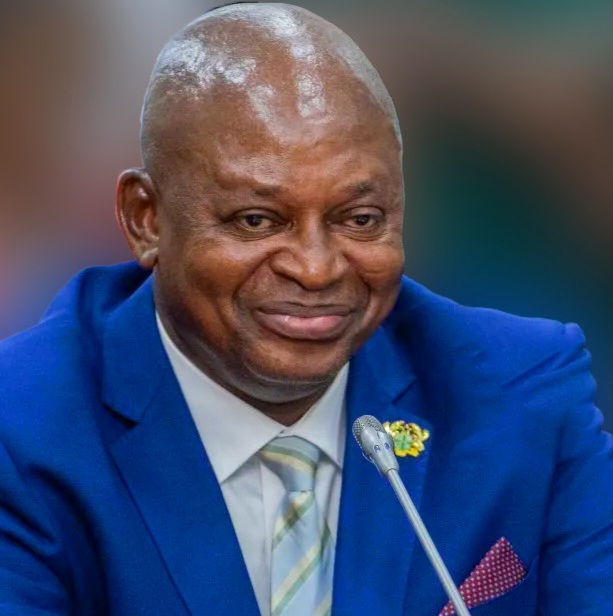
In a forward-looking address at the Graphic Business/Stanbic Bank Breakfast Meeting held on Tuesday, July 15, 2025, the Governor of the Bank of Ghana, Dr. Johnson Asiama, laid out a detailed blueprint for sustaining the recent foreign exchange gains.
The event, themed “Sustaining Forex Gains: Business and Economic Impact,” brought together industry leaders, policy experts, and stakeholders at the Labadi Beach Hotel to deliberate on the future of Ghana’s currency and macroeconomic stability.
The Governor’s keynote came at a time when Ghana’s economy is showing signs of a fragile yet promising recovery following years of turbulence triggered by domestic and global crises.
Cedi’s Comeback
Dr. Asiama began his remarks by reflecting on Ghana’s turbulent economic journey over the past three years, marked by the Domestic Debt Exchange Programme (DDEP), global monetary tightening, and fiscal indiscipline.
These shocks, he noted, had severely undermined macroeconomic stability, causing a sharp depreciation of the Ghanaian Cedi, spiraling inflation, and a general loss of public confidence.
However, through a combination of stringent monetary policy, fiscal consolidation under the IMF-supported programme, and improved investor sentiment, the narrative has shifted.
As of June 2025, the Cedi has appreciated by over 42% year-to-date, erasing nearly all the depreciation losses recorded in 2022 and 2023.
Backing this turnaround, Ghana’s gross international reserves have grown to US$11.1 billion, translating to 4.8 months of import cover.
A robust trade surplus of US$4.14 billion was recorded in the first four months of 2025, while the current account improved to a surplus of US$2.12 billion in the first quarter—an astonishing leap from US$66 million a year prior.
Policy Synergy: The Engine Behind the Gains
At the heart of these gains, Dr. Asiama emphasized, is coordinated policy action.
The Bank of Ghana has maintained a tight monetary stance, keeping the policy rate at 28%, deploying open market operations, and enforcing discipline in the forex market through structured auctions.
These efforts were complemented by the Ministry of Finance’s commitment to fiscal responsibility, particularly as outlined in the 2025 Budget and aligned with the IMF programme’s structural benchmarks.
According to the Governor, this “synchronized policy execution” has been instrumental in restoring investor confidence and stabilizing inflation expectations.
Despite the recent success, Dr. Asiama struck a cautionary tone: sustaining forex stability will be far more challenging than achieving it.
Commodity Dependency and Volatility Risks:
Ghana’s external performance is still largely reliant on three volatile commodities—gold, cocoa, and oil. While global gold prices above US$3,200/oz, spurred by geopolitical tensions, are currently beneficial, the Governor warned that a price correction could quickly reverse the gains.
Structural Weaknesses:
The import-heavy structure of the economy, especially energy and capital goods, creates seasonal forex pressure. Moreover, behavioural issues like persistent dollarization in key sectors (real estate, private schools, luxury retail) continue to erode confidence in the Cedi.
Capital Retention Challenges:
A major concern highlighted was the poor reinvestment of forex earnings. Despite rising export receipts, much of the funds remain offshore or outside productive use, especially among SMEs. Ghana’s formal savings rate remains low, undermining long-term capital formation.
The Governor acknowledged the complex policy balancing act. A strong Cedi curbs inflation but risks dampening export competitiveness and credit expansion.
Hence, the central bank must continuously recalibrate its interventions to sustain growth without triggering inflationary pressures.
Next Steps: From Currency Stability to Economic Transformation
Dr. Asiama articulated a clear agenda for transforming forex stability into a catalyst for economic transformation.
1. Boosting Forex Retention:
The BoG will encourage exporters to reinvest locally through tax incentives, preferential credit access, and procurement schemes. SMEs, especially, will be supported via digital trade platforms and transparent export documentation.
2. Export Diversification:
Beyond raw commodities, Ghana must build value chains in cocoa, refine and store bullion locally, and develop a petrochemical industry. Service exports—especially ICT, education, architecture, and creative industries—offer significant untapped forex potential.
3. FX Market Reforms:
The BoG will deepen FX forward auctions and introduce basic hedging instruments such as swaps and derivatives to allow firms to better manage currency risk.
4. Strengthening the Cedi and Curbing Dollarization:
The central bank is increasing enforcement of legal tender laws and finalizing regulatory frameworks for digital asset platforms and cryptocurrency exchanges. The upcoming rollout of the eCedi will ensure digital payments remain denominated in Ghana’s currency.
Business Sector Responsibility: From Compliance to Collaboration
While reaffirming the Bank’s commitment to policy leadership, Dr. Asiama stressed that businesses have a central role in preserving forex stability.
Strategic Reinvestment:
He urged export-oriented firms to reinvest proceeds locally not only for patriotism but as a resilience strategy. Firms transacting in Cedis or hedging their FX exposure, he said, should be prioritized for credit and procurement support.
Resilient Business Planning:
Executives were encouraged to integrate FX risk into their corporate strategy—from pricing to procurement—and not treat it as an afterthought relegated to finance departments.
Collaborative Innovation:
Businesses were invited to collaborate with the Bank of Ghana in fintech innovation, especially in supporting Cedi-based transactions and cross-border trade platforms. The Governor highlighted the eCedi pilot as one such initiative that could transform Ghana’s payment ecosystem.
The Bigger Picture: A Shared Responsibility
In closing, Dr. Asiama reminded participants that macroeconomic stability is a shared national asset—and safeguarding it must involve all actors: policymakers, bankers, exporters, importers, and the media.
“The Cedi is rising. Let us ensure that Ghana rises with it,” he concluded, calling for a united front to convert temporary recovery into durable economic transformation.
The breakfast meeting ended with panel discussions and breakout sessions focused on business perspectives, policy alignment, and the practicalities of forex risk management—cementing the event as a critical waypoint in Ghana’s economic journey.