BY NADIA NTIAMOAH
Burkina Faso, Mali and Niger have taken their growing regional partnership into African football after formally launching a joint bid to host the 2032 Africa Cup of Nations (AFCON), potentially bringing the continent’s biggest football tournament to the three Sahel states.
The three neighbouring countries, currently governed by military-led administrations, submitted the joint proposal following the Confederation of African Football’s decision to invite applications for the 2028, 2032 and 2036 editions of AFCON.
The Malian Football Federation (Femafoot) said the bid would be anchored on “solidarity, regional integration and sustainable development of African football”, reflecting the increasingly close relationship between the three countries.
According to Femafoot, the football authorities will work with their respective governments and other relevant institutions to prepare what it described as a “solid, credible bid” capable of presenting a new vision for African football.
The football partnership comes against the background of significant political changes across the Sahel.
Burkina Faso, Mali and Niger formally withdrew from the Economic Community of West African States (ECOWAS) after establishing the Alliance of Sahel States (AES), through which the three governments have sought deeper cooperation in security, infrastructure, trade and economic development.
Their bid to jointly stage AFCON could therefore represent one of the most significant sporting projects undertaken under the AES framework.
However, security is expected to feature prominently in CAF’s assessment of the proposal.
Burkina Faso, Mali and Niger have experienced persistent insecurity linked to attacks by armed jihadist groups. Their governments have also shifted away from some traditional Western security partners while developing closer relations with Russia.
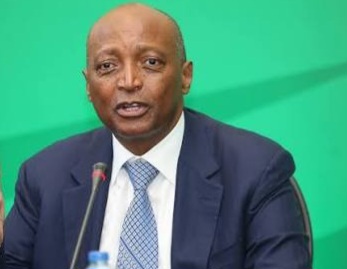
CAF President Dr Patrice Motsepe has nevertheless insisted that the political circumstances of the three countries will not automatically count against their bid.
Responding to questions about whether CAF would demand security guarantees before seriously considering the proposal, Motsepe said the three nations would have “as good a chance as everybody else” seeking the hosting rights.
“They are not going to be disadvantaged or prejudiced by the fact that they are military juntas,” Motsepe said, while acknowledging that safety and security would have to be carefully assessed before any hosting decision.
Motsepe stressed that CAF had not decided where the 2032 tournament would be staged and indicated that he intended to visit the three countries to engage with authorities on football-related matters.
The CAF president also emphasised that high standards would apply to every prospective host.
According to him, CAF must be satisfied that supporters and other visitors will be able to travel freely into and out of host countries and that adequate policing, security and infrastructure will be available throughout the competition.
Motsepe further clarified that the final decision would rest with the CAF Executive Committee rather than with the president alone, stressing the need for transparency, ethics, good governance and internationally accepted practices in the selection process.
The three countries have already taken their campaign to CAF’s leadership.
Football federation presidents from Burkina Faso, Mali and Niger met Motsepe in New York ahead of the 2026 FIFA World Cup final. Colonel-Major Djibrilla Hima Hamidou, a FIFA Council member and honorary president of Niger’s football federation, was also present.
Burkina Faso and Mali are not strangers to hosting African football’s flagship tournament.
Burkina Faso staged AFCON in 1998, while Mali hosted the competition in 2002. Niger, however, has never independently hosted the senior men’s Africa Cup of Nations.
A successful 2032 bid would therefore return the competition to Burkina Faso after 34 years and Mali after 30 years while handing Niger its first opportunity to co-host the continental showpiece.
Joint hosting is also becoming increasingly prominent in African football. Kenya, Tanzania and Uganda are due to become the first three countries to jointly stage an Africa Cup of Nations when they host the next edition.
CAF is simultaneously considering major changes to the future of the competition. Following the 2028 tournament, AFCON is expected to move to a four-year cycle, while Motsepe has said discussions are continuing over a possible expansion of the finals from 24 to 28 teams.