By IssahOlegor
President John Dramani Mahama has defended the role of social media criticism in governance, telling Ghanaians that he monitors TikTok videos and uses online complaints to hold ministers accountable, even as his earlier remarks about arrests of social media commentators and Tourism Minister Abla Dzifa Gomashie’s controversial description of TikTok as a “borlaso” (refuse dump) fuel debate over the government’s attitude towards the platform.
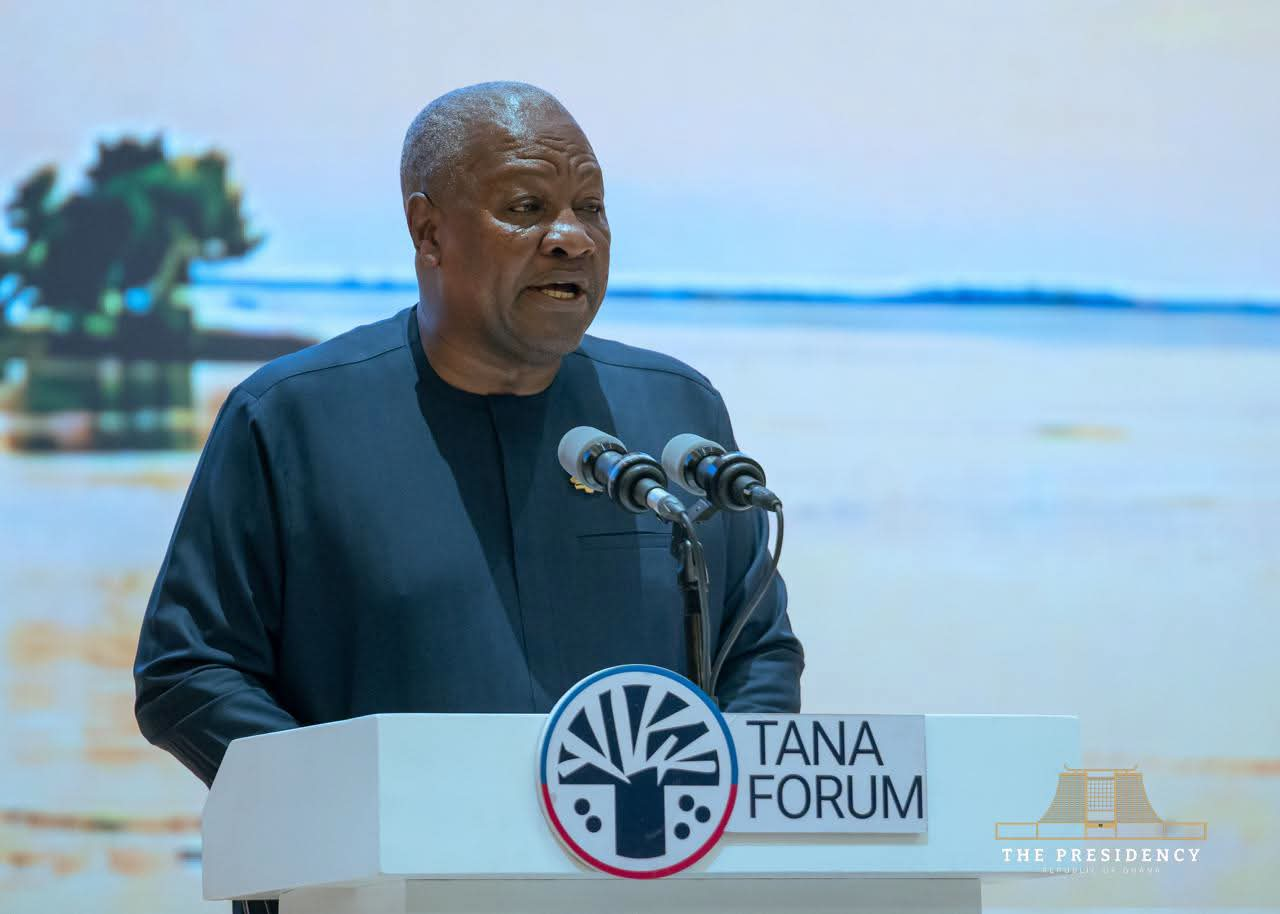
President Mahama made the remarks on Thursday, October 29, 2026, during an engagement with Ghanaians in Moscow, Russia, where he acknowledged that online criticism could help improve his leadership and alert government officials to problems that might otherwise escape their attention.
The President said he was not bothered by criticism suggesting that he was leading the country in the wrong direction, insisting that public officials must remain open to scrutiny rather than dismissing complaints because they come from political opponents or social media users.
“I don’t mind if people tell me that I’m leading the country in the wrong direction. I’m trying to do my best. Criticism helps me to do better,” he said.
He specifically addressed TikTokers, making it clear that he follows discussions on the platform and does not ignore videos criticising his administration.
“And so all your TikToks and things, don’t think I don’t see them. I see them,” the President said.
His comments come amid a growing national debate over the treatment of social media commentators, the arrest of individuals over online publications and the appropriate balance between freedom of expression and the enforcement of laws governing digital communication.
Explaining how social media criticism could influence government action, President Mahama recounted an incident involving reports of damage to a bridge in the Ashanti Region, allegedly connected to activities by illegal miners.
According to the President, he came across information about the incident while in Russia and forwarded it to the Ashanti Regional Minister for investigation.
He said the minister subsequently informed him that a channel had become blocked and that an excavator was being sent to clear it to allow water to flow.
Mahama presented the incident as an example of how digital platforms could provide government with information in real time and help authorities respond to problems in communities.
He also described how complaints about roads and other infrastructure could be forwarded to the relevant ministers for explanations and possible action.
The President argued that such feedback should not be dismissed simply because it appears on social media, adding that public complaints could help identify service delivery failures and improve the performance of government institutions.
He urged Ghanaians to speak up whenever they believed the country was heading in the wrong direction, insisting that criticism should not be based solely on partisan considerations.
“Tomorrow, if we see the danger signs that somebody is leading us the wrong way, we must, all of us, not based on partisan leanings, all of us must say, no, we’re not going in the right direction,” he said.
The remarks appear to recognise social media as an increasingly important channel through which citizens can communicate concerns to public officials, particularly where conventional complaint mechanisms may not produce immediate responses.
However, the President’s comments also bring renewed attention to the distinction between criticism of government policy, abusive language, misinformation and statements that may constitute criminal threats.
Mahama’s Earlier Comments on TikToker Arrests Raise Questions
While the President has now publicly acknowledged that he monitors TikTok criticism and uses information from the platform to engage ministers, his earlier comments about arrests involving social media users have generated a separate debate.
On September 25, 2026, during an engagement with Ghanaians in New York on the sidelines of the United Nations General Assembly, Mahama said he was unaware of many arrests involving TikTokers and other social media commentators until he heard about them through the media.
“A lot of these arrests, I don’t even know about them. I also hear them on the media,” he said.
The President also said some arrests worried him, particularly where the stated reason appeared to be that an individual had insulted him.
He explained that he had developed what he described as “crocodile skin” after years in politics and did not consider personal insults a reason to abandon his responsibilities.
Mahama acknowledged that he could instruct the Inspector-General of Police and Cabinet to allow people to express themselves freely without arrests over their statements, but questioned whether that would be the approach Ghanaians collectively wanted.
Instead, he proposed a national stakeholder discussion involving the Ghana Journalists Association (GJA), the Media Foundation for West Africa (MFWA) and other relevant institutions to determine how emerging media platforms should be regulated.
He called for a collective decision on whether the police should intervene in cases involving online publications and where the boundaries between freedom of expression and unlawful conduct should be drawn.
The President’s remarks were significant because they came amid public concern over several arrests and prosecutions linked to social media posts targeting public officials.
In July 2026, for instance, the Ghana News Agency reported that TikToker Camilla Alhassan had been sentenced to one year’s imprisonment with hard labour after pleading guilty to an offence involving offensive conduct conducive to a breach of the peace. The prosecution said her video contained derogatory remarks and statements concerning the President and First Lady.
The case became part of the wider debate about whether existing laws are being applied appropriately to online speech and whether criminal proceedings in such cases risk discouraging legitimate criticism.
Mahama’s September remarks did not amount to a declaration that all arrests of social media users were unjustified. Rather, he questioned some of the reasons given for the arrests and called for a broader discussion on how online content should be handled.
The government has maintained that legitimate criticism must be distinguished from unlawful conduct, including threats and incitement.
Tourism Minister’s ‘Borlaso’ Description Sparks Backlash
The controversy has been further complicated by remarks attributed to the Minister for Tourism, Culture and Creative Arts, Abla Dzifa Gomashie, who reportedly described TikTok as “borlaso,” a Ghanaian expression commonly used to refer to a refuse dump or a place where rubbish is discarded.
In a video circulating on social media, the minister reportedly said she was not personally active on TikTok and used the description while urging members of her political party to stay away from the platform.
Her comments have attracted criticism from social media users and content creators, some of whom argue that dismissing TikTok as a refuse dump overlooks its growing role in entertainment, marketing, cultural promotion and digital business.
The criticism is especially pointed because the minister is responsible for a portfolio that includes tourism, culture and the creative arts—sectors in which online platforms can be used to promote Ghanaian music, film, festivals, hospitality businesses and cultural attractions.
TikTok has become a promotional tool for many creators and businesses, enabling them to reach audiences through short videos, live broadcasts and other forms of digital content.
For tourism operators, the platform can provide a way to showcase destinations, hotels, restaurants, cultural events and experiences to both domestic and international audiences.
Consequently, critics of the minister’s remarks argue that a blanket dismissal of the platform risks overlooking opportunities to use digital media to advance the very sectors under her supervision.