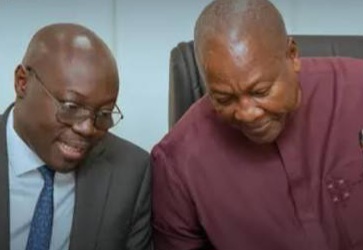
In a significant move aimed at reducing the financial strain on Ghanaians, President John Dramani Mahama has officially assented to a series of legislative bills, repealing several taxes that were previously deemed burdensome.
Among the key levies abolished are the Electronic Transfer Levy (E-Levy), Betting Tax, and the Emissions Levy. This step marks a major fulfillment of a promise John Mahama made during his campaign for the 2024 general elections. Emissions levy was never implemented by the previous government.
The decision follows a detailed legislative process that began earlier this year.
On March 13, 2025, Finance Minister Dr. Cassiel Ato Forson presented a suite of eight bills to Parliament, targeting a wide range of fiscal policies, including the revocation of the controversial E-Levy.
The bills put forward for parliamentary debate included the Electronic Transfer Levy (Repeal) Bill, 2025; the Betting Tax (Repeal) Bill, 2025; and the Emissions Levy (Repeal) Bill, 2025, along with other adjustments to income tax regulations and earmarked funds allocation.

The E-Levy, introduced in 2022 under the administration of former President Akufo-Addo, was a 1% charge on all electronic transactions, which included mobile money transfers, online payments, and remittances.
Despite being designed as a source of government revenue, the E-Levy was met with intense opposition from a large section of the public.
Many argued that it disproportionately affected lower-income citizens, and concerns were raised about its impact on financial inclusion, as it targeted mobile money services, which are heavily relied upon by unbanked Ghanaians.
The levy saw a significant decline in mobile money transactions following its implementation, and public resistance continued to grow over time.
Similarly, the Betting Tax, which imposed a 10% levy on gross winnings from gambling activities, was another source of contention.
Stakeholders in the gaming and betting industries voiced their concerns about the tax’s impact on the sector’s profitability and overall participation.
Many operators in the gambling industry had argued that the tax would push patrons to unregulated, illegal betting platforms, thereby undermining the growth and development of a regulated industry.
Ahead of the 2024 elections, John Dramani Mahama, who was seeking to return to office as the flagbearer for the National Democratic Congress (NDC), made a bold pledge to the electorate.

In his campaign, John Mahama promised to abolish the E-Levy, Betting Tax, and Emissions Levy within his first 120 days in office, citing the need to ease the financial burdens on everyday Ghanaians.
His commitment resonated with a wide segment of the population who had expressed frustration over the impact of these taxes.
True to his word, just a few months into his administration, President Mahama delivered on this promise.
On the heels of the parliamentary approval of the tax repeal bills, he granted his official assent to them, effectively scrapping the E-Levy, Betting Tax, and Emissions Levy.
This marks a significant shift in the country’s fiscal policy, with the government opting to eliminate certain revenue-generating measures that had been contentious during the previous administration.
The scrapping of these taxes is expected to provide much-needed relief to the citizens of Ghana, particularly the working class and lower-income earners who had felt the brunt of these levies.
Analysts suggest that the abolition could have a positive effect on consumption and economic activities, especially in sectors such as mobile payments and gambling.
For Mahama and the NDC, the successful fulfillment of this campaign promise not only brings immediate benefits to the people of Ghana but also strengthens their political position as the country looks toward future elections.
By repealing these taxes, the NDC has shown its commitment to the welfare of the people, thus reaffirming its stance on reducing financial burdens and fostering economic growth.
–BY Daniel Bampoe