BY Issah Olegor
Ghana and Côte d’Ivoire, the world’s two largest cocoa-producing nations, have agreed to harmonise their cocoa farm-gate pricing systems in what is being described as one of the most significant policy shifts in the West African cocoa sector in recent years.
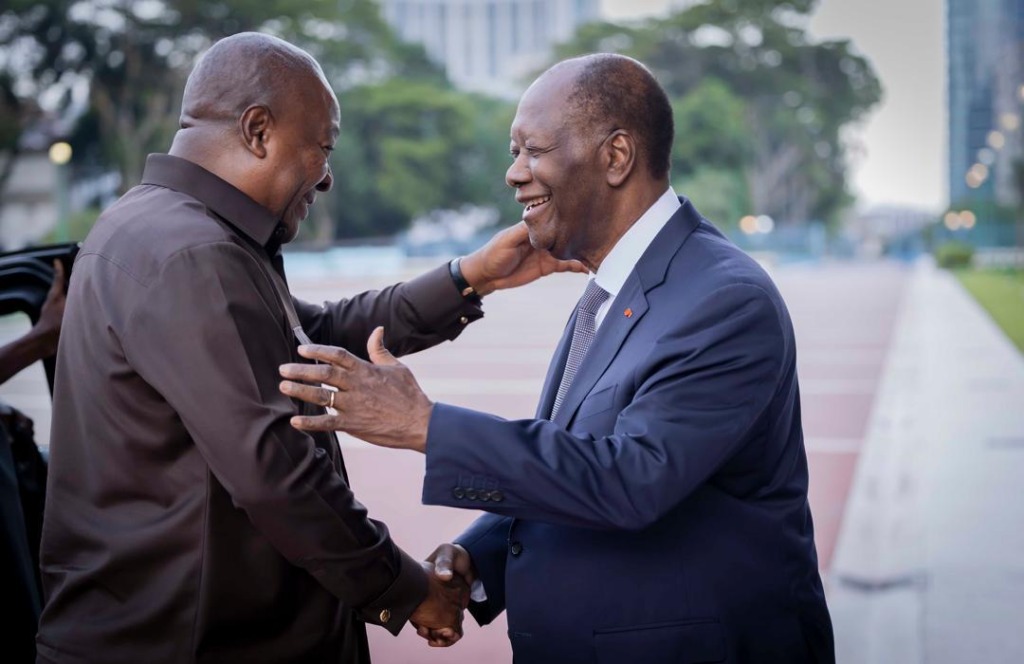
The landmark agreement was reached during the Côte d’Ivoire-Ghana High-Level Summit on the Future of the Cocoa Economy held in Abidjan, where President John Dramani Mahama and President Alassane Ouattara reaffirmed their commitment to deeper cooperation in the cocoa industry.
In a Joint Declaration issued after the summit, both leaders acknowledged that Ghana and Côte d’Ivoire together produce approximately 60 percent of the world’s cocoa, placing the two countries at the center of global cocoa trade and giving them significant influence over the future of the industry.
Under the new arrangement, the two countries will work toward aligning their farm-gate pricing policies, harmonising cocoa premiums, coordinating crop-season calendars, and strengthening market cooperation.
The decision comes at a time when cocoa pricing has become one of the most contentious issues within the cocoa sector.
Over the past year, cocoa farmers, purchasing clerks, Licensed Buying Companies, and traditional leaders have repeatedly raised concerns about producer prices, delayed payments, and the economic hardship facing cocoa-growing communities.
The issue became even more prominent following months of nationwide engagements by the Minority Caucus, led by Minority Chief Whip Frank Annoh-Dompreh and later joined by Minority Leader Alexander Afenyo-Markin, during which farmers complained about reduced earnings, inadequate funding for cocoa purchases, and uncertainty within the cocoa industry.
Industry observers have long argued that significant differences in producer prices between Ghana and Côte d’Ivoire often encourage cross-border cocoa smuggling, with farmers and traders seeking higher returns across national boundaries.
The new agreement is therefore expected to reduce those incentives by creating greater alignment between the pricing systems of both countries.
The two leaders also reaffirmed their commitment to ensuring that cocoa farmers receive fair compensation for their labor, stressing that sustainable farmer incomes remain essential for the long-term survival of the cocoa industry and the economic wellbeing of millions of farming households.
President Mahama and President Ouattara further praised the progress achieved under the Côte d’Ivoire-Ghana Cocoa Initiative (CIGCI), which has over the years sought to strengthen cooperation between the two countries.
Among the initiative’s achievements are the implementation of the Living Income Differential (LID), efforts to coordinate producer price announcements, and collaboration on cocoa traceability and sustainability measures.
Despite these successes, both countries acknowledged that the cocoa sector continues to face significant challenges.
These include volatile global cocoa prices, climate change, illegal mining activities affecting cocoa farms, the increasing use of cocoa substitutes in international markets, and stricter environmental and sustainability regulations from major consuming countries.
Beyond pricing reforms, Ghana and Côte d’Ivoire agreed to deepen scientific collaboration in addressing cocoa diseases, particularly the Cocoa Swollen Shoot Virus Disease, which continues to threaten production in both countries.
They also pledged to increase investments in cocoa processing, value addition, and domestic consumption of cocoa products to retain more value within Africa.
In a move aimed at strengthening Africa’s collective influence in the global cocoa market, the two countries announced plans to expand the Côte d’Ivoire-Ghana Cocoa Initiative to include other cocoa-producing countries across the continent.
The objective is to harmonise cocoa policies, strengthen regional cooperation, and improve Africa’s bargaining power in international cocoa trade negotiations.