
–BY Daniel Bampoe
In a decisive step toward improving cardiovascular healthcare, Ghana’s Ministry of Health has initiated the development of a comprehensive national strategic plan to address paediatric and adult congenital heart disease (CHD).
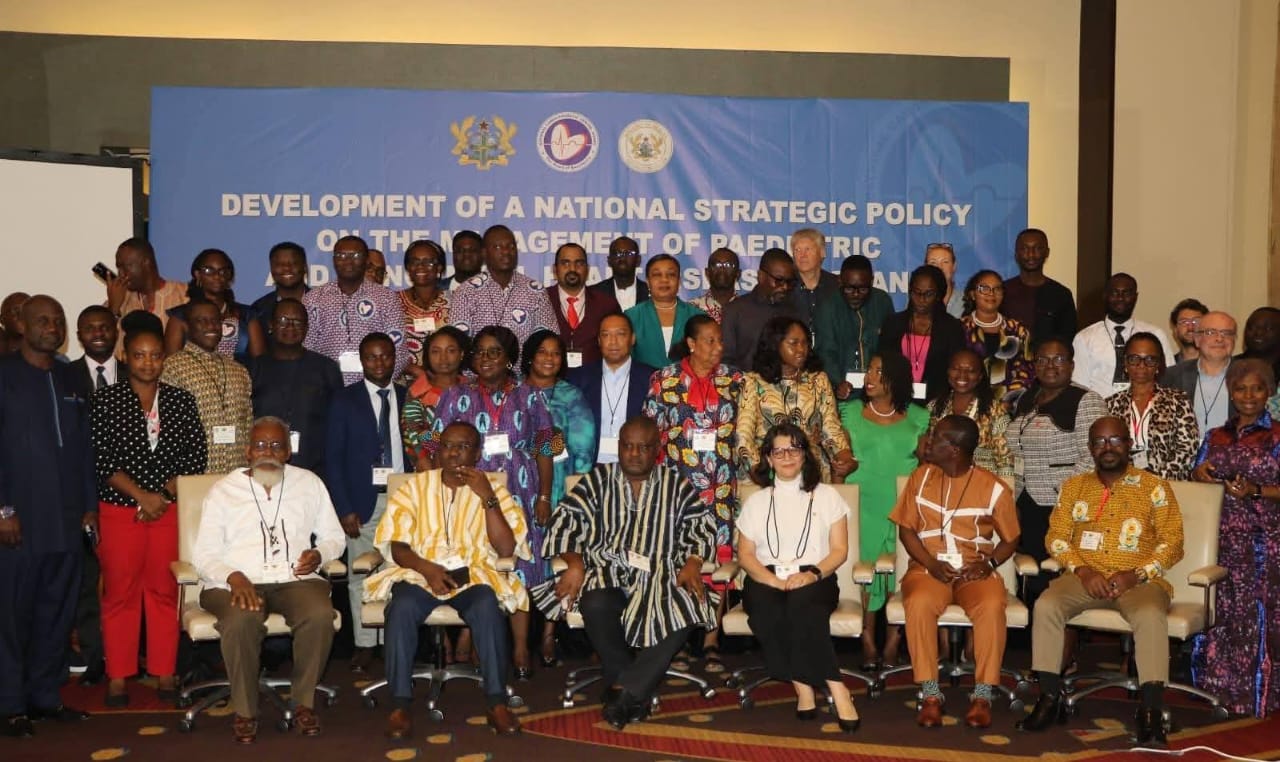
The plan was the focus of a high-level stakeholder meeting held in Accra, bringing together key figures from the medical field, government agencies, Parliament, and civil society.
The strategy aims to confront the growing burden of CHD in the country, an issue health officials describe as a silent crisis affecting thousands of children annually.
The National Cardiothoracic Centre (NCTC), Ghana’s leading facility for heart-related care, has reported increasing cases of CHD—many of which go untreated due to systemic limitations.
The strategic planning meeting was organised in collaboration with the NCTC and Children’s HeartLink, a U.S.-based international non-profit organisation that partners with local institutions to improve paediatric cardiac care.
Also in attendance were international partners including representatives from Boston Children’s Hospital, who have supported Ghana in building capacity over the years.
Acting Chief Director of the Ministry, Frank Raji, underscored the urgency of adopting a coordinated and long-term approach to congenital heart care.
He cited the significant number of children born with heart defects annually and the limited access to care, primarily due to financial hardship, geographical disparity, and a shortage of trained health professionals.
Raji outlined the Ministry’s strategic vision, which revolves around three pillars: strengthening the specialised health workforce, expanding heart care infrastructure beyond the capital, and establishing policy frameworks that ensure equitable and sustainable delivery of care.
He also noted that the plan will integrate paediatric cardiac care into the broader national child health strategy, with efforts to enhance the NCTC as a Centre of Excellence.
The discussions during the event were extensive, with stakeholders focusing on critical themes such as service delivery improvement, workforce training, data collection, and health system strengthening.
Particular attention was paid to reinforcing referral systems and closing the gap in diagnostic and treatment services—especially in underserved regions of the country.
This initiative is aligned with Ghana’s broader efforts under the National Surgical, Obstetric and Anaesthesia Plan (NSOAP), a policy framework launched to systematically improve surgical care in the country.
The CHD plan is expected to feed into this broader vision, ensuring that congenital heart services are part of Ghana’s national health priorities.
Participants acknowledged the essential role of collaboration in achieving these objectives and called for sustained support from development partners, NGOs, and the private sector.


