By Daniel Bampoe
The Minority Caucus in Parliament has served notice that it will fiercely resist any attempt by the Mahama administration to impose new taxes or levies on Ghanaians, arguing that citizens are already burdened by worsening economic hardship, rising unemployment and deteriorating living conditions.
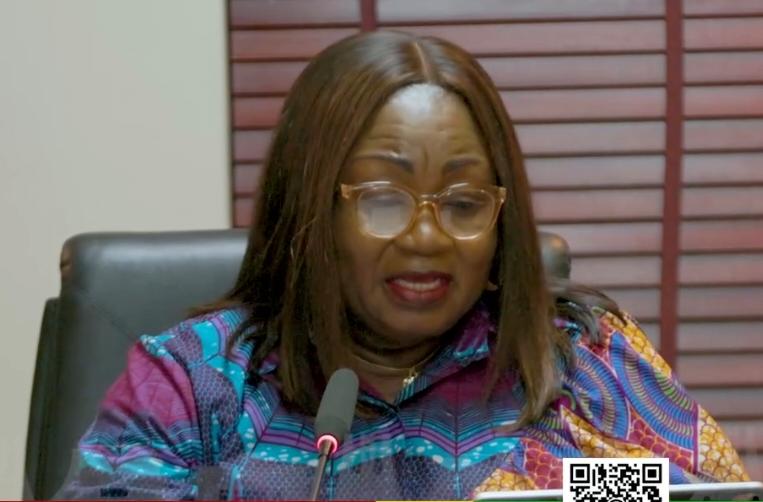
Delivering remarks on behalf of Minority Leader Alexander Kwamena Afenyo-Markin during the Leaders’ Media Briefing to mark the commencement of the Second Meeting of the Second Session of the Ninth Parliament, Deputy Minority Leader and Asokwa MP Patricia Appiagyei accused the governing National Democratic Congress (NDC) of hypocrisy and authoritarian tendencies in the handling of parliamentary business and economic policy.
Addressing journalists at Parliament House in Accra, the Deputy Minority Leader said the Minority remained committed to protecting ordinary Ghanaians from what she described as excessive taxation and poor governance under the current administration.
She commended Parliament’s Media Relations Department for organizing the media engagement, describing it as an important initiative aimed at promoting transparency and strengthening the relationship between Parliament and the Ghanaian people.
“We remain committed to engaging the media and the citizenry openly, responsibly and constructively,” she stated before presenting what she described as the Minority’s assessment of the government’s performance since Parliament began its current term.
Reviewing activities during the First Meeting of the Second Session, Patricia Appiagyei accused the Majority side of abusing the certificate of urgency mechanism to fast-track legislation without adequate scrutiny.
According to her, approximately 33 bills were processed under certificates of urgency during the previous meeting — a practice she argued was intended only for genuine national emergencies.
“The Minority considers this an abuse of democratic process and a violation of the spirit of parliamentary deliberations,” she declared.
She further accused the NDC Majority of operating an authoritarian style of governance in Parliament by frequently invoking urgency procedures to avoid detailed parliamentary examination of important legislation.
The Deputy Minority Leader also referenced the controversial anti-LGBTQ bill, noting that despite strong public support and campaign promises by the NDC, the legislation was not brought to a final vote in 2025.
“The Minority finds this delay deeply troubling and will remain vigilant to ensure the bill is not quietly diluted or shelved,” she warned.
Turning to governance and public service delivery, Patricia Appiagyei argued that despite the NDC’s widely publicized “national reset” agenda, many critical sectors continued to struggle with longstanding problems.
She cited persistent challenges within the National Health Insurance Scheme (NHIS), delays in school feeding grants in some secondary schools, and shortages of teaching materials in schools across the country.
According to her, ordinary Ghanaians have not experienced meaningful improvements in their daily lives despite government claims of economic stabilization.
While acknowledging that inflation had dropped to single digits, the Minority insisted that the improvement had not translated into relief for struggling households.
“Ordinary Ghanaian families are yet to feel tangible relief in their daily lives,” she said.
The Deputy Minority Leader stressed that the Minority would continue to push for policies capable of converting macroeconomic gains into real improvements in household incomes, food prices and living standards.
On youth unemployment, Patricia Appiagyei painted a worrying picture, disclosing that the youth unemployment rate currently stood at 34.4 percent.
“It is unacceptable by any standard,” she stated.
She questioned the effectiveness of flagship NDC youth employment initiatives including the “Adwumawura” programme and the National Apprenticeship Programme, arguing that the initiatives had not yet produced measurable outcomes.
In contrast, she defended the previous NPP government’s One District One Factory (1D1F) policy, insisting it created “real verifiable jobs” across the country.
The Minority, she said, supports efforts to expand free Technical and Vocational Education and Training (TVET) as well as apprenticeship programmes, but believes youth unemployment should now be treated as a national security concern requiring bipartisan action.
The Asokwa MP also criticized what she described as slow and cosmetic reforms within the public sector, arguing that government efforts to improve efficiency and reduce waste had so far failed to address core challenges in education and healthcare delivery.
She specifically referenced delayed feeding grants, inadequate educational resources, unresolved NHIS arrears and recurring drug shortages in public health facilities.
However, it was on taxation that the Minority delivered its strongest warning.
“Ghanaians are taxed enough,” Patricia Appiagyei declared emphatically.
“The Minority reiterates its firm position — no new taxes on an already burdened citizenry.”
She accused the NDC of political inconsistency, arguing that the party fiercely opposed several taxes introduced under the previous NPP administration while in opposition, only to introduce new levies after returning to power.
“That is a glaring contradiction,” she stressed.
The Minority also expressed concern about what it described as increasing tension in parliamentary proceedings following the NDC’s overwhelming majority in the House.
According to Patricia Appiagyei, the conduct of parliamentary business under the current Majority leadership has contributed to growing polarization and strained inter-party relations within Parliament.