By Daniel Bampoe
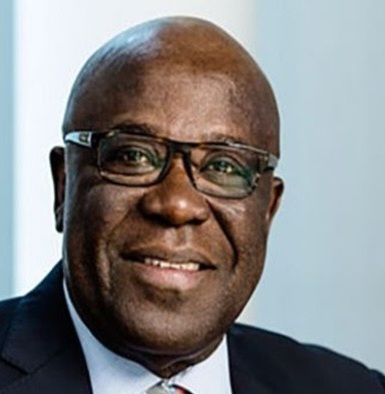
The long-running controversy surrounding the delayed operationalisation of the Weija Children’s Specialist Hospital has taken a dramatic turn after officials of the Economic and Organised Crime Office (EOCO) reportedly picked up the contractor responsible for the project following a crucial meeting with the Minister for Health, Kwabena Mintah Akandoh.
The development comes barely days after the Health Minister publicly explained in Parliament that the government’s inability to commission the hospital was not due to a lack of readiness on the part of the Ministry of Health, but rather because the contractor had failed to complete outstanding contractual obligations and officially hand over the facility.
Speaking in Parliament earlier this week, Mr. Akandoh rejected suggestions that the Mahama administration was deliberately delaying the opening of the hospital.
He maintained that although the Ministry had already assembled the full complement of health professionals required to operate the facility, the project remained under the control of the contractor because the formal handover process had not been completed.
The Minister disclosed that while some medical equipment had already been installed, several critical installations remained incomplete, and in some cases, the Ministry had no operational access to installed equipment because the contractor had not provided the required access codes.
He stressed that government was prepared to commission and begin operating the hospital within 24 hours if the contractor officially handed over the facility.
To resolve the impasse, the contractor was invited to a meeting with the Health Minister on Friday, July 10, 2026, to discuss the completion and immediate transfer of the hospital to the Ministry of Health.
According to sources familiar with the meeting, government appealed to the contractor to release the hospital so it could begin serving the public, particularly children requiring specialised healthcare services in the Weija-Gbawe Municipality and surrounding communities.
However, the contractor reportedly declined the request, insisting that he would not hand over the completed facility until government settled the outstanding balance owed under the construction contract or provided firm guarantees regarding when the remaining payments would be made.
The contractor is said to have maintained that releasing the hospital without resolving the financial obligations would expose him to significant losses, insisting that the contractual payment issues must first be addressed before any official handover could take place.
Shortly after the meeting ended, officials of the Economic and Organised Crime Office (EOCO) reportedly picked up the contractor and transported him to the agency’s headquarters.
As of the time of filing this report, neither EOCO nor the Ministry of Health had officially disclosed the reasons behind the action or issued any formal statement explaining the circumstances surrounding the contractor’s detention.
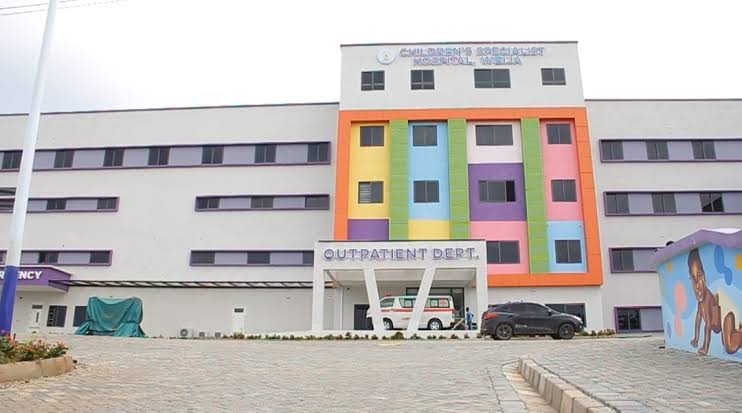
The Weija Children’s Specialist Hospital has remained at the centre of public debate for more than two years after the completion of its physical infrastructure without becoming operational.
The 120-bed specialist hospital, located in the Weija-Gbawe Municipality in the Greater Accra Region, was constructed to expand specialised paediatric healthcare services and reduce congestion at major referral institutions such as the Korle Bu Teaching Hospital and the Princess Marie Louise Children’s Hospital.
The facility is equipped with modern children’s wards, neonatal and paediatric intensive care units, operating theatres, outpatient clinics and other specialised medical facilities intended to provide comprehensive healthcare services for newborns, children and adolescents.
Despite the completion of the physical structures, unresolved contractual issues, outstanding payment disputes and administrative challenges have prevented the hospital from being commissioned and opened to the public.