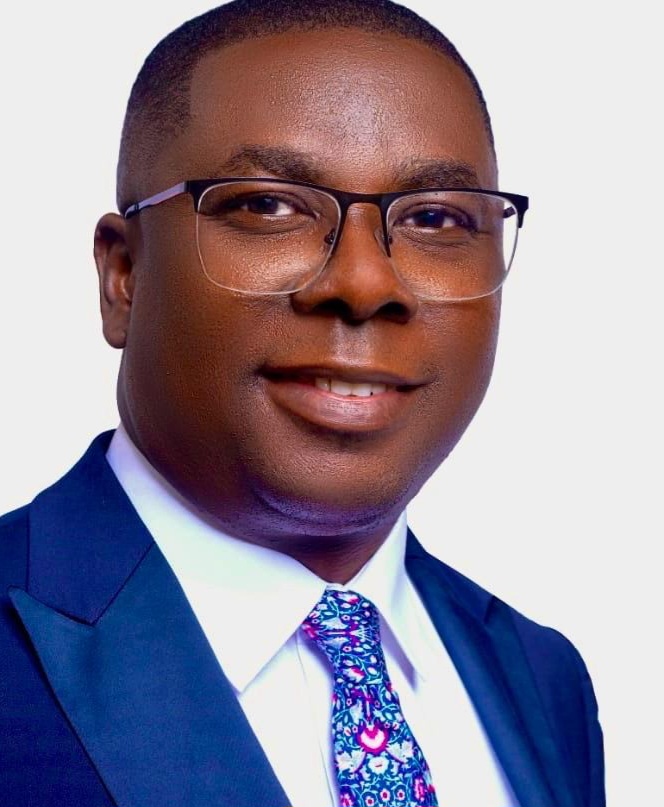
By Daniel Bampoe
Former Vice President Dr. Mahamudu Bawumia’s role in the gold-based foreign exchange strategy has come under renewed discussion, with Dr. Gideon Boako arguing that measures introduced during the country’s 2022 economic crisis laid the foundation for the stronger interventions now being undertaken to support the cedi.
In a detailed commentary, Dr. Boako said the origins of the current foreign exchange management strategy must be traced back to the severe economic difficulties Ghana experienced in 2022 following the outbreak of the Russia-Ukraine war and the subsequent deterioration in the country’s macroeconomic conditions.
The crisis eventually resulted in Ghana seeking support from the International Monetary Fund (IMF), with the restoration and rebuilding of the Bank of Ghana’s foreign exchange reserves becoming a key component of the programme.
According to Dr. Boako, one of the constraints imposed during that period was a ceiling on the Bank of Ghana’s direct monthly foreign exchange intervention.
He said the central bank was initially limited to US$80 million per month, a ceiling that was subsequently reduced to US$60 million.
He argued that the restriction was significantly below the actual demand for foreign currency in the Ghanaian economy at the time, creating a difficult policy environment for the government and central bank as they sought to manage pressure on the cedi while simultaneously rebuilding depleted reserves.
Dr. Boako said the then NPP administration nevertheless complied with the IMF-related restrictions and maintained what he described as fiscal and monetary discipline while working to rebuild the reserve position.
He contended that this approach eventually enabled Ghana to exceed the IMF’s reserve threshold by the end of 2024, creating the conditions for the foreign exchange intervention restrictions to be relaxed.
According to him, the lifting of the cap in 2025 subsequently provided greater room for the Bank of Ghana to inject foreign exchange into the market.
Dr. Boako’s central argument is that the increased capacity to intervene in the foreign exchange market under the current NDC administration did not emerge overnight, but was partly the result of the reserve-building process undertaken during the previous administration.
He argued that without the accumulation of reserves under the earlier IMF framework, the government and central bank would not have had the same capacity to undertake the scale of foreign exchange interventions currently being witnessed.
Dr. Boako acknowledged, however, that even while the Bank of Ghana operated under the intervention ceiling, the economy continued to require substantial amounts of foreign exchange.
The country needed dollars to finance imports of fuel, medicines, machinery and spare parts, food and beverages, while businesses also required foreign currency to repatriate legitimate profits and meet other international obligations.
It was against this backdrop, he said, that the government had to look beyond conventional foreign exchange interventions for additional sources of reserves and liquidity.
Dr. Boako credited Dr. Bawumia with championing the use of Ghana’s gold resources as an alternative means of strengthening the country’s foreign exchange position.
He specifically pointed to the Domestic Gold Purchase Programme (DGPP) and the Gold-for-Oil programme, describing them as strategic responses to the shortage of foreign exchange that confronted the country during the economic crisis.
The argument is that by purchasing gold domestically and using gold-related arrangements to support essential imports, Ghana could reduce its immediate dependence on scarce US dollars while simultaneously strengthening its reserves.
Dr. Boako said the approach represented an attempt to turn one of the most valuable natural resources into a tool for addressing the country’s longstanding foreign exchange challenges.
The former government official argued that the significance of the gold strategy goes beyond the individual programmes themselves.
In his view, Ghana has historically struggled with recurrent foreign exchange shortages, which have repeatedly placed pressure on the cedi and contributed to inflationary pressures and higher interest rates.
He therefore portrayed Dr. Bawumia’s intervention as an attempt to find an alternative mechanism for addressing a structural problem that has affected successive governments.
“He did not waste the crisis. He found a solution to a problem that has haunted the cedi since the First Republic and under every government,” Dr. Boako wrote.
He further alleged that the NDC government is now benefiting from and deploying the same broad strategy to support the cedi, reduce inflationary pressures and create room for lower interest rates, while simultaneously presenting the resulting improvements as an achievement of the current administration.
Dr. Boako also challenged claims regarding the volume of foreign exchange sold by the Bank of Ghana during 2024.
He disputed an assertion that the central bank sold an average of US$250 million per month during the year, arguing that such a figure could be misleading if it combines different categories of foreign exchange sales.
According to him, total foreign exchange sales can include auctions and other foreign exchange windows in addition to direct market intervention by the Bank of Ghana.
His contention is that distinguishing between these categories is important when assessing the extent to which the central bank actually intervened directly in the foreign exchange market under the IMF-related restrictions.
Dr. Boako further argued that the expansion of foreign exchange flows and the increase in foreign exchange accumulation for reserves were facilitated, to a significant extent, by gold-purchase arrangements introduced during Dr. Bawumia’s tenure.