BY NADIA NTIAMOAH
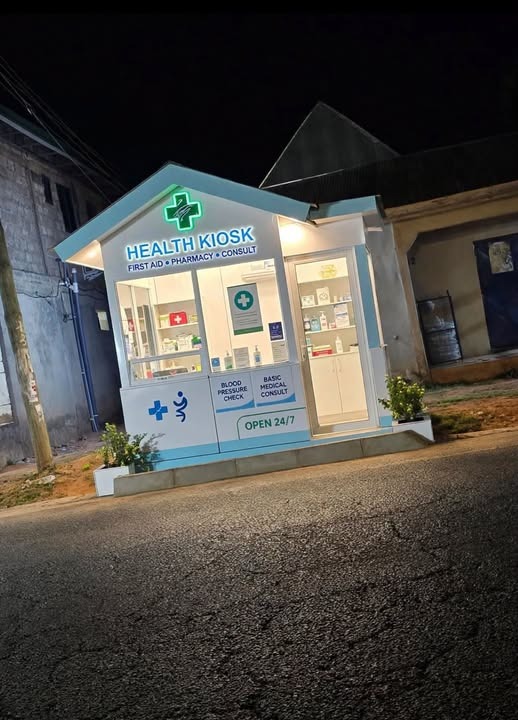
President John Dramani Mahama has moved to clarify growing discussions over the government’s introduction of health kiosks, insisting that the initiative is not intended to replace the much-discussed Agenda 111 hospitals, but to complement existing healthcare infrastructure by taking basic medical services closer to communities.
The Agenda 111 initiated by the previous government has not seen any intervention since the Mahama administration took over almost two years.
The clarification comes as the government roles out its ‘Free Primary Healthcare Programme’, a policy that places greater emphasis on preventive care, early diagnosis and treatment at the community level before patients require more specialised hospital services.
Under the new approach, health kiosks are expected to operate alongside Community-based Health Planning and Services (CHPS) compounds, mobile clinics and motorcycles to expand access to basic healthcare, particularly in communities where residents face difficulties travelling to conventional health facilities.
The kiosks are being positioned as an additional entry point into the healthcare system, with the government seeking to bring services closer to people’s homes, workplaces and other areas where large numbers of people gather.
The health kiosks are expected to provide basic and preventive healthcare services and treatment for common conditions.
Rather than requiring residents to travel long distances to hospitals for every minor health complaint, the new system is intended to allow people to access frontline services closer to where they live and work.
The government says the kiosks could be strategically located in busy communities, markets, commercial areas and transport terminals, thereby bringing primary healthcare directly to people in places where they ordinarily spend their daily lives.
The initiative forms part of President Mahama’s broader Free Primary Healthcare agenda, which seeks to shift greater attention towards prevention and early intervention instead of relying predominantly on hospital-based treatment after illnesses have become severe.
A major feature of the proposed health kiosk system is its connection to the wider healthcare network.
According to the government’s explanation, the kiosks will be digitally connected through tablets to district hospitals and higher levels of care.
This means health workers stationed at a kiosk will not necessarily have to operate in isolation when confronted with a condition beyond their capacity.
Where a patient’s condition requires specialised attention, the health worker can consult doctors remotely or refer the patient to a district hospital or another appropriate facility.
The system is therefore designed to create a chain between community-level healthcare and higher-level medical facilities.
In effect, the kiosk would serve as an early point of contact, while district, regional and specialised hospitals would continue to handle cases requiring more advanced diagnosis, treatment or intervention.