BY Daniel Bampoe
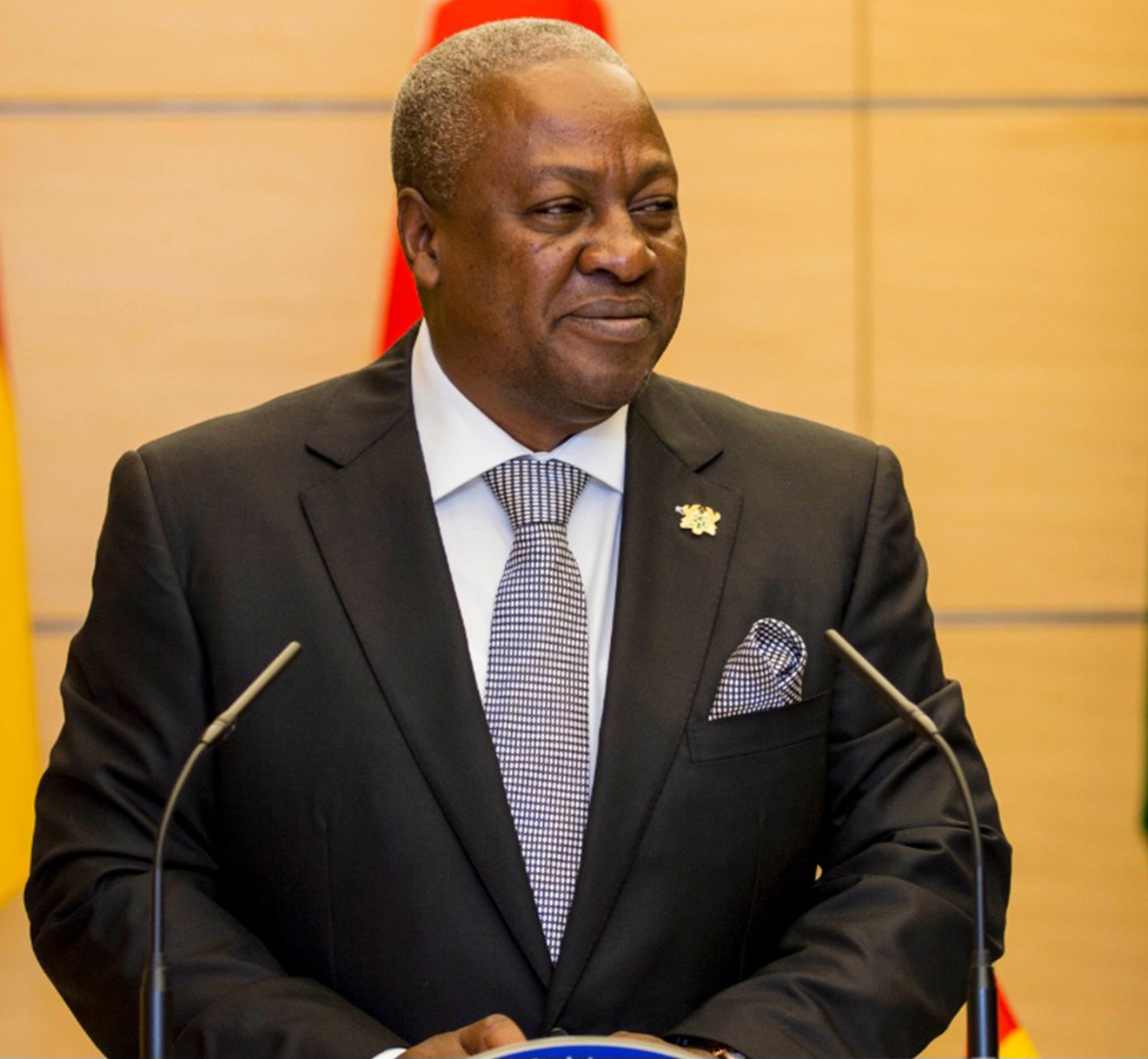
President John Dramani Mahama is facing criticism from political opponents who accuse him of taking a different position on Accra’s perennial flooding after assuming office, contrasting his recent comments with promises he made while in opposition that an NDC government would find a permanent engineering solution to the problem.
The criticism follows the President’s assessment of the devastating floods that swept through several parts of the Greater Accra Region after torrential rains claimed at least nine lives, displaced hundreds of residents and caused extensive destruction to homes, businesses and public infrastructure.
Following an aerial inspection of the affected communities, President Mahama directed the Minister for Finance to immediately release funds from the government’s Contingency Fund to support flood victims through the National Disaster Management Organisation (NADMO).
Expressing sympathy to affected families, the President described the destruction as extensive and praised the military, the Ghana Police Service, NADMO, the Ministry of Works, Housing and Water Resources and the 48 Engineers Regiment for their rescue operations, which saved many lives during the disaster.
“I’ve seen many of the videos where people had to be carried out of their houses. They deployed their boats, and they helped to save quite a lot of lives,” the President said.
Government’s emergency response is expected to provide temporary shelter, food and other humanitarian assistance to displaced residents while officials continue assessing the extent of the damage.
However, it was the President’s explanation of the causes of the flooding that has generated political debate.
Addressing the nation after the inspection, President Mahama acknowledged that the volume of rainfall recorded during the latest storm was unusually high.
According to him, preliminary data indicated that approximately 140 millimetres of rain fell over Accra, compared with the highest single-day rainfall of about 56 millimetres recorded last year.
“The amount of rainfall recorded today is among the highest experienced in several years,” he stated.
The President argued that extreme weather events linked to changing climatic conditions remain beyond government’s control.
“That aspect of the problem is beyond our control because it is driven by changing climatic conditions,” he explained.
He nevertheless blamed human behaviour as a major contributor to Accra’s recurring floods.
According to him, indiscriminate dumping of refuse into drains, encroachment on waterways and the construction of buildings within flood-prone areas continue to undermine government efforts to improve drainage infrastructure.
He disclosed that aerial surveys revealed illegal dumping of refuse on wetlands, where reclaimed land was later sold for development.
To address the problem, President Mahama announced that government would embark on a nationwide exercise to remove structures obstructing waterways and drainage channels.
He disclosed that the issue would be placed before the National Security Council, after which Metropolitan, Municipal and District Assemblies would work with the Ministry of Works, Housing and Water Resources to identify illegal structures for demolition.
“We’ll not only break the houses; we have to move the rubble out of the way because there’s no use breaking a house and leaving the rubble in the waterways,” he said.
Beyond the immediate interventions, the President also unveiled a long-term strategy to decongest Accra by developing a new city outside the capital and relocating major government institutions over the next two decades.
According to him, the proposed city would reduce population pressure on Accra and help minimise future flood risks associated with rapid urbanisation.
Government officials say the proposed city will eventually be supported with roads, electricity, water supply and other infrastructure to encourage residential and commercial development outside the capital.
Despite those announcements, critics argue that the President’s latest comments differ significantly from his position while serving as Leader of the Opposition.
They point to a statement issued by Mr. Mahama on May 27, 2024, following severe flooding in Accra under the previous administration.
At the time, Mr. Mahama blamed the Akufo-Addo government for what he described as its failure to effectively manage and prevent flooding.
“The recent heavy downpours… have exposed the government’s failure to manage and prevent floods effectively,” he said in the 2024 statement.
He also questioned the impact of hundreds of millions of dollars reportedly invested in the Greater Accra Resilient and Integrated Development (GARID) Project.
According to the then opposition leader, despite approximately US$200 million reportedly spent under GARID and Parliament’s approval of an additional US$150 million, flooding remained a persistent challenge.
Mr. Mahama further promised that an NDC government under his leadership “would not rest until we find an engineering solution to the persistent flooding and implement an effective prevention and management plan.”
Critics now contend that after more than a year in office, government has yet to produce the comprehensive engineering solution previously promised.
They also note that shortly after assuming office, the President established a committee chaired by presidential adviser Stan Dogbe to coordinate flood-related interventions, but argue that no major breakthrough has yet been achieved.
According to the critics, the President’s latest emphasis on climate change and human behaviour appears inconsistent with the strong criticisms he directed at the previous administration while in opposition.
They argue that instead of attributing part of the problem to factors beyond government’s control, the administration should focus on implementing the engineering solutions it previously promised.
Government, however, maintains that the latest floods were caused by a combination of unusually intense rainfall, poor human behaviour, rapid urbanisation and long-standing drainage challenges.