—By Daniel Bampoe
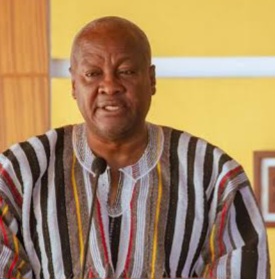
President John Dramani Mahama is facing intense public backlash over what many perceive as an overwhelming favouritism toward Northerners and Ewes in his recent wave of political appointments.
The controversy has sparked a wider national debate over ethnic balance, inclusivity, and adherence to constitutional principles in the governance of Ghana.
Since returning to power, President Mahama has filled several high-profile positions in key state agencies and institutions with northerners, prompting critics to allege a clear ethnic bias.
Prominent among these appointments are Dr. Abdul-Samed Tanko, a renowned cardiologist at Korle-Bu Teaching Hospital, now serving as CEO of the University of Ghana Medical Centre (UGMC), and Dr. Yakubu Seidu Adam, who has been made CEO of Korle Bu Teaching Hospital.
Also appointed is Professor Seidu Mahama Alidu as Executive Secretary of the Water Resources Commission.
The list of appointments appears to extend further, touching multiple sectors.
In the security architecture, individuals of Northern descent are now at the helm of crucial agencies.
DCOP Abdul-Osman Razak serves as National Security Coordinator with his brother appointed as Director Investigations at National Security with Richard Jakpa also serving as Director of Special Operations while Charles Kipo heads the National Intelligence Bureau (NIB).
Mohammed Abdul Salam leads the National Lottery Authority, and Brigadier General Paul Seidu Tanye-Kulono directs the Ghana Ports and Harbours Authority (GPHA).
Critics argue that the trend goes beyond isolated appointments and reflects a deliberate pattern of ethnic preference. Reference is made to his first term in office where 19 Chief Directors appointed out 23 were all northerners.
A reconciliation of appointments shows that the leadership of major state bodies—including the Ghana Health Service (GHS), Ghana Highways Authority (GHA), Ghana Immigration Service (GIS), Electricity Company of Ghana (ECG), Ghana Water Company Limited (GWCL), and even financial institutions like GCB Bank, Consolidated Bank Ghana (CBG) and the National Investment Bank (NIB)—are now dominated by Northerners and Ewes.
Below are just a few of the names currently occupying influential roles:
Dr Kamal-Deen Ali – Director-General, Ghana Maritime Authority (GMA), a retired naval officer, even though Mahama said no post retirement contract for public servants.
Samuel Kaba Akoriyea – Director-General, Ghana Health Service
John Bawah – Managing Director, State Housing Company
Julius Kpekpena – Managing Director, ECG
Adam Mutakawali – Managing Director, GWCL
Farihan Alhassan – Managing Director, GCB Bank
Dr Alhassan Iddrisu – CEO, Ghana Statistical Service (GSS)
Simon Madjie – CEO, Ghana Investment Promotion Centre (GIPC)
Dr Sofo Tanko Rashid Computer – CEO, GIFEC
Edward Bawa – Group CEO, Goil
Malik Basintale – CEO, Youth Employment Agency (YEA)
The perceived imbalance is further amplified in the President’s recent nominations of Municipal and District Chief Executives (MMDCEs).
In the Ashanti Region, which is traditionally an Akan strongholds, about 19 nominees are said to be of Northern descent.
Constituencies like Asokore Mampong, Ejura Sekyedumase, Obuasi East, and Bekwai—all predominantly Akan areas—have seen nominees with Northern lineage.
This has fueled anger among local National Democratic Congress (NDC) members who feel their communities are being sidelined.
Further adding to the discontent is the fact that several of the appointees are known to be closely linked to Mahama by blood or long-standing political alliances.
Presidential advisors Joyce Bawa Mogtari and Prosper Bani, Secretary to the President Calistus Mahama, and Ministers like Joseph Bukari Nikpe (Transport), Yusif Sulemana (Deputy Minister of Lands and Natural Resources), and Ibrahim Murtala Mohammed (Minister for Environment, Science, and Innovation) all hail from Northern or Volta origins.
While Mahama loyalists argue that the appointments are grounded in competence and meritocracy, the opposition and sections of the public believe otherwise.
They cite Article 35(6)(b) of Ghana’s 1992 Constitution, which mandates the state to ensure balanced representation of all regions and ethnic groups in national affairs.
The criticism also underscores a perceived hypocrisy. While in opposition, Mahama and the NDC regularly condemned then-President Nana Addo Dankwa Akufo-Addo’s government for what they described as “Akyem-Ashanti domination.”
Today, the tables appear to have turned, with the Mahama administration now accused of replicating the very same ethnic favoritism they once denounced.
Political observers and civil society organizations are now urging the President to clarify the criteria guiding these appointments and to take active steps to ensure broader regional inclusion.
They warn that the growing sense of ethnic marginalization could worsen national cohesion, deepen tribal divisions, and erode trust in public institutions.