
By Nadia Ntiamoah
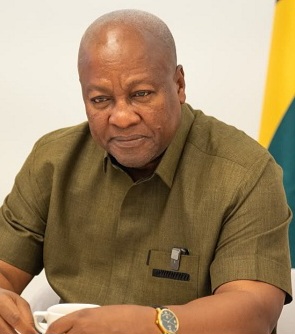
President John Dramani Mahama has effectively put his Ministers, Chief Executives, Board members and other political appointees on notice, warning that the sweeping changes already underway in government may not end with the dissolution of nine state institution boards.
A strongly worded notice from the Presidency on Wednesday, September 2, 2026, has sent a fresh wave of uncertainty through government circles, with political appointees being reminded that their positions are not guaranteed and that the President is prepared to take further action where necessary.
The warning follows President Mahama’s decision to dissolve the boards of nine major state institutions with immediate effect, in a move the Presidency says is intended to strengthen institutional leadership, improve coordination and ensure that government appointees remain aligned with the administration’s policies and priorities.
The institutions affected are Prestea Sankofa Gold Limited, Bulk Oil Storage and Transportation Company Limited (BOST), Volta Aluminium Company Limited (VALCO), Consolidated Bank Ghana Limited (CBG), Ghana Post Company Limited, the Road Maintenance Trust Fund, TDC Ghana Limited, Ghana National Petroleum Corporation (GNPC) and the National Sports Authority.
The directive, announced by Felix Kwakye Ofosu, Spokesperson to the President and Minister for Government Communications, instructed the relevant sector Ministers to take all necessary steps, in accordance with the applicable laws and governing instruments, to give effect to the dissolution.
The Presidency added that the affected boards would be reconstituted in due course.
But while the dissolution of the boards has attracted attention, it is the accompanying warning from the President that has generated perhaps the greatest anxiety among government appointees.
In a notice signed by the Secretary to the President, Callistus Mahama, Ph.D., all Ministers and political appointees were reminded of President Mahama’s determination to enforce discipline, accountability and effective leadership throughout government.
The notice pointed specifically to the recent ministerial changes, the dissolution of selected boards and what it described as the “impending reshuffle of Chief Executives”.
That reference has raised the possibility that more high-profile changes could soon be announced across government institutions.
The message from the Presidency was uncompromising: holding political office under the Mahama administration comes with responsibilities, and officials who fail to meet expectations should not assume that they will remain in office indefinitely.
The President expects Ministers, Deputy Ministers, Chief Executives, Board members and other political appointees to conduct themselves with integrity, diligence and humility while respecting established administrative procedures.
More importantly, the Presidency warned that conduct that undermines governmental cohesion, institutional authority or the effective implementation of government policy “will not be tolerated”.
That warning has fuelled speculation about internal tensions within sections of government, particularly allegations that some political appointees may be working at cross-purposes with their respective Ministers.
There have been claims circulating among some government supporters that certain appointees have allegedly sought to undermine or frustrate Ministers within their respective sectors.
One such claim that surfaced after the presidential announcement alleged that an individual abruptly exited a WhatsApp platform immediately after the release on the board dissolutions was circulated.
The identity of the person, the particular WhatsApp platform involved and the reason for the alleged departure have not been independently established.
The incident therefore cannot, on its own, be presented as evidence that the individual was involved in sabotage or internal resistance.
Nevertheless, the claims have added fuel to growing conversations about discipline, loyalty and coordination within the administration.
For some government supporters, the President’s warning is being interpreted as a signal that he is unwilling to allow personality clashes, institutional rivalries or disagreements between political appointees to interfere with the implementation of his government’s agenda.
The latest developments also highlight the importance President Mahama appears to be placing on the relationship between Ministers and the agencies operating under their respective portfolios.
While Boards and Chief Executives have defined responsibilities under the laws establishing state institutions, the Presidency’s latest communication makes clear that political appointees are expected to operate within the broader policy direction of the government.
The President has therefore made it clear that public appointments should not be viewed as permanent political rewards.
The notice stated that public office is “a privilege and an opportunity to serve the Ghanaian people”, adding that performance across all sectors would continue to be assessed.
That assessment, the Presidency said, could result in further action whenever necessary to safeguard the integrity, effectiveness and responsiveness of the administration.
The development is particularly significant because the Mahama administration is still implementing its broader programme following the National Democratic Congress’ return to power after the 2024 general election.
Since assuming office in January 2025, President Mahama has made changes to the composition of his government and leadership of various public institutions as he seeks to align the machinery of state with his administration’s policy objectives.
The latest board dissolutions suggest that the process of reviewing leadership at state institutions is continuing.\
And with the Presidency openly referring to an impending reshuffle of Chief Executives, attention is now shifting from the nine dissolved boards to the individuals occupying executive positions across the country’s state-owned enterprises and public institutions.
For appointees watching developments from within government, the message could hardly be clearer.
The President has not limited his warning to the officials whose boards have already been dissolved. It covers Ministers, Deputy Ministers, Chief Executives, Board members and other political appointees.
In effect, every political appointee has been reminded that continued service will depend on performance, discipline, integrity, cooperation and adherence to government policy.
The warning may also serve as an attempt to prevent internal divisions from becoming a larger political problem for the administration.
Where Ministers and officials of state institutions fail to work together, government programmes can suffer delays, conflicting directives can emerge and public confidence in the administration can be affected.
President Mahama’s latest intervention therefore appears designed to reinforce a single chain of responsibility and ensure that those appointed to execute government business do so in accordance with the administration’s priorities.
The coming days could consequently be crucial for several state institutions as the Presidency begins the process of reconstituting the dissolved boards and potentially changes the leadership of other institutions.


