By Daniel Bampoe
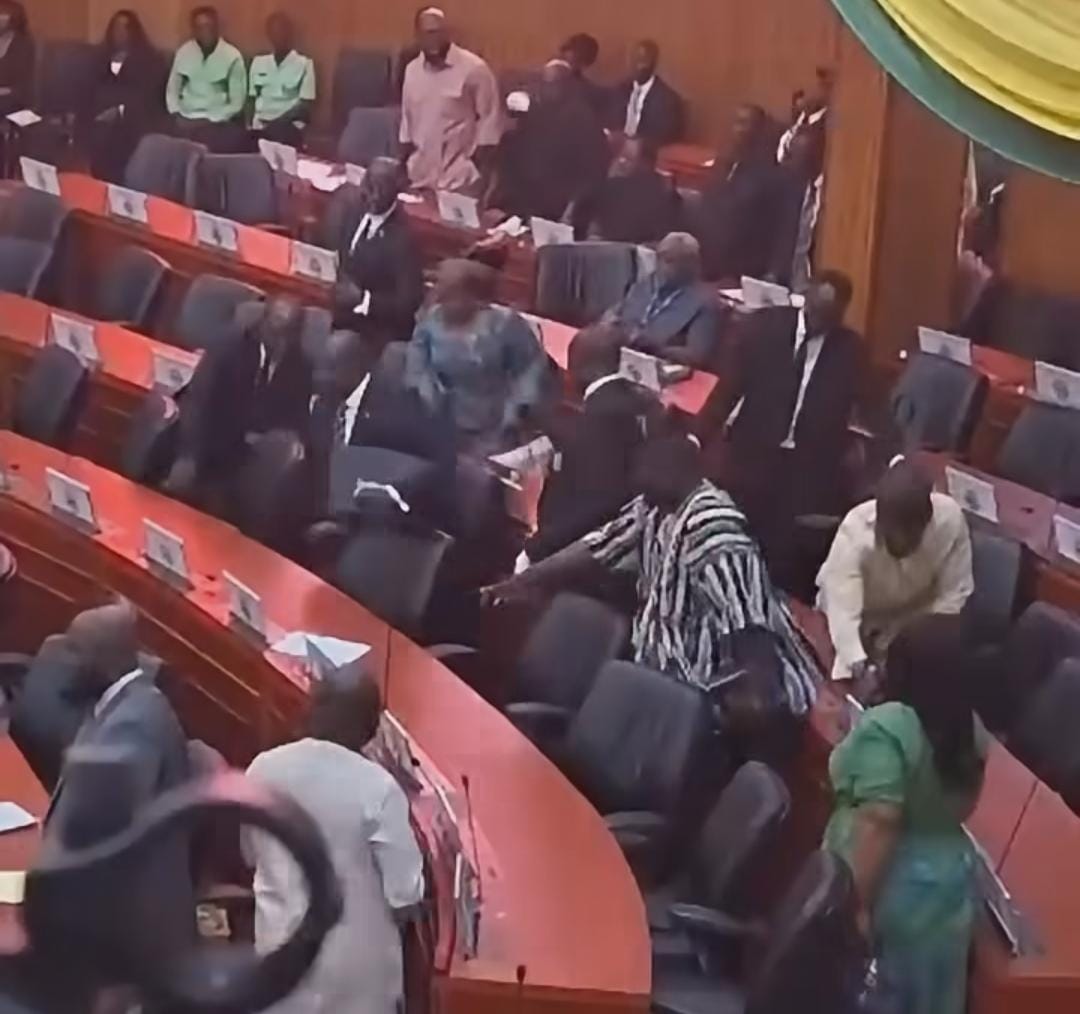
Parliament’s first sitting of its Third Meeting of the Second Session on Tuesday, November 3, 2026, descended into a heated confrontation between the Majority and Minority caucuses after Speaker Alban Bagbin ordered the Member of Parliament for Damongo, Samuel Abu Jinapor, to leave the Chamber for refusing to withdraw an allegation that Foreign Affairs Minister Samuel Okudzeto Ablakwa was involved in the sale of diplomatic passports.
The dramatic incident, which saw a Parliamentary Marshal escort the former Lands and Natural Resources Minister out of the Chamber, triggered a solidarity walkout by the Minority caucus and opened another front in the growing political confrontation over the management of Ghana’s diplomatic passports and the government’s expenditure on the evacuation of Ghanaians from South Africa.
The controversy began when Jinapor, who is also the Ranking Member on Parliament’s Foreign Affairs Committee, made an allegation linking Ablakwa to the alleged sale of diplomatic passports. His comments immediately attracted an objection from Majority Leader James Agalga, who argued that the accusation was not supported by established facts.
The Speaker subsequently directed Jinapor to withdraw the allegation. However, after the Damongo MP failed to comply with the directive, he was ordered out of the Chamber and escorted away by a Parliamentary Marshal.The action provoked an immediate reaction from the Minority, with Minority Leader Alexander Afenyo-Markin describing the Speaker’s decision as harsh, high-handed and unfair.
In a subsequent engagement with journalists, Afenyo-Markin questioned the basis for the Speaker’s action, arguing that MPs should be allowed to raise concerns about suspected wrongdoing and refer such matters to the appropriate parliamentary committees for investigation.
He maintained that Parliament should not require a member to establish every detail of an allegation before bringing it to the attention of the House, particularly where the matter concerns the conduct of a public officer and the administration of state institutions.
According to him, the Majority Leader should have treated Jinapor’s comments as an issue requiring further scrutiny instead of insisting on their withdrawal.
Afenyo-Markin also claimed that the Minority understood Jinapor to have withdrawn the statement, questioning why the Speaker proceeded with the order for his removal.
He argued that the appropriate parliamentary response should have been to initiate a process through which the Foreign Affairs Committee or another relevant committee could examine the claims and establish the facts.
The Minority Leader further maintained that the incident raised concerns about the space available to opposition MPs to question government officials and draw attention to matters of public interest during parliamentary proceedings.
Diplomatic passport controversy deepens
The confrontation did not occur in isolation. It came against the background of sustained opposition criticism of the issuance of Ghanaian diplomatic and service passports, with the New Patriotic Party (NPP) questioning the eligibility of some individuals who reportedly received the official travel documents.
The Minority has particularly raised concerns about the issuance of service passports to six individuals whose official positions, according to the opposition, were either inaccurately described or did not exist.
The NPP has questioned the circumstances under which the documents were approved and whether the beneficiaries met the requirements for obtaining such passports.
The party has also petitioned the United States Embassy in Ghana, asking it to suspend recognition of the affected passports pending an independent verification of the beneficiaries’ eligibility.
The controversy has placed Foreign Affairs Minister Samuel Okudzeto Ablakwa under sustained political scrutiny, with the opposition demanding greater transparency over the selection of beneficiaries, the positions they occupy and the authorities responsible for approving the documents.
However, the allegations of passport sales remain contested and have not been established as proven wrongdoing by the Minister. ‘Yɛgye Yɛn Sika’ demonstration adds pressure
The parliamentary confrontation also followed a major demonstration in Accra earlier on Tuesday, organised by supporters of the NPP and led by the party’s youth wing under the banner ‘Yɛgye Yɛn Sika’.
The protesters demanded accountability over the reported GH¢49.72 million expenditure on the evacuation of 1,964 Ghanaians from South Africa.
They questioned the financial records and supporting documentation relating to the exercise, citing alleged discrepancies in payment records, duplicate entries and gaps in the documents used to justify the expenditure.
The demonstrators called for the release of detailed invoices, contracts, proof of payment, passenger manifests and beneficiary records to establish how the money was spent.
The protest also brought the diplomatic and service passport controversy into sharper focus, with demonstrators demanding a comprehensive account of the individuals who received the documents and the basis on which they were issued.
The NPP has called for Ablakwa’s resignation or dismissal by President John Dramani Mahama, arguing that the allegations surrounding the evacuation expenditure require an independent investigation.
The Foreign Affairs Minister, however, has rejected allegations of financial wrongdoing and maintained that the evacuation expenditure should be subjected to an independent audit.