
By Daniel Bampoe
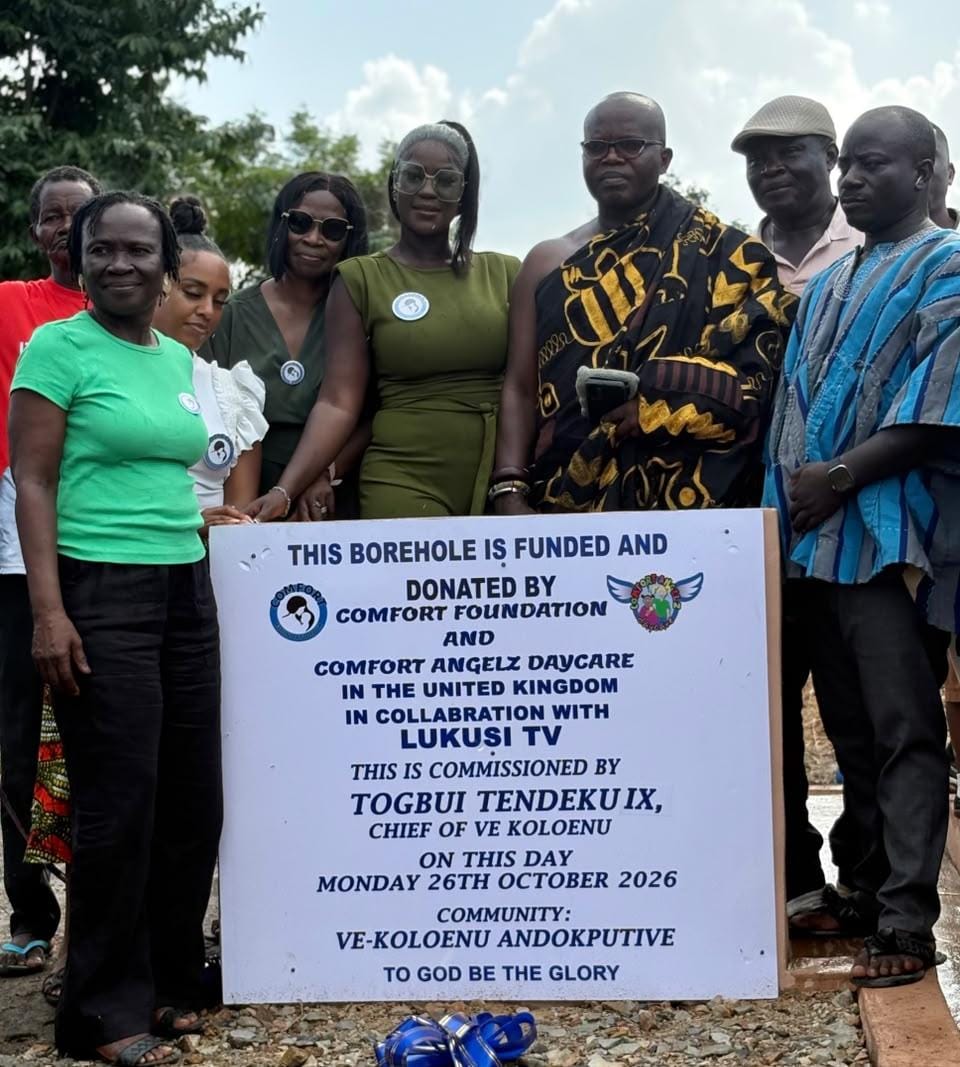
The United Kingdom-based Comfort Foundation has reached another milestone in its commitment to improving access to potable water in deprived communities across Ghana, completing its 20th borehole project in eight years as part of sustained efforts to address water shortages and improve living conditions in rural communities.
The latest achievement brings the foundation’s water intervention record to 20 boreholes since its establishment, with six constructed and commissioned in different communities in 2026 alone.
Led by its founder, Beverly Asieduah Annan-Forson, the foundation has over the years directed resources towards communities where residents have struggled to access safe drinking water, often forcing families, particularly women and children, to travel long distances in search of water for their daily needs.
The six communities benefiting from the foundation’s borehole projects this year are Ve-Koloenu Lomenava, Ve-Kolenu Andokputive, Gomoa Amoanda, Ansongkrom in Kwahu, Buabeng Clinic in Kwahu and the School for the
Deaf at Mampong-Akwapim.
The projects form part of a wider eight-year philanthropic effort focused on improving access to basic social amenities, particularly in underserved rural communities where inadequate water infrastructure continues to affect public health, education and household livelihoods.
From 14 boreholes To 20
Comfort Foundation’s latest milestone builds on an earlier record of 14 boreholes constructed in 14 different communities across Ghana.
In previous interventions, the foundation provided boreholes to communities including Odumase and Amanfrom, where residents had reportedly endured years of difficulties accessing potable water.
Before the intervention, families in these communities depended on distant and, in some cases, unsafe water sources. Children and women were among those most affected, as they often had to walk considerable distances to obtain water for drinking, cooking and other domestic activities.
The lack of reliable access to clean water exposed residents to waterborne diseases, including cholera and typhoid fever, while also placing additional pressure on households already facing difficult living conditions.
The commissioning of boreholes therefore provided more than a new source of water. It offered communities an opportunity to improve sanitation, hygiene and general health while reducing the burden associated with searching for water.
The foundation’s expansion from 14 boreholes to 20 over the eight-year period reflects the continuity of its water-access programme and its commitment to extending assistance to communities beyond major urban centres.
Foundation expands support to education and sanitation
While access to potable water remains one of its major priorities, Comfort Foundation’s work has extended beyond borehole construction to include interventions in education and sanitation.
During one of its previous community engagements, the foundation combined its water projects with educational support for schoolchildren, distributing schoolbags and learning materials to pupils.
The exercise was undertaken by the foundation’s team, including directors Faustina and Edmund Sackey, as part of efforts to support children from disadvantaged backgrounds and improve their access to essential educational materials.
The organisation also supported the construction of a toilet facility designed to serve more than 800 schoolchildren, addressing sanitation challenges within the beneficiary school’s environment.
The interventions reflect the foundation’s broader development approach, which recognises that access to clean water, proper sanitation and quality education are interconnected factors in improving the welfare of vulnerable communities.


