
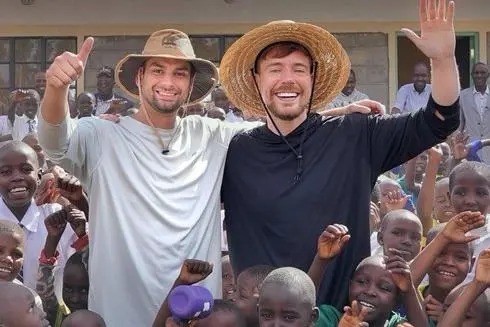
BY DANIEL BAMPOE
American YouTube superstar Jimmy Donaldson, popularly known as MrBeast, has unveiled a nearly US$10 million community development project in Ghana’s Eastern Region, bringing education, healthcare, clean water, electricity and food support to a cocoa-growing community.
The project, known as Abna Dakwa Village, was showcased in a video released on September 19, 2026, revealing an extensive development built on previously undeveloped land.
The initiative has been designed around a central goal: creating better living and educational opportunities for children and families in cocoa-producing communities where child labour remains a concern.
According to information released about the project, the community is home to approximately 1,062 residents and was developed around five major areas—education, clean water, healthcare, food and economic opportunities.
At the heart of Abna Dakwa Village is a newly constructed school capable of accommodating more than 300 students.
The development also includes 10 homes for teachers, intended to provide accommodation and help strengthen access to teaching staff within the community.
The school is supported by additional infrastructure designed to improve the overall welfare of pupils rather than focusing solely on classroom education.
A major component is a school feeding programme under which every student is expected to receive a free meal on each school day for the next five years.
The programme has support from The Rockefeller Foundation and is intended to improve nutrition, school attendance and learning outcomes while helping reduce pressures that can push children into labour.
Access to clean water is another major component of the project. Abna Dakwa Village features water towers and solar-powered water systems designed to provide residents with a more reliable source of clean water.
Solar infrastructure has also been installed to provide electricity to the community.
The use of solar power is particularly significant because the project is intended not simply as a short-term intervention but as infrastructure capable of supporting the community over the longer term.
The new settlement also includes a medical clinic, providing residents with healthcare services within the community.
A marketplace has been constructed to support commercial activity, while improved sanitation facilities form part of the broader development.
The combination of health, water, sanitation and electricity infrastructure means the project goes beyond the construction of a school and attempts to address several of the basic services required for a functioning community.
The project also incorporates facilities intended to support food production and economic activity. These include agricultural facilities, fish tanks and a chicken coop, creating opportunities for residents to engage in local food production.
The economic component is important to the project’s wider objective because improving household livelihoods can potentially reduce dependence on children’s labour and allow families to keep children in school.
A football field and children’s playground provide spaces for sports, entertainment and social interaction, giving children opportunities to participate in activities outside the classroom.
The project reportedly took approximately one year of planning and eight months of construction after work began on previously undeveloped land.
Its unveiling has attracted international attention because of the scale of the investment and the involvement of MrBeast, one of the world’s most prominent digital creators.
The 28-year-old YouTuber has built a global following through large-scale entertainment videos and philanthropic initiatives under his Beast Philanthropy organisation.
He is reported to have more than 500 million subscribers across his YouTube presence, giving his philanthropic projects an audience far beyond the communities in which they are implemented.
The Abna Dakwa development represents a different side of MrBeast’s increasingly prominent philanthropic work.
Rather than focusing on a single intervention, the Ghana project combines education, nutrition, healthcare, clean water, electricity, agriculture and community infrastructure.
Its stated objective is also connected to a major social issue within cocoa-growing areas: the need to ensure children have access to education and basic services rather than becoming trapped in exploitative forms of labour.


