By Nadia Ntiamoah
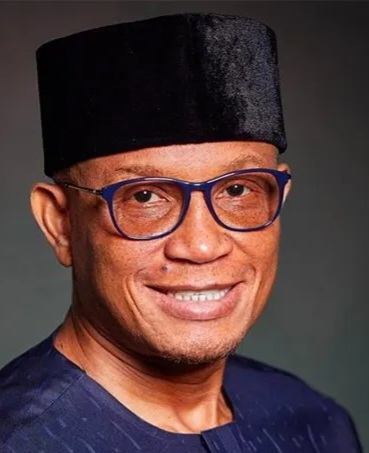
Former Minister and New Patriotic Party (NPP) stalwart, Shaykh Dr. Mustapha Abdul-Hamid, has rejected suggestions that Ghana could face an Islamisation agenda should former Vice President Dr. Mahamudu Bawumia eventually become President, describing such claims as inconsistent with the political history and voting patterns.
Speaking at the 2026 Liberty Lecture organised by the Danquah Institute at the Alisa Hotel, Dr. Abdul-Hamid argued that there is no evidence of a coordinated political or religious project among Ghanaian Muslims to transform the country into an Islamic state.
He said the voting behaviour of Muslims during the 2024 general election offered one of the clearest indications that religion does not determine the political choices of Ghanaian Muslims.
According to him, if there were a collective Muslim agenda to use political power to Islamise Ghana, Dr. Bawumia’s presidential candidacy would have provided an opportunity for such an agenda to manifest itself. Instead, he said, voting patterns showed that many predominantly Muslim communities supported President John Mahama, a Christian.
Dr. Abdul-Hamid cited constituencies including Ayawaso East, Ayawaso North, Asawase, Ejura, Tamale North, Tamale Central, Tamale South and Sagnarigu, which he said voted heavily for Mr Mahama despite Dr Bawumia being the Muslim presidential candidate of the NPP.
He also pointed to what he described as an equally significant pattern in predominantly Christian communities, where Dr Bawumia performed strongly despite some Christian parliamentary candidates contesting on the same NPP ticket.
He cited Assin South as a prominent example, saying Dr Bawumia secured more votes than the NPP’s parliamentary candidate, whom he described as a Minister of the gospel.
He further referenced voting results from a polling station near the Kumasi Central Mosque at Asawase, arguing that even after Dr Bawumia had refurbished the mosque in 2023, the polling station did not vote for the NPP in the subsequent election.
For Dr. Abdul-Hamid, these examples demonstrate that Ghanaian voters do not simply vote according to religious identity and that attempts to portray Dr. Bawumia’s political ambitions as a religious project distort the country’s electoral reality.
Northern Voting Pattern Challenges Islamisation Claims
Dr. Abdul-Hamid also relied on national election figures to strengthen his argument.
He said President Mahama obtained approximately 1.38 million votes from Ghana’s five northern regions—Savannah, Northern, Upper East, Upper West and North East—representing about 21 per cent of his nationwide total of 6,591,790 votes.
By comparison, he said Dr. Bawumia obtained 759,108 votes from the same five regions, representing about 15.56 per cent of his national total of 4,877,611 votes.
He argued that the figures make it difficult to sustain a narrative that Muslim voters were acting collectively to advance a religious political agenda.
“You cannot therefore dishonestly repackage this evidence to prophesy that electing Dr. Bawumia on an NPP ticket will suddenly shift the balance of power from south and from Christian to Muslim,” he said.
Bawumia’s Political Ambition Is Not Religious
Turning specifically to Dr. Bawumia’s credentials and political aspirations, Dr. Abdul-Hamid said the former Vice President’s professional and academic background points to a career focused on economics and economic development rather than religious transformation.
He argued that Dr. Bawumia’s education and professional life have centred on finding solutions to economic challenges and that his presidential ambitions should consequently be assessed within the context of national development rather than his religious identity.
Dr. Abdul-Hamid also recalled former President Nana Addo Dankwa Akufo-Addo’s explanation for selecting Dr. Bawumia as his running mate in 2016.
He said Nana Akufo-Addo had described Dr. Bawumia as someone he trusted and considered honest, hardworking, loyal and committed to finding solutions, adding that the former President believed Ghana would be in safe hands with him.
Arabic, Islamic Banking Debate
Dr. Abdul-Hamid also addressed concerns surrounding proposals to introduce Arabic as an optional language alongside Mandarin and the development of interest-free banking in Ghana.
He rejected suggestions that such policies should automatically be interpreted as steps towards Islamisation.
On Arabic, he stressed that the language and the Islamic faith are not synonymous, noting that Arabic is spoken by Arab Christians as well as Muslims.
He also pointed out that some of the world’s largest Muslim-majority populations do not speak Arabic, citing Indonesia, Pakistan, India, Bangladesh and Nigeria.
According to him, Ghana’s interest in Arabic could also have an economic dimension because the 22 Arab League countries represent a substantial market that Ghanaian businesses could seek to access.
He similarly defended interest-free banking, arguing that the concept should not be treated as exclusively Islamic.
He traced criticism of usury to periods predating Islam and cited the existence of Sharia-compliant financial institutions outside Muslim-majority countries, including Al-Rayan Bank in the United Kingdom.