
By Issah Olegor
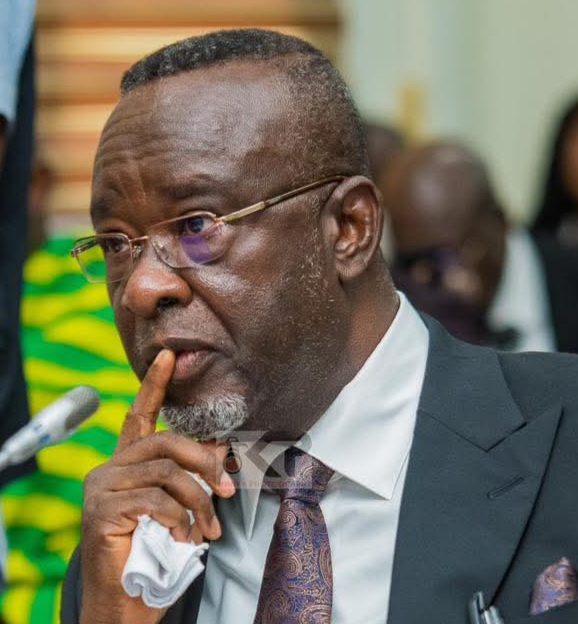
Parliament has confirmed Justice Paul Baffoe-Bonnie as the country’s next Chief Justice, capping weeks of political drama, legal tension, and public controversy that have cast a shadow over the nation’s judiciary.
The confirmation, which took place on Thursday, November 13, followed a stormy vetting process and a deep partisan divide between the Majority and Minority caucuses.
The appointment, pushed through by a majority decision, came despite the Minority’s open rejection of the process, describing it as unconstitutional and tainted by unresolved lawsuits challenging the removal of former Chief Justice Gertrude Araba Esaaba Torkornoo.
From Torkornoo’s Ouster To A Judicial Crisis
The controversy traces back to August 2025, when President John Dramani Mahama removed Chief Justice Torkornoo after her suspension, citing “administrative lapses and ethical breaches.”
The move immediately sparked outrage from the legal community, opposition parties, and civil society groups, who argued that the President had overstepped his constitutional mandate.
Her suspension led to seven separate lawsuits—filed at the Supreme Court, the High Court, and the ECOWAS Court of Justice—all questioning the legality of her removal and the constitutional procedure adopted.
Legal analysts say these cases are still pending, creating what the New Patriotic Party (NPP) described as “a constitutional crisis and an assault on judicial independence.”
It was against this backdrop that Justice Paul Baffoe-Bonnie, a senior Supreme Court Judge and long-time judicial figure, was nominated by the President to replace Chief Justice Gertrude Torkornoo.
The nomination was immediately met with skepticism from opposition MPs and sections of the legal fraternity, who cited a potential conflict of interest—as Justice Baffoe-Bonnie had sat on a Supreme Court panel that ruled on preliminary proceedings related to Torkornoo’s removal.
A Vetting Clouded
The Appointments Committee of Parliament began vetting Justice Baffoe-Bonnie on Monday, November 10, but the process was anything but smooth.
The Minority Leader, Alexander Afenyo-Markin, described the nominee as a “disputed candidate,” drawing sharp protests from Majority Leader Mahama Ayariga, who insisted that Parliament had already settled the legality of the process through a prior ruling.
Afenyo-Markin’s remarks led to heated exchanges on the floor, with the Minority accusing the Majority of “political intimidation” and “executive manipulation” of the judiciary.
The session became even more dramatic when Minority MPs staged a walkout, vowing not to “lend legitimacy to a process that violates Ghana’s Constitution.”
In their absence, the Committee—dominated by the Majority—went ahead with its deliberations
Presenting its findings later in the week, the Committee’s Chair, Bernard Ahiafor, praised Justice Baffoe-Bonnie for his “deep knowledge of the law, ethical discipline, and intellectual clarity,” recommending him for approval.
The Final Showdown In Parliament
On Thursday, November 13, the report was laid before the plenary for debate and adoption.
The Majority backed the motion for Justice Baffoe-Bonnie’s approval, while the Minority opposed it, calling for a secret ballot to formally register their rejection.
When Speaker Alban Bagbin put the question to a voice vote, he declared, “The ayes have it.”
The Minority immediately challenged the ruling under Order 151(3), demanding a headcount. The result saw 169 votes for the Majority and 63 for the Minority—a clear partisan split.
But even the headcount did not end the dispute. Tolon MP and Deputy Minority Chief Whip, Habib Iddrisu contested the tally, alleging that non-MPs, including the Ashanti Regional Minister, were still seated in the chamber during voting.
His call for a division vote (a secret ballot) was denied, prompting fresh accusations of procedural manipulation.
The Speaker, however, stood by his ruling: “Honourable Members, I am satisfied that the ayes have it. Justice Baffoe-Bonnie is hereby approved as the Chief Justice of the Republic of Ghana.”
Minority Cries Foul, Majority Celebrates
The Minority Caucus, in a strongly worded statement after the session, reiterated its opposition, saying:
“We reject the appointment of Justice Baffoe-Bonnie as unconstitutional and politically engineered. His confirmation undermines the sanctity of judicial independence and the integrity of the democracy.”
The NPP, echoing this sentiment in an earlier press statement, warned that the appointment “could collapse the separation of powers,” accusing the government of using “brute political force to desecrate the Constitution.”
The Majority, on the other hand, hailed the confirmation as “a victory for institutional continuity,” with Majority Leader Mahama Ayariga describing Justice Baffoe-Bonnie as “a man of impeccable character and unmatched judicial experience.”
Who Is Justice Paul Baffoe-Bonnie?
Justice Baffoe-Bonnie has served on the Supreme Court since 2008, making him one of the judiciary’s longest-serving members.
He has been involved in several landmark rulings, including cases on electoral disputes and constitutional interpretation.
During his vetting, he outlined a three-pillar reform agenda: ensuring judicial efficiency, promoting transparency, and strengthening public trust in the courts.
Despite these pledges, critics argue that his association with recent constitutional controversies and his prior involvement in cases linked to the Torkornoo saga have left “a shadow of doubt” over his impartiality.
The Road Ahead
Justice Baffoe-Bonnie is expected to be sworn in by President Mahama in the coming days at the Jubilee House, amid growing public debate over the politicization of the judiciary.
Legal experts warn that if the pending court cases on Chief Justice Gertrude Araba Torkornoo’s removal rule against the government, the new Chief Justice’s appointment could face legitimacy challenges.


