
By Daniel Bampoe
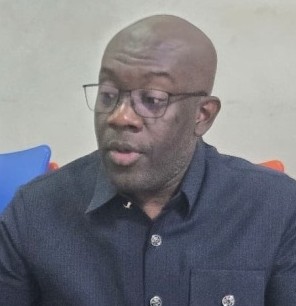
Member of Parliament for Ofoase-Ayirebi, Kojo Oppong Nkrumah, has warned that Ghana’s democratic progress is at risk if accountability continues to be influenced by political party affiliations, arguing that selective demands for transparency and responsibility could weaken the country’s democratic institutions.
He said the practice of demanding accountability only when political opponents are in government, while overlooking alleged wrongdoing by members of one’s own political party, undermines the principles of democratic governance and creates room for impunity.
According to the former Information Minister, accountability must be applied consistently, regardless of the political identity of individuals or institutions involved in matters of public interest.
Speaking at the Geneva Institute for Leadership & Public Policy (GILPP) Regional Conference 2026, Oppong Nkrumah identified partisanship as one of the major challenges confronting accountability in Ghana’s democracy.
“The major problem with accountability in our democracy is that it’s partisan. Depending on who is in power, there’s accountability, and depending on whose party is being asked to account, people turn a blind eye to the question of accountability,” he stated.
He argued that such an approach weakens the country’s ability to hold public officials and institutions responsible for their decisions and actions, particularly when political considerations influence public reactions to issues of national importance.
The Ofoase-Ayirebi MP also raised concerns about the role of Parliament in promoting accountability, questioning why some requests for parliamentary inquiries into matters of national interest reportedly face resistance.
He maintained that the parliamentary majority should not use its numerical strength to prevent investigations or scrutiny of issues that deserve public attention.
According to him, the existence of a majority in Parliament should not become a reason for blocking efforts to establish the facts surrounding matters affecting the country.
“There are major issues of national interest that we’re asking Parliament to have an opportunity to conduct an inquiry into. The simple truth is that because there’s a majority in power, there’s a Speaker who is with the majority, and they do not desire a shining of the light on what is happening,” he said.
Oppong Nkrumah’s comments highlight the continuing debate over the effectiveness of parliamentary oversight and the extent to which political majorities should facilitate investigations into issues raised by minority lawmakers.
He suggested that Parliament must remain an institution where matters of public concern can be examined without undue political interference, insisting that accountability should not depend on which political party controls the legislature.
Beyond Parliament, the former minister also questioned the consistency of civil society organisations and other accountability institutions in pursuing issues involving public officials and institutions.
He argued that some organisations appear to demonstrate different levels of urgency depending on the political interests or affiliations of those involved, a situation he believes undermines public confidence in their watchdog responsibilities.
To illustrate his concerns, Oppong Nkrumah referred to allegations involving a headmaster in Obuasi who has been accused of sexually abusing several female students.
He questioned whether sufficient pressure was being brought to bear on the Ghana Education Service to ensure that the allegations were properly addressed and that the necessary accountability measures were pursued.
The MP’s reference to the case also drew attention to the responsibility of educational authorities to protect students, respond appropriately to allegations of abuse and ensure that those entrusted with the care and supervision of children are held accountable where wrongdoing is established.
He suggested that civil society organisations and other stakeholders should demonstrate the same level of commitment to accountability regardless of the individuals or institutions involved.
His broader argument was that Ghana cannot build strong democratic institutions if accountability is treated as a political weapon rather than a national responsibility.
Oppong Nkrumah’s remarks come amid recurring disagreements between the parliamentary Majority and Minority over investigations into public expenditure, government decisions and other issues of national interest.
The Minority has frequently called for parliamentary scrutiny of matters it considers controversial, while the Majority’s position on some of these requests has generated political debate over the effectiveness of parliamentary oversight.
The MP’s intervention at the GILPP Regional Conference 2026 therefore places renewed emphasis on the need for consistency, independence and fairness in the country’s accountability processes.
He maintained that political loyalty should not determine whether citizens, civil society groups, Parliament and other institutions demand answers from public officials.
He warned that when wrongdoing is overlooked because of political affiliation, the country risks weakening the very democratic principles that allow public officials to be questioned and held responsible for their actions.


