BY Grace Zigah
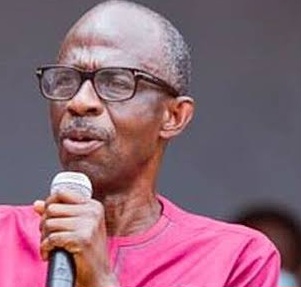
A sharp public disagreement has erupted within the National Democratic Congress (NDC) over recent polling data on the party’s potential 2028 flagbearer, after former Kumbungu Member of Parliament, Ras Mubarak, strongly criticized a survey conducted by Global InfoAnalytics.
The controversy was triggered by a poll released by pollster Mussa Dankwah, Executive Director of Global InfoAnalytics, which ranked Finance Minister Dr. Cassiel Ato Forson as the leading contender in the post-Mahama era with 32 percent support.
The survey further placed NDC National Chairman Johnson Asiedu Nketiah at 25 percent, Education Minister Haruna Iddrisu at 23 percent, and Vice President Prof. Jane Naana Opoku-Agyemang at 14 percent.
Notably absent from the list, however, was Chief of Staff Julius Debrah—an omission that has sparked criticism and raised questions within party circles.
Reacting to the poll, Ras Mubarak dismissed its credibility, arguing that any serious assessment of the NDC’s future leadership must include Debrah as a major contender.
“Any poll that does not feature the Chief of Staff, Julius Debrah, as a leading candidate should be taken with a very big pinch of salt,” he stated.
Ras Mubarak’s intervention reflects growing internal debate within the NDC over who is best positioned to lead the party after President John Dramani Mahama, whose current term is expected to end in 2029 in line with constitutional limits.
Julius Debrah, who currently serves as Chief of Staff, has in recent months built a visible grassroots presence, particularly through nationwide “keep fit” exercises that have increased his popularity among party supporters. His rising profile has earned him the nickname “Kwaku Azameti,” with some observers suggesting he could emerge as a formidable contender if he chooses to enter the race.
The exclusion of Julius Debrah from the Global InfoAnalytics poll has therefore raised eyebrows, with some within the party questioning whether it was an oversight or a deliberate decision. Unverified claims have also surfaced suggesting tensions between the pollster and the Chief of Staff’s camp, although no official confirmation has been provided.
Efforts to obtain a response from Mussa Dankwah on these allegations have so far been unsuccessful. Mussa Dankwah is alleged to be closed to Church Street, the powerhouse of NDC outside Jubilee House where the Fante Confederacy meets and plots the future direction of the party.
The dispute comes at a time when polling data has increasingly become a key tool in shaping political narratives within the NDC.
Tracking polls released by Global InfoAnalytics throughout 2025 and early 2026 have shown shifting dynamics in the party’s internal race.
Earlier data suggested a tight contest between Ato Forson and Haruna Iddrisu, with both figures emerging as strong contenders.
However, more recent figures indicate that Ato Forson has surged ahead, reflecting what analysts describe as a broader shift toward technocratic leadership within the party.
At the same time, previous polls had also placed Vice President Prof. Jane Naana Opoku-Agyemang among the most preferred candidates at certain points, highlighting the fluid nature of the race. Despite these internal contests, Global InfoAnalytics data suggests that the NDC remains in a strong electoral position heading into 2028, with many of its potential candidates outperforming their New Patriotic Party (NPP) counterparts in early voter sentiment tracking.
The polls also indicate a possible decline in NPP support following the 2024 elections, further strengthening the NDC’s prospects.
However, the growing reliance on polling data has also exposed divisions within the party, with some members questioning the methodology, intent, and political implications of such surveys.
For critics like Ras Mubarak, the issue is not just about numbers, but representation. His defense of Julius Debrah underscores a broader concern that certain influential figures may be overlooked in shaping the party’s future leadership narrative.