BY Nadia Ntiamoah
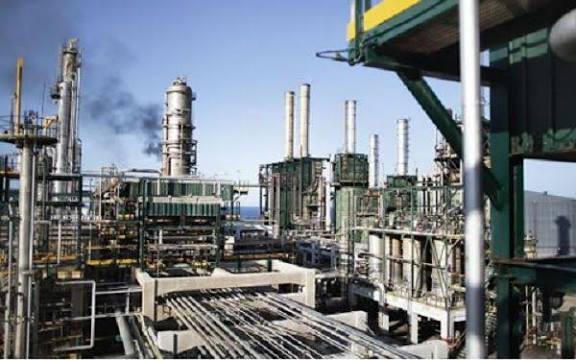
After years of uncertainty, operational shutdowns, and mounting concerns over the fuel security, the Tema Oil Refinery (TOR) has finally resumed crude oil refining, marking a major turning point in the country’s downstream petroleum sector.
The restart of operations follows the successful completion of extensive maintenance works aimed at restoring the refinery’s operational integrity and long-term viability.
The revival comes after a prolonged period of inactivity that had left Ghana increasingly dependent on imported refined petroleum products.
TOR, once the backbone of the energy infrastructure, had struggled for years with aging equipment, financial constraints, and repeated shutdowns that undermined its capacity to function at optimal levels.
The latest development signals a renewed effort by the state to reverse that decline and reposition the refinery as a strategic national asset.
According to management, the refinery resumed operations after the successful execution of a comprehensive Turnaround Maintenance (TAM) programme on its Crude Distillation Unit (CDU).
The maintenance works, which ran from August 1 to October 30, were carried out in line with internationally accepted engineering, safety and operational standards.
The exercise marked the first major overhaul of the facility in several years and was critical to restoring operational reliability.
Following the completion of the maintenance works, the National Petroleum Authority (NPA) conducted a detailed regulatory inspection to assess safety compliance, operational readiness and environmental standards.
After satisfying itself that all regulatory conditions had been met, the Authority granted TOR the necessary clearance to resume refining operations.
In a statement announcing the resumption, TOR explained that production would initially begin under a phased operational framework.
This approach, management noted, is designed to allow for system stabilization, performance testing and gradual optimization before full-scale operations resume.
The phased process is also expected to minimize operational risks and ensure long-term sustainability.
As part of its broader rehabilitation programme, the refinery has also completed the installation of a new furnace, known as F-61. Once fully commissioned and integrated into the Crude Distillation Unit, the new furnace is expected to significantly boost output.
TOR estimates that its installation will restore the refinery’s nameplate capacity to 45,000 barrels per stream day, up from the current operational level of about 28,000 barrels per day.
In the medium term, management has indicated plans to further expand capacity to 60,000 barrels per stream day through the installation of an additional air cooler.
The government is expected to formally commission the new furnace at a later date, with details of the ceremony to be announced in due course.
The refinery’s management has credited the progress made so far to sustained government backing, particularly the support of President John Dramani Mahama, whom it says has played a critical role in championing the revival of the facility as a strategic national asset.
The Energy and Green Transition Minister, Dr. John Abdulai Jinapor, was also acknowledged for providing policy direction and technical oversight throughout the restoration process.
TOR further commended its board, management team and workforce for their resilience and commitment during what it described as a challenging but transformative period.
The company reiterated its commitment to operating safely, efficiently and sustainably as it works to re-establish itself as a cornerstone of the energy supply chain.