BY Nadia Ntiamoah
Second Deputy Governor of the Bank of Ghana, Matilda Asante-Asiedu, has declared that the economy has emerged from one of its most challenging periods in recent history, but cautioned that preserving the gains achieved through painful reforms will require continued discipline from policymakers, businesses and financial institutions.
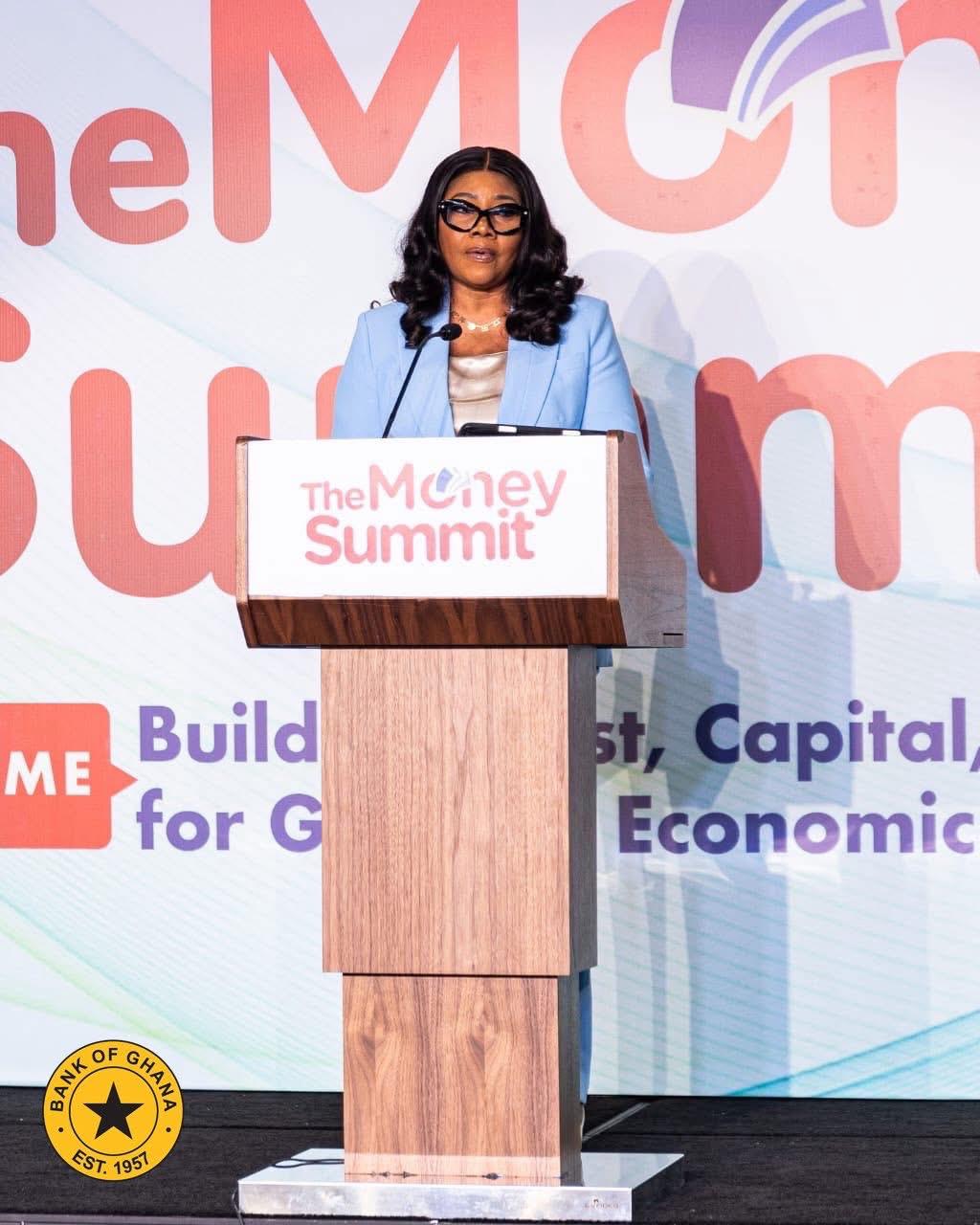
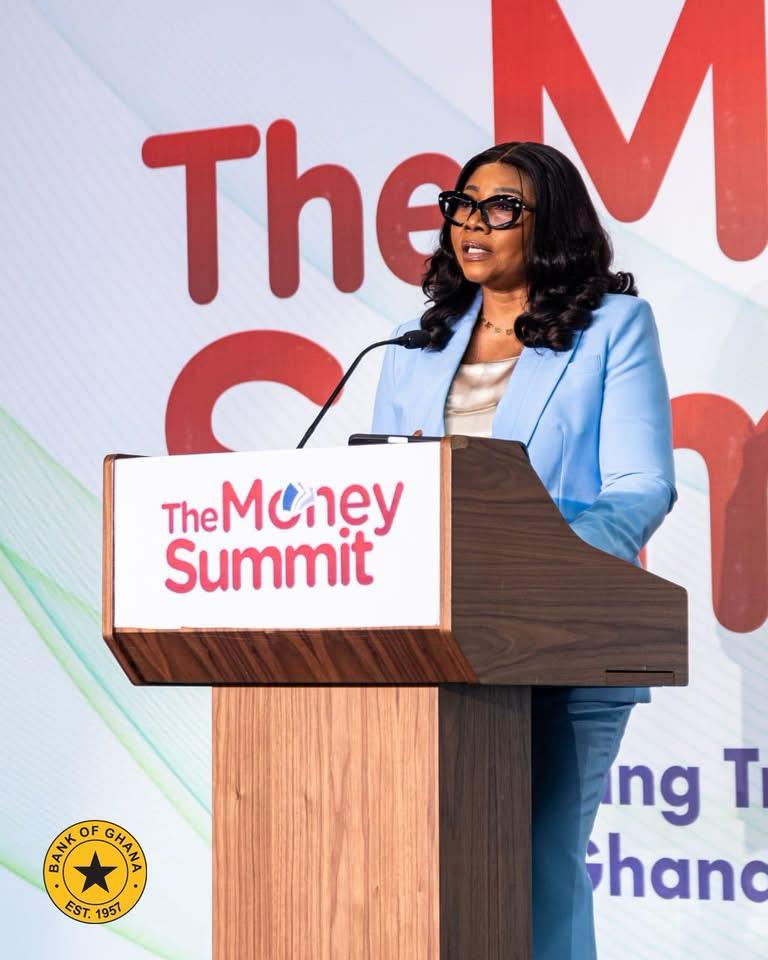
Delivering the keynote address at The Money Summit 2026 in Accra on Tuesday, June 2, Asante-Asiedu said Ghana had successfully secured macroeconomic stability after years of turbulence, but warned that the next and more difficult phase would be ensuring that the recovery remains sustainable.
Speaking on the summit’s theme, “Building Trust, Capital and Stability for Ghana’s Economic Future,” the Second Deputy Governor argued that the country’s recent economic turnaround should not be taken for granted, particularly as global uncertainties continue to threaten emerging economies.
According to her, the economy has undergone a remarkable transformation within a relatively short period.
She noted that headline inflation, which stood at 23.8 percent at the end of 2024, had declined sharply to approximately 3.4 percent by April 2026, bringing inflation comfortably within single-digit territory and, at some points, below the Bank of Ghana’s medium-term target band.
She explained that food inflation, which disproportionately affects ordinary households, had also witnessed a dramatic decline from nearly 28 percent to just over 2 percent during the same period.
The significant reduction in inflation, she said, had created room for the central bank to aggressively ease monetary policy and lower borrowing costs across the economy.
Asante-Asiedu pointed out that the Monetary Policy Rate had been reduced from 27 percent to 14 percent, while the benchmark 91-day Treasury bill rate had dropped from 28 percent to below 5 percent. Average lending rates, which exceeded 30 percent at the height of the economic crisis, have also fallen to around 16 percent.
“For every business in this room, that is the difference between credit that strangles and credit that fosters growth,” she remarked.

Beyond inflation and interest rates, the Deputy Governor highlighted improvements in the external sector, revealing that Gross International Reserves had increased from approximately US$9 billion to more than US$14 billion within two years.
She attributed the reserve build-up largely to strong gold export receipts, improved fiscal discipline and reforms in foreign exchange market management.
She further noted that the current account remains in surplus while economic growth continues to outperform expectations, describing the overall economy as stable and on a stronger footing than it was two years ago.
Reflecting on the country’s recent economic journey, Asante-Asiedu said stabilisation programmes of this magnitude often take many years to achieve, making the progress particularly significant.
“To sum it all up, our economy is well and stable,” she told participants.
However, she warned that the gains remain fragile and could easily be reversed if policymakers and economic actors become complacent. She stressed that geopolitical tensions, volatility in global oil markets and domestic policy slippages continue to pose significant risks.
The Deputy Governor also used the platform to explain Ghana’s transition from the International Monetary Fund’s Extended Credit Facility (ECF) programme to a Policy Coordination Instrument (PCI) arrangement.
According to her, the shift marks an important turning point because Ghana will no longer rely on IMF financing but will instead be assessed based on its commitment to implementing sound economic policies.
“The Policy Coordination Instrument is no longer about borrowing; it is about monitoring our own reforms,” she explained.
She added that under the new arrangement, the credibility would depend entirely on the consistency and quality of its economic management.
She argued that trust, capital and stability are interconnected pillars of sustainable economic development.
She described trust as the foundation upon which financial systems operate, noting that deposits, loans and even currencies ultimately depend on confidence.
She stressed that investors are attracted to countries where institutions are credible, regulations are predictable and economic policies remain consistent over time.
According to her, trust reduces risk perceptions and lowers the cost of capital, making it easier for businesses to access long-term financing.
Despite recent progress, she expressed concern that private-sector credit in Ghana remains relatively low, accounting for less than 10 percent of Gross Domestic Product.
“A stable economy that does not lend to its farmers and firms has only done half the job,” she cautioned.
The Deputy Governor challenged businesses and industry associations to strengthen internal accountability structures that could help reduce lending risks and ultimately lower borrowing costs.
On the issue of stability, she emphasised that low inflation, adequate foreign reserves and a well-functioning foreign exchange market are essential for maintaining confidence and encouraging investment.
She noted that economic expectations often become self-fulfilling, arguing that confidence in future stability plays a critical role in sustaining current gains.
“In economics, expectations are very nearly self-fulfilling. If you believe inflation will stay low, you price as though it will, and it does,” she said.
Outlining the Bank of Ghana’s priorities going forward, Asante-Asiedu pledged that the central bank would continue to safeguard price stability and respond swiftly to any inflationary threats.
She explained that maintaining low inflation is critical because it supports low interest rates, affordable credit and business expansion.
The Deputy Governor also announced that the central bank would continue to strengthen the external buffers by increasing reserve accumulation through the Ghana Accelerated National Reserve Accumulation Programme (GANRAP).
She disclosed that the Bank is targeting a reserve position equivalent to six months of import cover in the short term and fifteen months of import cover over the medium term.
Addressing the foreign exchange market, she urged businesses, banks, importers and investors to avoid speculative activities that could undermine the cedi.
Referring to the cedi’s remarkable performance in 2025, she said those who bet against the local currency and hoarded foreign exchange suffered significant losses as the currency staged one of the strongest recoveries globally.