BY Grace Zigah
Authorities in the Central Region have launched an urgent public health intervention following recent flooding incidents that submerged sections of cemeteries and raised concerns about potential outbreak of disease in several affected communities.
The National Disaster Management Organisation (NADMO), working in collaboration with the Ghana Health Service and National Security, has announced plans to embark on a large-scale fumigation exercise in flood-hit areas as part of efforts to prevent the spread of water-borne diseases and other environmental health risks.
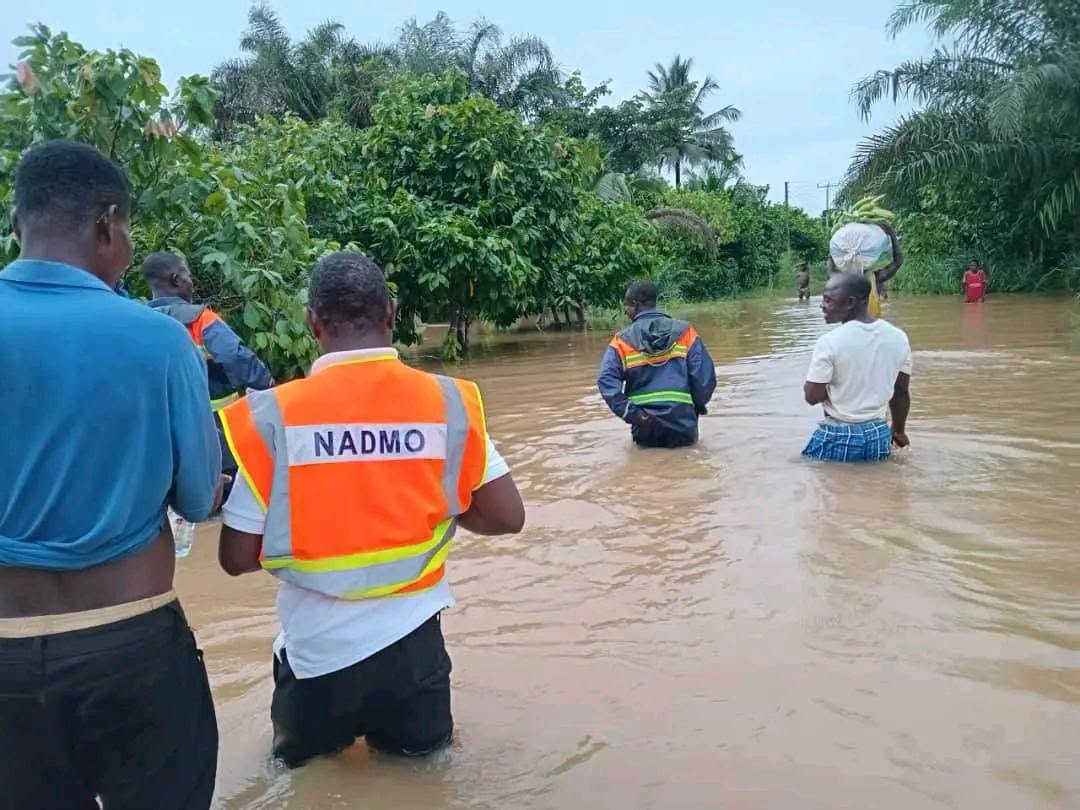
The intervention comes in the aftermath of heavy rains that swept across parts of the Central Region, claiming 18 lives and affecting over 5,000 people in 13 districts.
The unprecedented rains caused widespread flooding, destruction of property, displacement of residents and disruption of economic activities.
The floods affected several communities and left emergency response agencies battling to rescue stranded residents and provide assistance to victims.
Speaking on the situation, Central Regional Director of NADMO, Kwesi Dawood, disclosed that the decision to fumigate affected communities became necessary after floodwaters inundated portions of cemeteries in some areas, creating fears of possible contamination and public health complications.
According to him, disaster management officials have already begun collaborating with key institutions to implement preventive measures aimed at protecting residents from potential outbreaks of diseases commonly associated with flooding.
“We are also collaborating with other institutions in the region to embark on fumigation in some sections of the flooded areas. We had some flooding in cemeteries in the area, and when issues like this happen, we have to do the fumigation to curb the likes of water-borne diseases and other health risks that we do not want,” Dawood explained.
He noted that the exercise forms part of a broader emergency response strategy designed to reduce environmental hazards and ensure that communities affected by the floods do not experience secondary public health crises after the waters recede.
The Central Regional NADMO Director emphasized that prompt intervention is critical because floodwaters often carry contaminants that can increase the risk of diseases such as cholera, typhoid fever and other infections if preventive measures are not taken quickly.
Beyond the planned fumigation exercise, NADMO is continuing its assessment of the full extent of damage caused by the flooding while coordinating relief efforts for affected residents.
The recent flooding has once again highlighted the vulnerability of several communities in the Central Region to seasonal heavy rains.
Over the years, recurring floods have caused significant damage to homes, businesses and public infrastructure, prompting repeated calls for improved drainage systems and long-term flood mitigation measures.
NADMO has assured the public that it will continue to work closely with the Ghana Health Service, National Security and other stakeholders to monitor conditions in the affected communities, provide relief assistance and implement measures necessary to safeguard lives and public health.
The organisation says the emergency fumigation exercise will commence in the coming days as part of ongoing efforts to restore normalcy and protect communities from the lingering effects of one of the region’s most destructive flooding incidents in recent months.