
By Grace Zigah
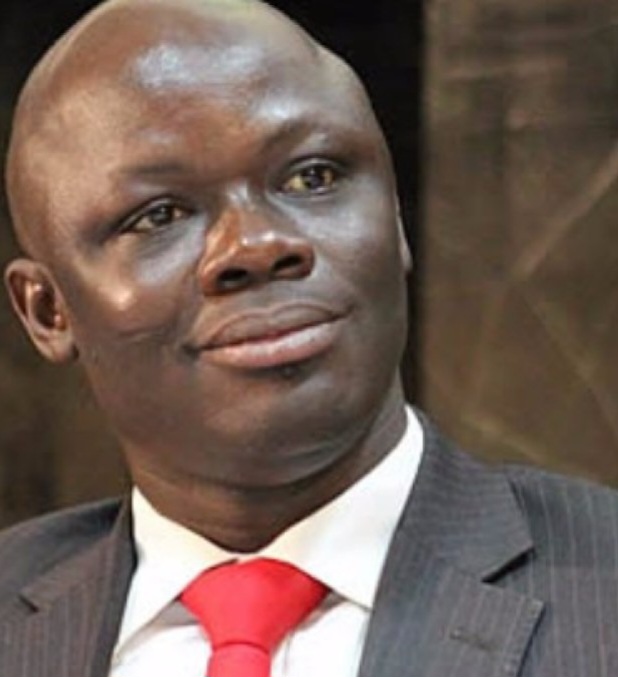
Private legal practitioner and broadcaster Samson Lardy Anyenini has mounted a strong public critique of the Attorney-General’s handling of the Nana Agradaa case, calling on the state to immediately challenge the reduction of her prison sentence at the Court of Appeal in order to protect public interest and uphold the integrity of the justice system.
Speaking on JoyNews’ NewsFile programme on Saturday, February 7, 2026, Anyenini expressed deep concern over what he described as the Attorney-General’s apparent inaction following the decision of the Amasaman High Court to reduce the jail term of Evangelist Patricia Asiedua Asiamah, popularly known as Nana Agradaa, from 15 years to 12 calendar months.
The High Court, while upholding her conviction, ruled that the original sentence imposed by the trial court was harsh, excessive, and disproportionate, and therefore exercised its discretionary powers to vary the punishment.
The revised sentence was made retrospective, taking effect from the date of her conviction on July 3, 2025, meaning she is expected to complete her sentence in July 2026.
Anyenini argued that the matter should not end at the High Court level, stressing that the Attorney-General has a constitutional and institutional responsibility to appeal the reduction in order to safeguard public confidence in the criminal justice system.
“This is not a situation where you sit back and say, ‘I secured fifteen years, the court reduced it to one year, and my work is done.’ No. The state that employs you expects you to pursue this matter to the Court of Appeal and have that sentence reversed,” he stated.
He questioned the legal logic behind maintaining the conviction while drastically reducing the sentence, noting that the presiding judge had acknowledged that the circuit court judge acted properly in securing the conviction.
According to Samson Anyenini, this contradiction raises serious legal and moral concerns about the justification for such a significant reduction in punishment.
Placing the matter within a broader legal context, Anyenini referenced the sentencing framework, explaining that statutory limits exist for both misdemeanours and felonies.
He noted that Agradaa was convicted of a misdemeanour and a second-degree felony, and even under older sentencing regimes, custodial limits were clearly defined. In his view, sentencing thresholds exist to ensure consistency, deterrence, and fairness in the justice system.

Beyond the technical legal arguments, Anyenini framed the issue as one of public safety and moral accountability, warning that failure to appeal the ruling could weaken public trust and embolden fraudulent religious actors.
“If the state fails to appeal this reduction, it sends a dangerous message and amounts to abandoning its duty to protect the public from spiritual predators,” he warned.
He further raised concerns about what he described as selective justice, arguing that leniency should not be applied disproportionately to high-profile or so-called “repentant” figures while ordinary citizens face harsh punishment for minor offences.
“The so-called repentant are given a free pass, while the poor languish in prison for stealing a goat.
Attorney-General, it is time to act. Reverse this sledgehammer ruling and restore the teeth of our criminal justice system,” he said.
Nana Agradaa was convicted for charlatanic advertisement and defrauding by false pretence after promoting a money-doubling scheme through television broadcasts and church services, persuading members of the public to hand over money with promises of supernatural financial multiplication.

The case, which began in 2022, culminated in her conviction on July 3, 2025, and her incarceration at the Nsawam Female Prison.
The High Court’s decision to reduce her sentence has since generated nationwide debate, with divided public opinion over whether the ruling represents judicial fairness or excessive leniency.


