By Daniel Bampoe
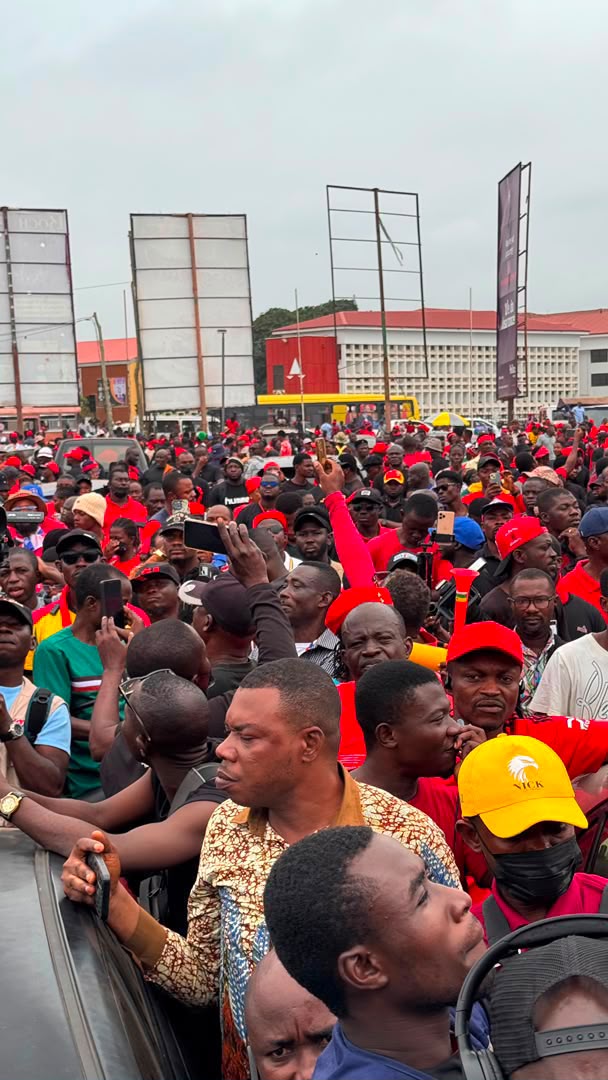
Thousands of supporters of the opposition New Patriotic Party (NPP), led by the party’s national executive, Members of Parliament and other senior officials, poured onto the streets of Accra on Thursday, August 6, in a massive demonstration against the John Dramani Mahama administration, accusing the government of undermining democracy, promoting selective justice and using state institutions to intimidate political opponents.
The nationwide protest, dubbed “Democracy Under Attack,” saw the NPP march through the principal streets of the capital before presenting separate petitions to the Supreme Court and the Presidency.
The party said the demonstration was intended to draw national attention to what it described as increasing attacks on judicial independence, arbitrary arrests, political intimidation and the erosion of the rule of law under the current administration.
The demonstration attracted a large number of NPP Members of Parliament, national executive, constituency leaders, party supporters and other sympathisers, making it one of the biggest opposition protests since the National Democratic Congress (NDC) returned to power.
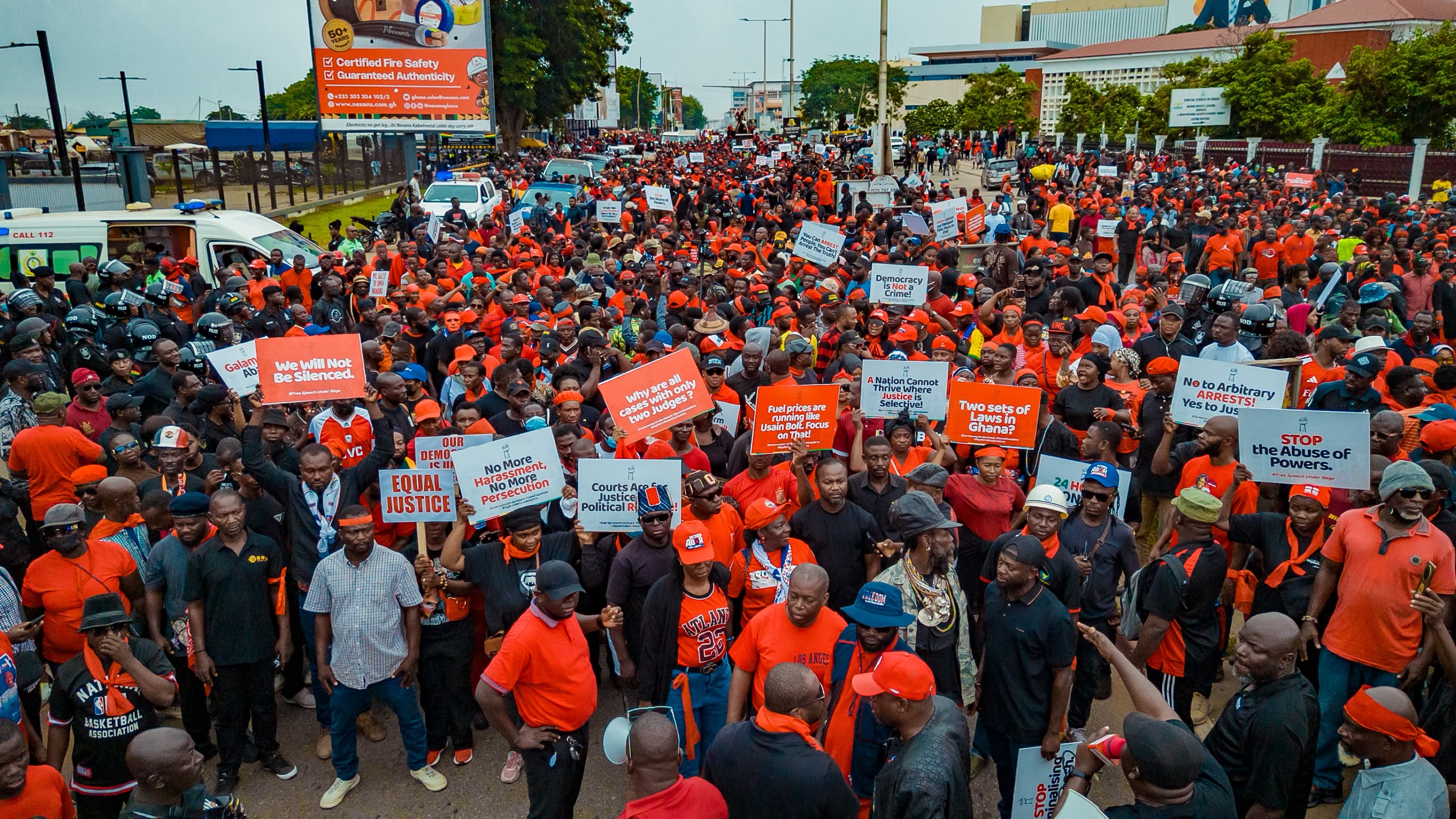
The first stop of the march was the Supreme Court, where party leaders presented a petition expressing concern over what they described as growing threats to the independence of the judiciary and the country’s democratic institutions.
The protesters later proceeded to the Jubilee House to submit a second petition addressed to President John Dramani Mahama.
However, the presentation of the petition at the Presidency was briefly delayed after the NPP objected to the government’s decision to assign only Presidential Staffer Nana Yaa Jantuah to receive the document on behalf of the President.
Minority Leader Alexander Afenyo-Markin described the government’s decision as disrespectful, arguing that the NPP had assembled its highest-ranking leadership, including Members of Parliament, the party’s General Secretary, the Chief of Staff to the party’s 2028 flagbearer, the Chairman of the Constitutional Committee and other senior officials, to present the petition.
“With great respect and without prejudice to your person, to nominate only you to come amounts to disrespecting us as a political party,” Afenyo-Markin stated during the brief exchange with Nana Yaa Jantuah.
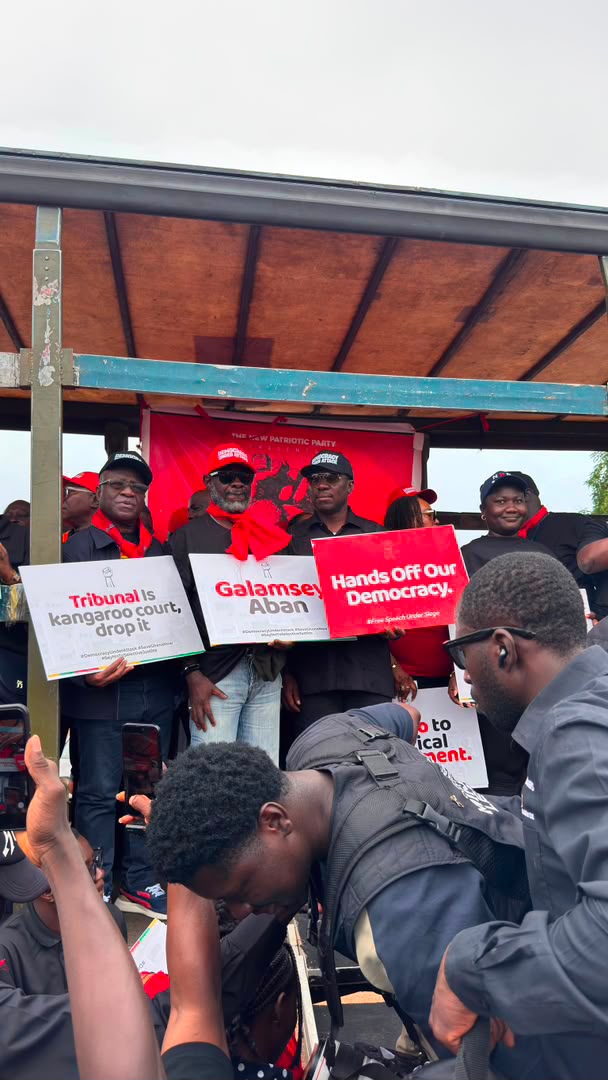
Despite the disagreement, the NPP proceeded with the presentation in what party leaders described as the interest of protecting the democracy.
The petition was eventually presented on behalf of the party by the NPP’s Deputy National Youth Organiser.
Addressing the gathering, Afenyo-Markin accused the Mahama administration of abandoning key campaign promises, including commitments on job creation, the proposed 24-hour economy, electricity tariffs and cocoa prices, while allegedly concentrating its efforts on persecuting political opponents.
The Minority Leader also questioned the imprisonment of NPP Ashanti Regional Chairman Bernard Antwi Boasiako, popularly known as Chairman Wontumi, arguing that the circumstances surrounding his conviction had raised serious public concerns.
He further criticised the removal of the former Chief Justice, alleging that the development formed part of attempts to influence the judiciary.
According to him, the decision to continue hearing criminal cases involving some NPP officials during the legal vacation also raised questions about fairness and due process.
The Minority Leader additionally accused the Economic and Organised Crime Office (EOCO) of imposing what he described as excessive bail conditions on opposition figures by demanding landed properties worth millions of cedis before granting bail.
Afenyo-Markin cautioned the government against using state institutions to target political opponents, reminding the NDC that no political party remains in power forever.
He said the NPP could return to government after the 2028 general election and urged the current administration to uphold democratic principles and protect the rule of law.
Referring to recent discussions surrounding the International Monetary Fund’s assessment of the economy, he also argued that allegations of financial impropriety involving public institutions should remind government officials that they too could face scrutiny in the future.
“We are saying democracy is under attack, and let us all take steps as players in the governance structure to correct it and make Ghana a better place,” Afenyo-Markin declared.
The demonstration follows weeks of heightened political tension, with the opposition accusing the government of selective justice and political persecution, while the Mahama administration has consistently maintained that state institutions are acting independently and in accordance with the law.
The petitions presented to both the Supreme Court and the Presidency are expected to form part of the NPP’s continued campaign demanding what it describes as greater respect for constitutional governance, judicial independence and the protection of democratic rights in Ghana.