BY Nadia Ntiamoah
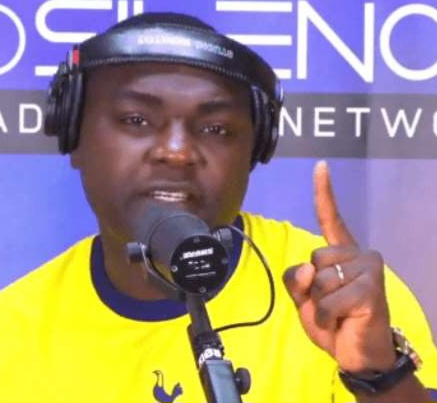
A growing online confrontation between social media commentator Ghana Jollof and US-based Ghanaian broadcaster Kelvin Taylor has developed into a wider political debate over the limits of political commentary, personal attacks and the apparent double standards surrounding aggressive rhetoric in the highly polarised political environment.
What began as a clash over the style and targets of political commentary has increasingly attracted politicians, lawyers, activists and social media users, with opposing sides debating whether the response to controversial political speech should be another counterattack, a call for restraint or stronger standards for public discourse.
At the centre of the controversy is Ghana Jollof, an anonymous online commentator who has taken issue with Taylor’s repeated attacks on political figures, particularly personalities associated with the New Patriotic Party (NPP).
Ghana Jollof then returned the attacks on NDC figures dragging them in the mud.
The dispute has reportedly included criticism of Taylor’s remarks about former Vice President Dr Mahamudu Bawumia and his wife, Samira Bawumia, among other public figures.
Ghana Jollof has indicated that there will be no ceasefire in the online confrontation unless Taylor changes what the commentator considers his pattern of targeted political attacks.
Taylor has publicly claimed he was engaged by President John Mahama in his oppition days to launch assault on then ruling government, the NPP.
The position has triggered a fresh argument about whether aggressive political commentary should be condemned consistently, regardless of the political party or personality being targeted.
Kpebu Calls for Ceasefire
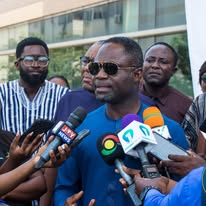
Private legal practitioner Martin Kpebu has entered the debate, calling for an end to what he considers a growing culture of aggressive political insults.
Martin Kpebu urged Ghana Jollof to “cease fire”, but his intervention went beyond simply criticising the anonymous commentator. He also warned political actors against applying different standards to political attacks depending on who is responsible for them.
According to Martin Kpebu, supporters of the National Democratic Congress (NDC) cannot embrace or tolerate aggressive commentary against NPP figures while expecting similar attacks against their own political leaders to be suppressed.
His argument was essentially that political actors cannot condemn one form of inflammatory commentary while permitting another because it favours their side.
Martin Kpebu also pointed to the anonymity surrounding Ghana Jollof’s identity, arguing that operating without publicly revealing one’s face may make it easier to use particularly harsh language without the same level of accountability associated with conventional public commentary.
He further noted, in a lighter reference to his own experience, that he had previously been subjected to insults from Kelvin Taylor and had chosen not to respond in kind.
Supporters Reject One-Sided Truce
Kpebu’s intervention has not ended the controversy. Instead, it has generated another wave of debate, particularly among commentators and NPP sympathisers who believe Ghana Jollof should not be expected to stop responding while Taylor continues his own style of political commentary.
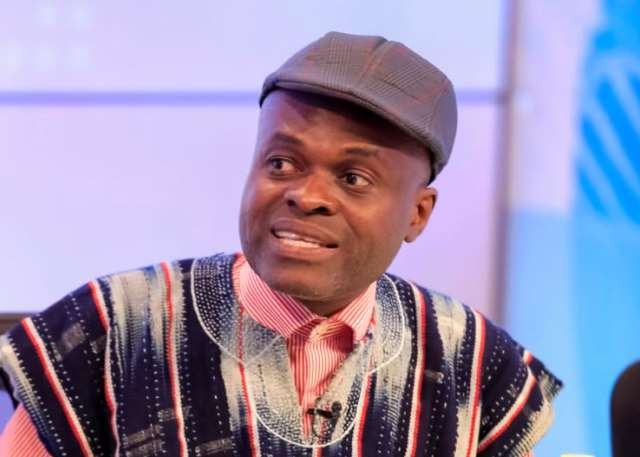
Some have argued that calling for a ceasefire from only one side amounts to demanding unilateral surrender rather than genuine reconciliation.
Political commentator P.K. Sarpong, in a social media reaction cited in the debate, argued that a truce would be fundamentally flawed if it required silence from one side while ignoring what supporters regard as the source of the hostility.
The argument has therefore shifted from the personalities involved to a broader question: should political insults be answered with more insults, or should all sides independently abandon the practice?
The Double-Standards Argument
Perhaps the most politically sensitive aspect of the dispute is the accusation of double standards.
Critics of the NDC and its supporters argue that Kelvin Taylor’s aggressive style was previously welcomed by sections of the party’s support base when his attacks were directed at NPP officials.
They now contend that some of the same people are demanding action against Ghana Jollof because the criticism has moved in the opposite direction.
Supporters of Taylor, however, have rejected attempts to equate the two commentators, arguing that Taylor’s commentary contains substantive political analysis and references to public issues, while Ghana Jollof’s approach is considered by critics to be more personal and provocative.
That disagreement has made the controversy more than a simple social-media quarrel. It has become another battleground in Ghana’s long-running argument over political communication and partisan media.
Growing Concern Over Online Political Culture
Beyond the partisan divide, another section of the public appears increasingly uncomfortable with the normalisation of personal insults in Ghana’s political conversation.
Some citizens and commentators have called for political criticism to focus more heavily on policies, evidence, governance failures and public accountability rather than personalities and families.
They argue that social media has made political communication faster and more accessible but has also created an environment where provocative statements can generate greater attention than sober analysis.
Critics of both sides therefore maintain that political commentators should be able to scrutinise public officials without crossing into abusive or degrading language.
The debate also touches on the broader question of free expression. Ghana’s democratic system protects freedom of expression and allows robust criticism of political leaders, but the existence of that freedom does not automatically settle arguments about responsible journalism, personal attacks or the consequences of inflammatory rhetoric.
A Political Fight Bigger Than Two Commentators
The Ghana Jollof–Kelvin Taylor confrontation has consequently become a reflection of Ghana’s increasingly heated digital political environment.
For supporters of Ghana Jollof, the controversy is about confronting what they see as a political commentator who has been allowed to attack opponents without facing equivalent resistance. For Taylor’s supporters, the attempt to equate his political commentary with Ghana Jollof’s approach is itself misleading.