By Issah Olegor
The Office of the Special Prosecutor (OSP) has finally secured its first criminal conviction since its inception in 2018, marking a significant milestone in the fight against corruption after years of criticism and public skepticism over its effectiveness.
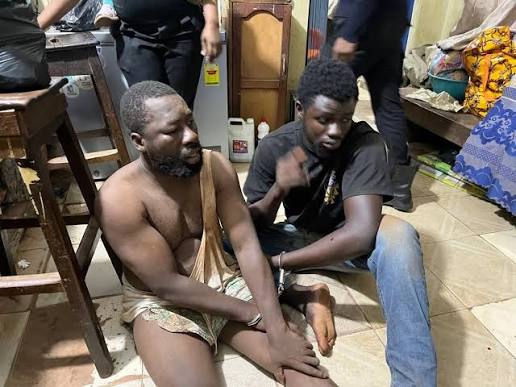
The ‘landmark’ conviction was handed down by the High Court in Tamale, where six individuals were found guilty of orchestrating a payroll fraud scheme involving the Ghana Education Service, GES.
The culprits, comprising school administrators, payroll officers, and accountants, were convicted after entering guilty pleas under the OSP’s plea bargaining framework.
According to court documents and the OSP’s official report, the convicts illegally validated and reactivated the salaries of a teacher who had vacated his post.
Their actions enabled the wrongful disbursement of over GH¢86,000 in public funds.
However, the total amount recovered through restitution and reparation now stands at GH¢106,319.64.
This conviction comes amid years of public doubts about the OSP’s ability to prosecute high-profile corruption cases. It has so far failed to prosecute any high profile corruption case the essence of establishing the office.
Established under the Office of the Special Prosecutor Act, 2017 (Act 959), the OSP was designed to be an independent institution mandated to investigate and prosecute corruption and corruption-related offenses, especially involving public officers and politically exposed persons.
The OSP’s first occupant, renowned anti-corruption campaigner Martin Amidu, resigned dramatically in November 2020, citing political interference and a lack of support.
In his resignation letter to then-President Nana Akufo-Addo, Amidu described his tenure as a “traumatic experience” and accused the government of undermining the independence of the office—particularly after he published a scathing report on the controversial Agyapa Royalties deal.
Following Amidu’s resignation, President Akufo-Addo nominated Kissi Agyebeng—a law lecturer and legal practitioner—as the second Special Prosecutor in May 2021
Kissi Agyebeng’s appointment came with high expectations but also mounting pressure to deliver results, especially after years without a single conviction.
Since assuming office, Kissi Agyebeng has faced growing criticism over the OSP’s perceived inertia.
By early 2025, public discourse had turned sharply against the institution, with calls for its scrapping gaining traction due to what many described as an “ineffective” and “wasteful” entity.
At a Constitution Day lecture in February 2025, Kissi Agyebeng defended the relevance of the OSP, pointing out that entrenched political interests and a lack of institutional cooperation had hindered progress.
“We have had over fifty corruption-related commissions of inquiry in our history and five coups all launched in the name of fighting corruption,” he said, urging the public not to give up on institutional mechanisms.
The OSP’s latest success, however, appears to be a turning point.
In addition to the Tamale convictions, the office currently has six ongoing criminal trials in Accra, Kumasi, and Tamale.
It is also handling 16 active investigations, including high-profile cases involving the National Cathedral, the Bank of Ghana, the National Service Secretariat, and the controversial acquisition of the Achimota Forest lands.
A recent OSP mid-year report revealed that 197 additional cases are under various stages of review and consideration.