
BY Issah Olegor
The National Sanitation Day (NSD) initiative, reintroduced by government to rekindle the culture of cleanliness and civic responsibility, officially made its comeback on Saturday with a massive cleanup exercise across Accra.
The relaunch marked a significant moment in the ongoing fight against poor sanitation, as government officials, traditional leaders, and residents came together to sweep, desilt, and clear refuse from major streets and markets in the capital.
The cleanup began from the premises of the Accra Metropolitan Assembly (AMA) and extended through Tudu, Kantamanto, Agbogbloshie Market, Abb
ossey Okai, and the Kwame Nkrumah Circle — areas often identified as sanitation hotspots.
Market women, traders, drivers, and residents joined government officials in desilting drains, collecting litter, and sweeping streets, symbolizing a renewed collective responsibility toward maintaining a clean city.
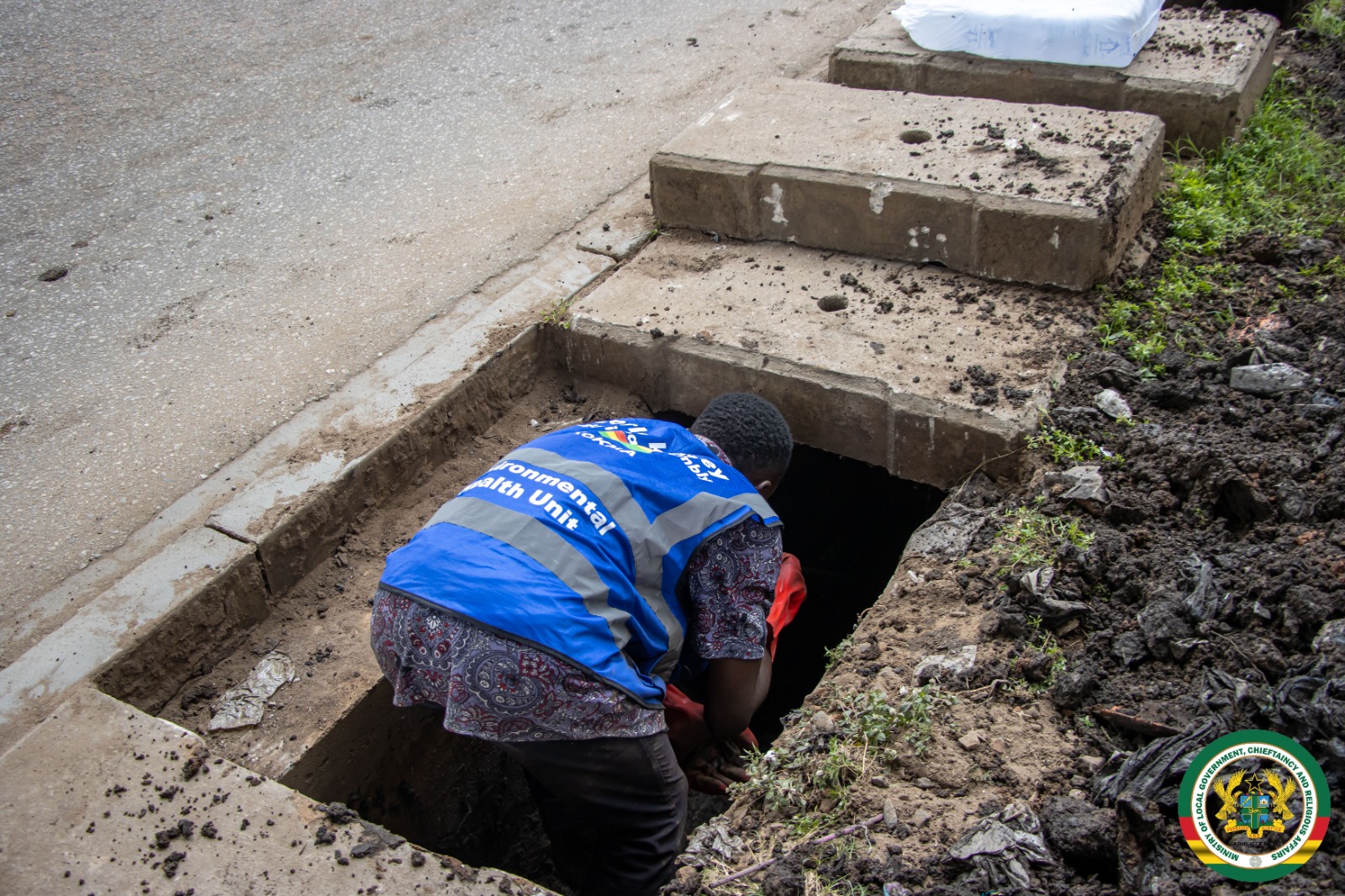
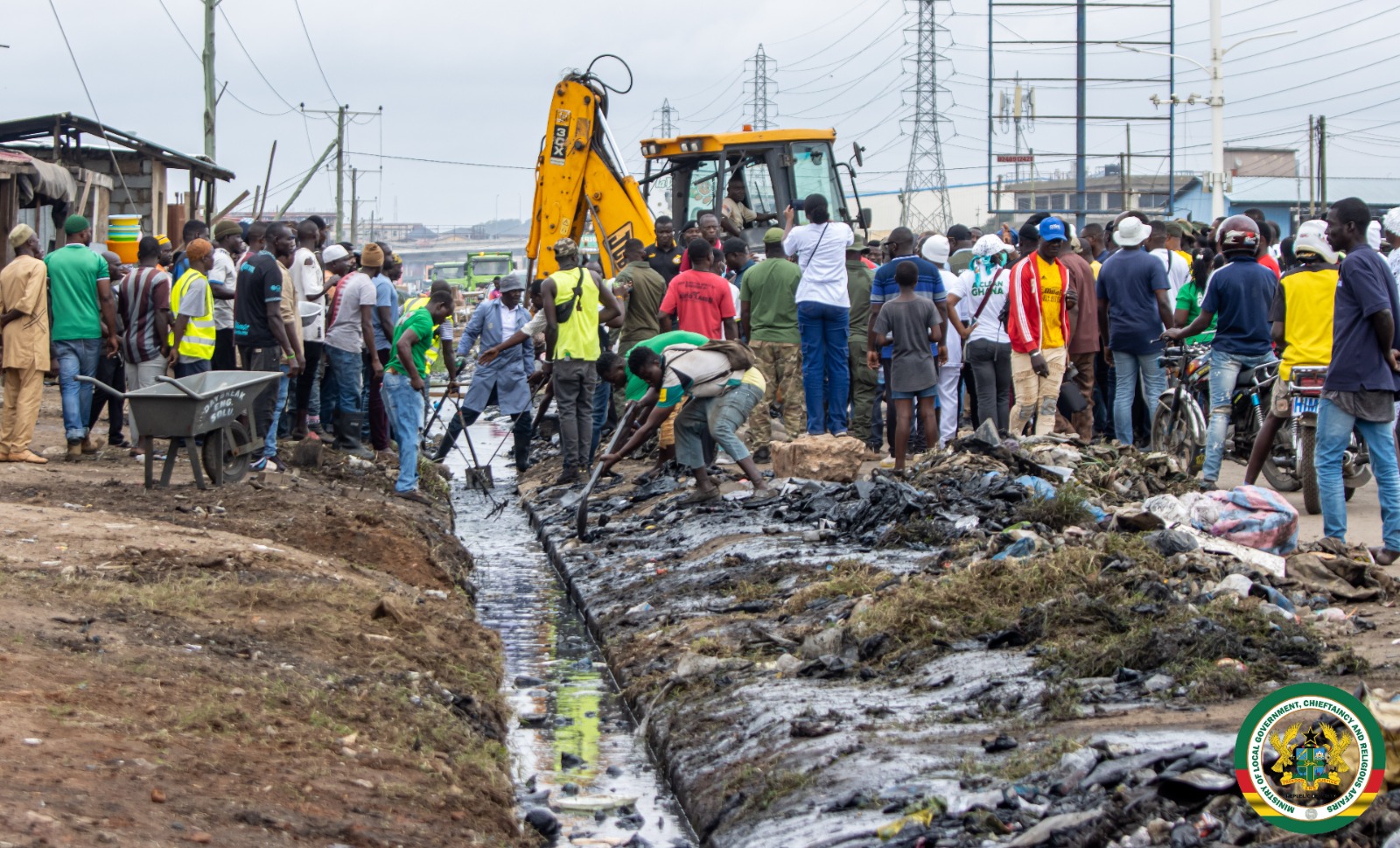
The event was jointly led by the Minister for Local Government, Chieftaincy and Religious Affairs, Ahmed Ibrahim, the Ga Mantse, King Tackie Teiko Tsuru II, the Mayor of Accra, and Municipal Chief Executives of Ablekuma Central and Korle Klottey, alongside the Sempe Mantse and Wolomei of the Ga Traditional Area.
Speaking after the exercise Ahmed Ibrahim emphasized that sanitation must become a civic culture rather than a government-led campaign.
He noted that Accra, as the face of the nation, should embody discipline, cleanliness, and order.
“Accra is Ghana’s capital and must reflect our collective discipline and responsibility,” the Minister said. “A clean nation is a healthy nation, and a healthy nation drives economic growth.”
Ibrahim also revealed plans by the government to construct ultramodern market facilities across the country under the 24-Hour Economy Programme, explaining that markets are not only commercial hubs but also central to public health.
“Where we eat is the market,” he said. “It is therefore important that our markets remain clean and safe. Government plans to develop ultramodern markets that promote hygienic and sanitary conditions for the good of our people — not only in the Ga State, but across all communities in Ghana.”
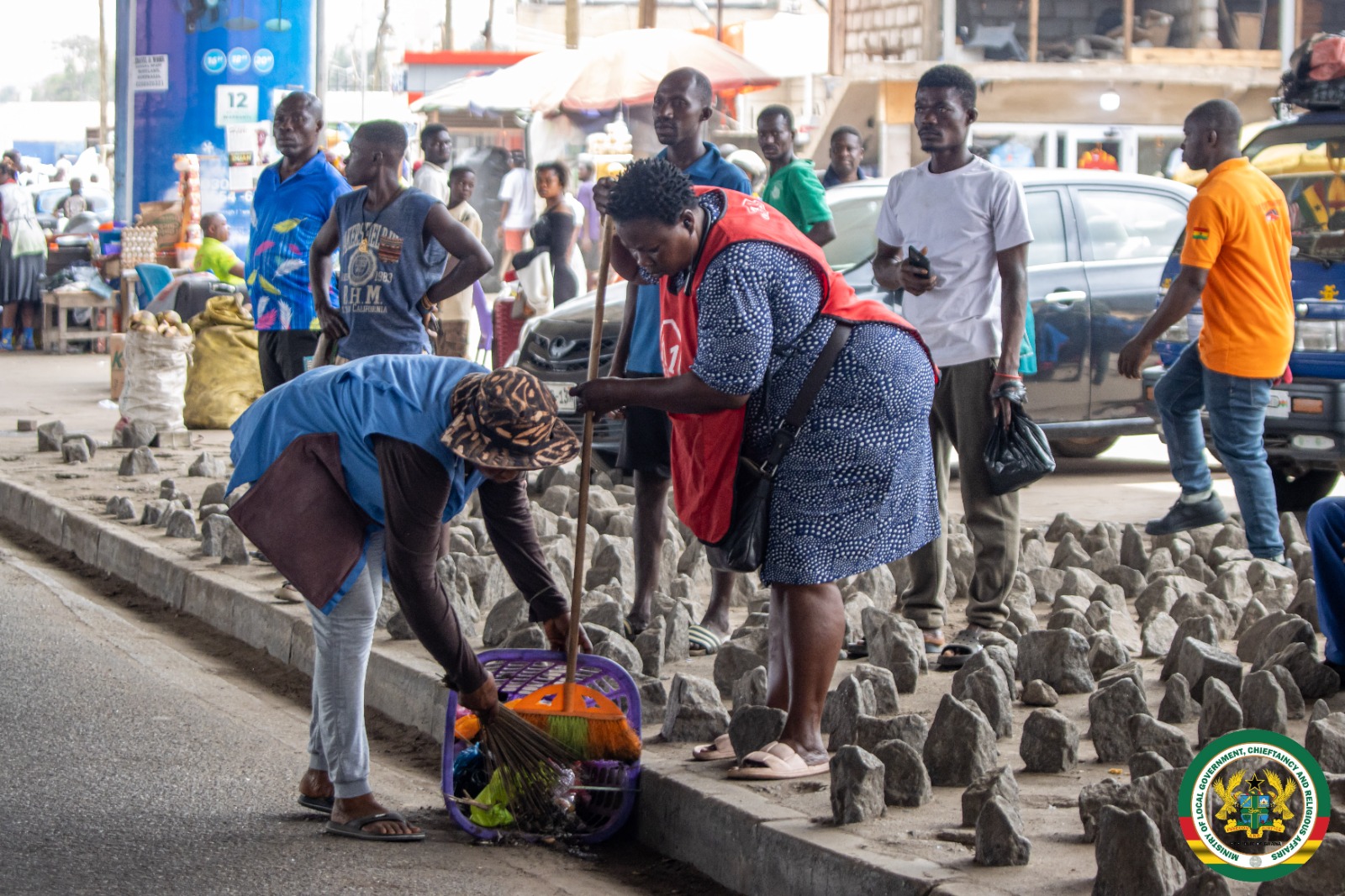
In his address, King Tackie Teiko Tsuru II praised the strong collaboration between traditional authorities and government institutions, saying the exercise demonstrates that communal unity can transform Accra into a cleaner, healthier city.
“As the father and overlord of Accra, it is my duty to ensure that the city remains clean. Cleanliness brings prosperity and good health to our people,” he stated.
Other traditional leaders, including the Sempe Mantse and Wolomei, pledged to sustain the momentum of the campaign and called on residents to maintain cleanliness in their communities daily, not only on designated sanitation days.

The Mayor of Accra expressed optimism about the future of the initiative, describing the high level of participation as proof of a “renewed civic consciousness” among citizens.
He said the exercise showed how partnership between government, traditional authorities, and communities could solve one of the city’s most persistent challenges.
Beyond Accra, similar cleanup activities were organized across all Metropolitan, Municipal, and District Assemblies (MMDAs) nationwide. Local authorities mobilized residents, town leaders, and youth groups to participate in coordinated cleaning efforts — a move aimed at reinforcing the idea that environmental cleanliness is a shared national duty.
The Ministry has since declared that the first Saturday of every month will be observed as National Sanitation Day.
On these days, citizens across Ghana are expected to clean their surroundings between 6:00 a.m. and 10:00 a.m., during which all markets and shops will remain closed to ensure full participation.
The relaunch of National Sanitation Day marks a revival of a once-successful civic exercise first introduced in 2014, which saw citizens across Ghana dedicate the first Saturday of every month to community cleaning.
However, participation waned over the years due to limited enforcement and public apathy.