BY Issah Olegor
A simmering diplomatic row between Ghana and the United States over the deportation of Salvadoran national Kilmar Armando Ábrego García has taken a dramatic turn after the Ghanaian government flatly refused to accept the individual, sparking wider discussions about the country’s role in the U.S. deportee arrangement.
The controversy began when the U.S. Department of Homeland Security (DHS) reportedly attempted to deport Abrego García — a 30-year-old Salvadoran man — to Ghana under an administrative mix-up that mistakenly listed the country as a destination.
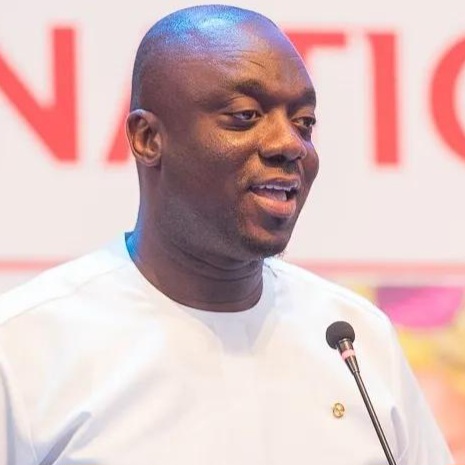
The Foreign Affairs Minister, Samuel Okudzeto Ablakwa, swiftly rejected the move, stating unequivocally that the government would not accept any deportee who is not a Ghanaian citizen.
“Ghana is not accepting Abrego Garcia. He cannot be deported to Ghana,” Ablakwa declared in a statement on X (formerly Twitter).
“Our understanding to accept a limited number of non-criminal West Africans, purely on humanitarian grounds, does not extend beyond that. Ghana strongly objects to these misleading reports.”
Who Is Kilmar Abrego Garcia?
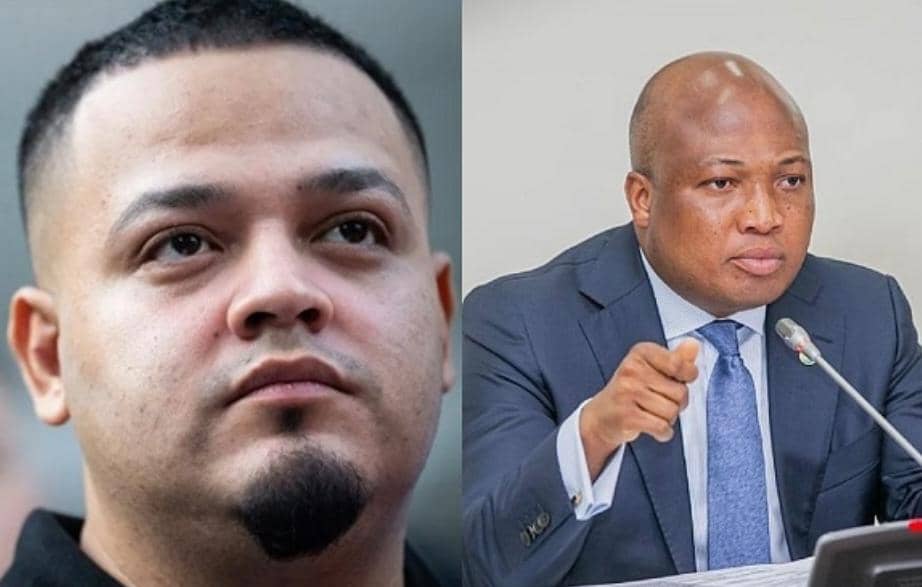
Born in July 1995 in Los Nogales, San Salvador, Kilmar Abrego Garcia’s life story reads like a tale of hardship and displacement.
As a teenager, he fled his native El Salvador to escape the notorious Barrio 18 criminal gang, which had terrorized his family for years through extortion and death threats.
At just 16, Garcia illegally crossed into the United States through the Texas border, seeking refuge.
However, in 2025, Garcia’s life took a tragic turn when he was deported from the U.S. to El Salvador despite having no criminal record.
His removal, carried out under what U.S. officials later admitted was an “administrative error,” saw him imprisoned without trial in the Salvadoran Terrorism Confinement Center (CECOT) — a high-security prison notorious for detaining alleged gang members.
The U.S. government accused Garcia of being linked to MS-13, a claim he has consistently denied.
His wife filed a successful legal challenge in Maryland, where a U.S. District Court ordered the government to “facilitate and effectuate” his re-entry.
But even after the U.S. Supreme Court upheld that ruling, Washington’s interpretation of “facilitate” — which stopped short of demanding his release — drew criticism from human rights groups.
Ghana Pushes Back
The deportation mix-up caused a diplomatic standoff when U.S. authorities allegedly listed Ghana as a possible deportation destination for Garcia.
Foreign Minister Ablakwa said the government had “directly and unambiguously” informed Washington that such an arrangement was unacceptable.
Following discussions, the U.S. Department of Homeland Security officially accepted Ghana’s refusal.
Okudzeto Ablakwa later confirmed that DHS had amended its court filings to reflect that Ghana was not a lawful deportation destination for Garcia.
“The Government of Ghana is pleased that our refusal to accept Abrego Garcia has been duly acknowledged by the U.S. authorities,” Ablakwa said.
“This government will continue to act transparently and protect Ghana’s sovereignty in all international dealings.”
Political And Security Reactions
The development has reignited parliamentary debate in Accra over the broader U.S.–Ghana deportee agreement, under which dozens of West Africans have been returned from the United States.
Members of the Minority in Parliament are demanding that the agreement be laid before the House for scrutiny, arguing that it was never properly ratified.
Meanwhile, Dr. Sharif Mahmud Khalid, Economic Adviser to the Vice-President, defended the administration’s handling of the deportee process.
Speaking on Channel One TV’s The Big Issue, Dr. Khalid assured the public that “the government has never compromised on the security screening of deportees.”
“None of this is being done in secrecy,” he said. “Every deportee undergoes extensive vetting through national security protocols. Ghana is not a dumping ground for any nation’s deportees.”