By Issah Olegor
The Governor of the Bank of Ghana (BoG), Dr. Johnson Pandit Asiama, has assured Ghana’s business community that the country’s economy remains on a stable growth path despite lingering global uncertainties, stating that the central bank will continue to pursue policies that protect the cedi, keep inflation under control and support sustainable economic expansion.
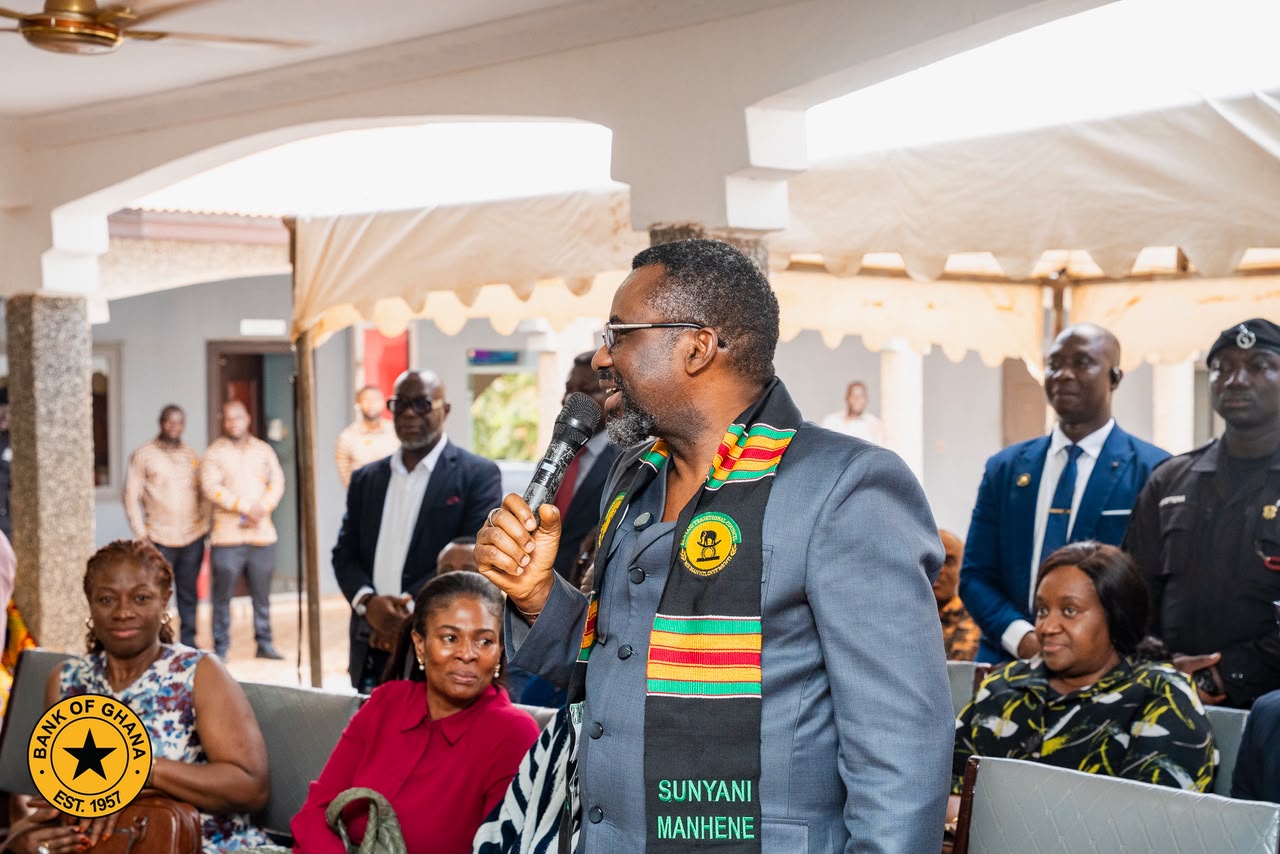
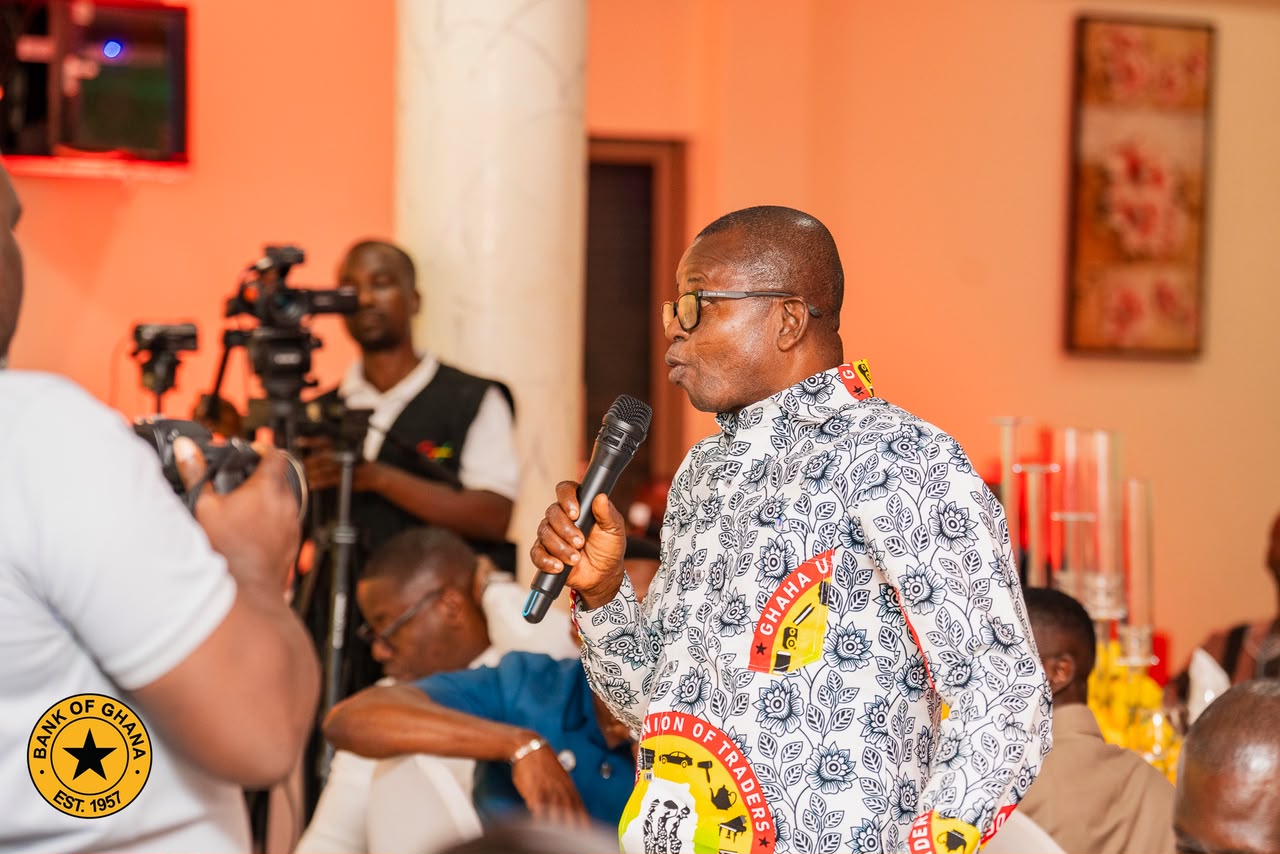
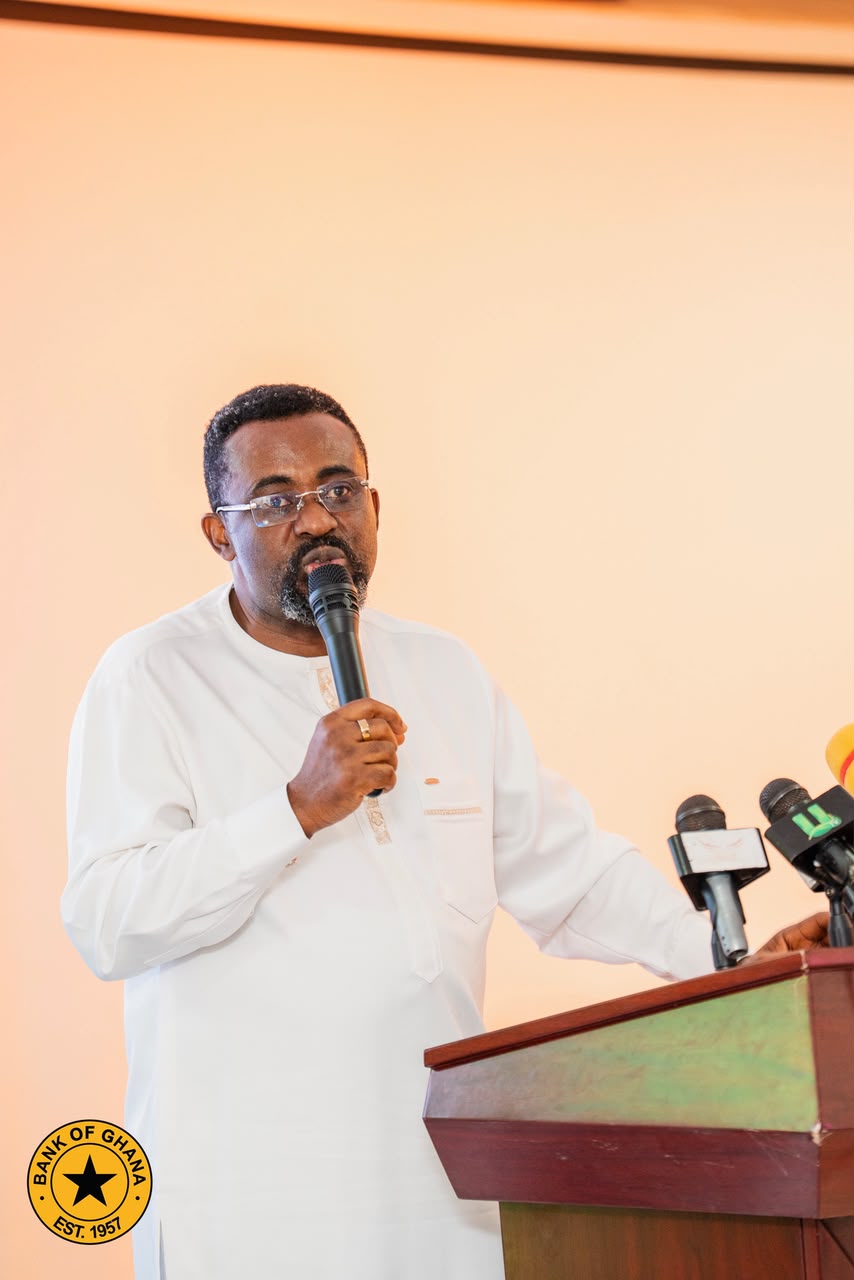
Addressing a stakeholder engagement with business leaders, bankers, manufacturers, traders and the media in Sunyani, Bono Region, Dr. Asiama said strengthening dialogue with stakeholders has become one of his key priorities since assuming office as Governor, as part of efforts to make the operations of the central bank more transparent and responsive to the needs of businesses and the wider economy.
The engagement brought together representatives of the Association of Ghana Industries (AGI), the Ghana Union of Traders Association (GUTA), the Ghana National Chamber of Commerce and Industry (GNCCI), the Ghana Association of Banks, Community Banks, forex bureaus, microfinance institutions and members of the Ghana Journalists Association.
According to Dr. Asiama, the Bank of Ghana recognises that its policy decisions directly affect businesses, financial institutions, farmers, traders, manufacturers and households, making continuous engagement with stakeholders essential to achieving effective monetary policy implementation.
The Governor explained that the Bank’s Monetary Policy Committee recently reviewed both domestic and global economic conditions before deciding to maintain the Monetary Policy Rate at 14 percent.
He said the decision reflected a careful balance between sustaining the country’s low inflation environment while providing adequate support for investment, business expansion and economic growth.
Dr. Asiama noted that although the global economy continues to face uncertainty arising largely from the ongoing conflict in the Middle East and elevated international crude oil prices, Ghana’s economy has demonstrated remarkable resilience.
On inflation, the Governor acknowledged that the rate increased modestly from 3.7 percent in May to 5.3 percent in June 2026 but emphasised that inflation remains comfortably below the Bank of Ghana’s medium-term target band.
He attributed the recent increase largely to higher transport and haulage costs triggered by rising global crude oil prices, expressing confidence that the upward movement would prove temporary.
The Governor stressed that maintaining low and stable inflation remains one of the Bank’s primary objectives because it reduces the cost of living, strengthens household purchasing power, improves business planning and encourages long-term investment.
Turning to economic growth, Dr. Asiama announced that Ghana’s economy expanded by 6.4 percent during the first quarter of 2026, compared with 6.2 percent recorded during the corresponding period in 2025.
He explained that the improved performance was driven mainly by growth within the industrial and services sectors, while increased commercial activity, stronger industrial production, higher trade volumes and a gradual recovery in tourism also contributed to the positive outlook.
According to the Governor, declining lending rates have further improved business confidence by making credit more affordable for private sector investment.
He also reported significant improvements within the banking sector, describing Ghana’s financial system as stable, well-capitalised and increasingly capable of supporting economic growth.
Banks, he noted, continue to record growth in customer deposits while the quality of their loan portfolios has improved considerably.
More importantly, credit to businesses and households has expanded significantly, growing by more than 41 percent in June 2026 compared to approximately 9 percent during the same period last year.
Dr. Asiama said the sharp increase in private sector lending demonstrates renewed confidence within the banking industry and provides businesses with greater opportunities to expand operations, create employment and contribute to national development.
On Ghana’s external sector, the Governor said exports of gold and cocoa continued to perform strongly during the first half of 2026, enabling the country to maintain a healthy trade surplus despite increased expenditure on petroleum imports resulting from higher international oil prices.
He disclosed that Ghana’s gross international reserves currently stand at approximately US$12.9 billion, representing about five months of import cover.
According to him, these reserves provide the country with a strong buffer against external economic shocks while supporting the Bank of Ghana’s efforts to maintain stability in the foreign exchange market.
Dr. Asiama acknowledged that the cedi experienced temporary pressure earlier in the year following geopolitical tensions in the Middle East but said the local currency has since recovered as market conditions improved.
He reaffirmed the Bank of Ghana’s commitment to maintaining an orderly foreign exchange market and preserving confidence in the national currency through prudent monetary management.
Looking ahead, the Governor cautioned that although Ghana’s recent macroeconomic performance has been encouraging, policymakers must remain vigilant because developments in the global economy continue to present risks that could affect domestic economic conditions.
He assured stakeholders that the Bank of Ghana will continue implementing policies aimed at protecting the value of the cedi, maintaining low inflation, preserving financial sector stability and creating conditions that encourage investment and sustainable economic growth.
“Our goal is simple,” Dr. Asiama stated. “To create an economic environment where businesses can grow with confidence, households can plan for the future, and every Ghanaian can share in the benefits of a stable and growing economy.”
Concluding his address, the Governor emphasised that maintaining macroeconomic stability is a shared national responsibility that extends beyond the Bank of Ghana to include government, businesses, financial institutions, traders, farmers and households.
He called for stronger collaboration among all stakeholders, arguing that greater trust, cooperation and mutual understanding remain essential for sustaining the economic gains and improving living standards across the country.