BY Daniel Bampoe
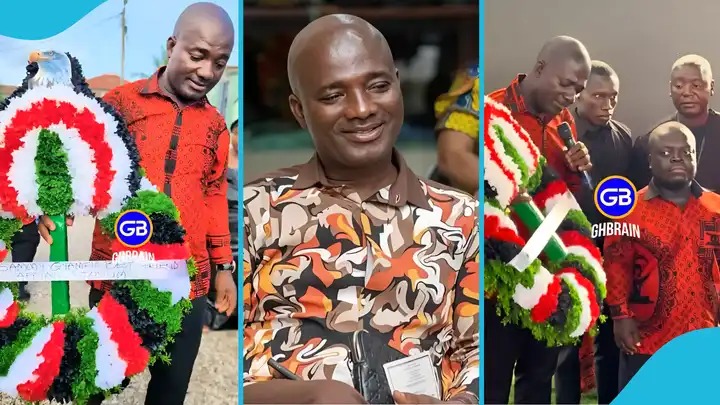
The final resting place of legend Ghanaian Highlife musician Daddy Lumba has been publicly unveiled at his East Legon residence in Accra as his family marks the first anniversary of his death, months after the reported burial at the private property triggered a major confrontation with Ga traditional authorities.
The unveiling has brought renewed attention to one of the most controversial issues that followed the death of the musician, whose real name was Charles Kwadwo Fosu, on July 26, 2025.
Daddy Lumba died at The Bank Hospital in Accra at the age of 60 after a short illness, bringing to an end a celebrated musical career spanning several decades.
As part of activities marking one year since his passing, the family unveiled a specially constructed tomb located in a new building behind his East Legon residence.
According to information accompanying images and videos of the facility, the structure was completed within about four months and stands at a location Daddy Lumba is said to have personally designated as his preferred final resting place before his death.
The facility is also expected to contain a museum on the upper floor dedicated to preserving Daddy Lumba’s musical history, memorabilia and legacy.
The unveiling is significant because the exact location of the Highlife icon’s remains had generated months of speculation and bitter disagreements among members of his own family.
Daddy Lumba’s elder sister, Ernestina Fosu, publicly complained as recently as June 2026 that she did not know where her younger brother had been laid to rest.
Speaking to journalists on June 25, Ernestina made an emotional appeal to authorities to intervene, claiming that she had not seen her brother’s remains since his death.
She said her greatest wish was to know where Daddy Lumba had been laid so she could see him one final time and find closure.
Her younger sister, Faustina Fosu, however, previously presented a different position on the burial controversy.
Faustina said she had been informed that it was Daddy Lumba’s wish to be buried at his East Legon residence and argued that his remains should not be disturbed if that request had already been honoured.
Long before the latest unveiling, reports that Daddy Lumba had been buried at his East Legon home had attracted the attention of traditional authorities within the Ga State.
The office of the Gborbu Wulomo-Shitse subsequently summoned the then family head, Victor Kofi Owusu, popularly known as Abusuapanin Tupac or 2Pac, to answer questions concerning the alleged burial.
Traditional authorities argued that under Ga customs, burying a deceased person within a residential community without going through the appropriate traditional processes raised serious customary concerns.
They maintained that the dead should generally not be buried among the living and indicated that where exceptional circumstances required such a burial, appropriate customary rites would have to be performed.
The matter escalated after Abusuapanin Tupac reportedly failed to appear before the traditional authorities as requested.
Representatives of the traditional authority subsequently warned that exhumation could become an option if it was established that Daddy Lumba had been buried on Ga land without the required customary processes.
They also maintained that even if the remains were eventually removed, the family could still be required to perform rituals to pacify the land and the relevant traditional deities.
The controversy became even more heated after social commentator Counsellor Lutterodt publicly called on some youth to go to the East Legon residence and establish whether Daddy Lumba had been buried there.
Police later arrested Lutterodt and charged him with offensive conduct conducive to a breach of the peace after investigators alleged that his comments had the potential to provoke public disturbance.
He subsequently appeared before the Adentan Circuit Court, pleaded not guilty and was granted bail in the sum of GH₵50,000 with two justified sureties.
The burial controversy also attracted interventions from personalities including Afia Schwarzenegger, who publicly argued that the family had obtained a state burial permit and therefore questioned attempts to interfere with the resting place.
Against that turbulent history, the first-anniversary unveiling has now provided the public with a clearer picture of what the family presents as Daddy Lumba’s final resting place.
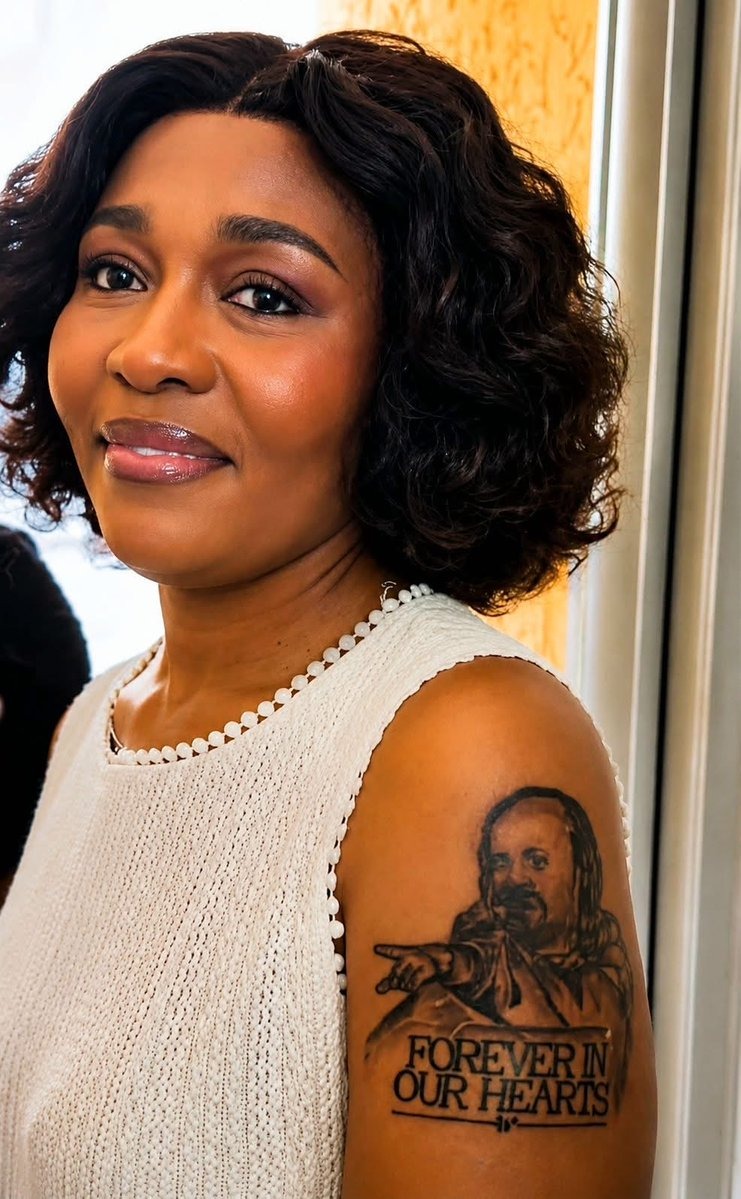
The anniversary has also been marked by an emotional gesture from Priscilla Ofori, popularly known as Odo Broni.
Odo Broni unveiled a tattoo bearing the inscription “Forever In Our Heart” in remembrance of the late musician.
The tattoo adds a personal dimension to an anniversary that comes after nearly a year of legal battles, traditional controversies and internal family disagreements following Daddy Lumba’s death.

Odo Broni has herself been at the centre of some of those disputes.
Following Daddy Lumba’s death, questions emerged over the recognition of his surviving spouses, resulting in litigation involving Odo Broni and Akosua Serwaa.
The disputes later expanded to include the administration of Daddy Lumba’s estate, funeral arrangements, family leadership and control over activities organised in the musician’s name.
Even the first-anniversary commemoration became another source of disagreement.
Abusuapanin Tupac announced preparations for the July 26 anniversary and indicated that customary widowhood rites involving Odo Broni would form part of the activities.
Another faction of the Ekuona family led by Nana Kwabena Brefo challenged his authority, however, insisting that Tupac had previously been removed as family head and therefore lacked the mandate to organise official family activities.
The faction also questioned plans for widowhood rites and demanded clarity over the location of Daddy Lumba’s remains.
The unveiling of the East Legon tomb therefore comes against the backdrop of those questions and appears to publicly confirm the location the family says serves as the musician’s final resting place.