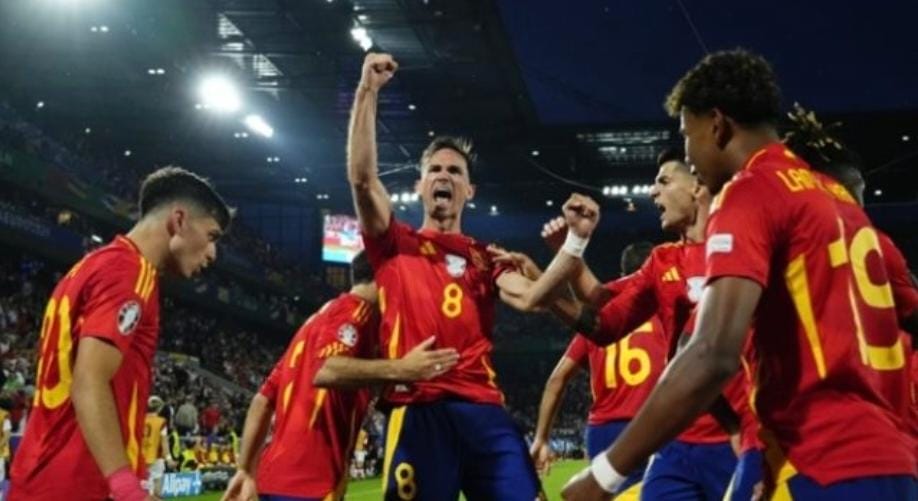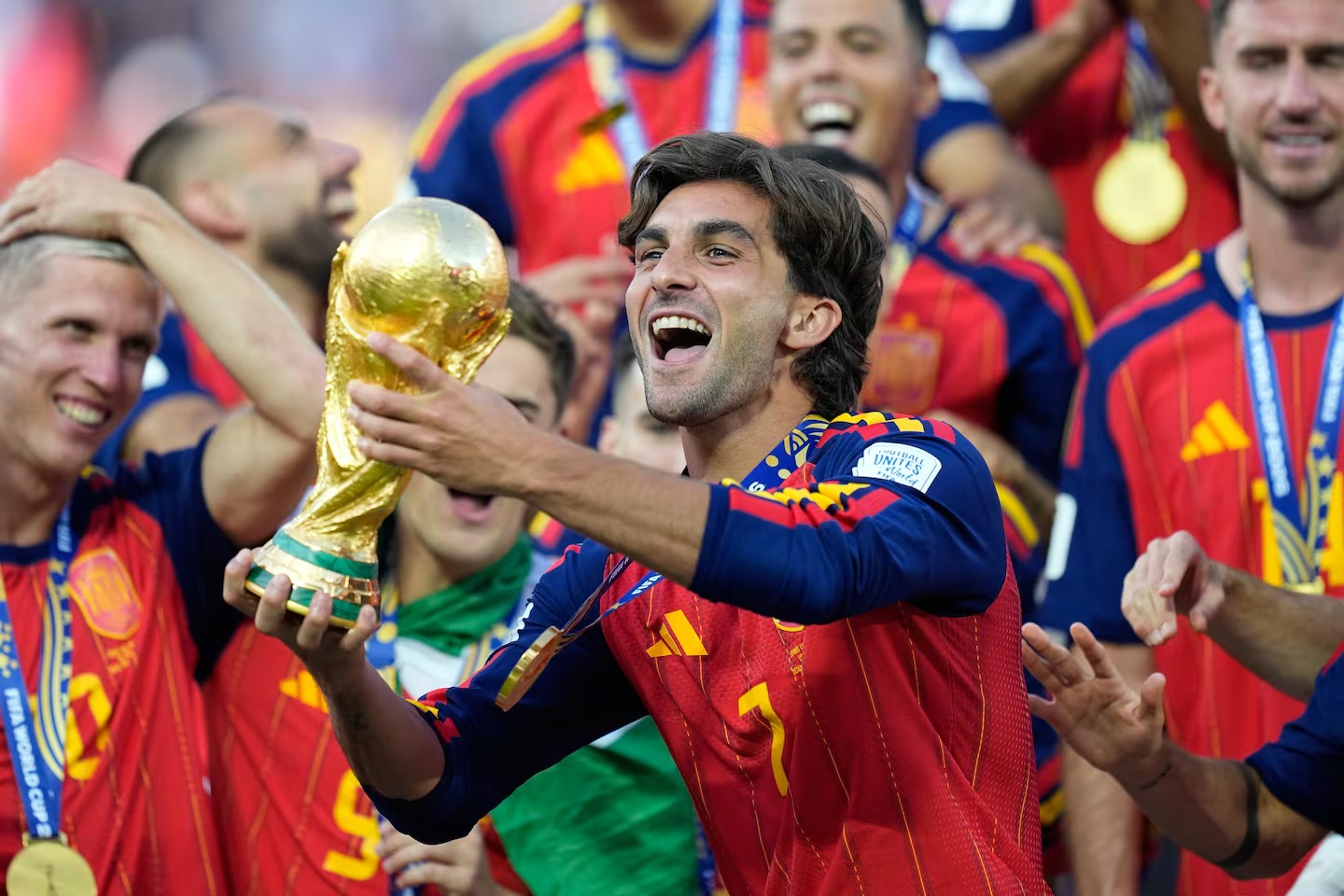
Spain’s coronation as world champions brought the curtain down on a historic 2026 FIFA World Cup that did more than produce a winner—it transformed the scale of football’s biggest competition, shattered attendance and scoring records and provided further evidence of the changing balance of power in the international game.
La Roja defeated defending champions Argentina in a dramatic final at the New York/New Jersey Stadium on July 19, with Ferran Torres scoring the decisive goal in the 106th minute of extra time to hand Spain their second FIFA World Cup crown.
The triumph came 16 years after Spain won their first world title in South Africa in 2010, when Andrés Iniesta famously struck an extra-time winner against the Netherlands.
This time, Torres became Spain’s championship hero, delivering the decisive moment after Luis de la Fuente’s side had established themselves as the tournament’s outstanding team.
Spain’s road to the trophy was built not only around their technical quality but also an extraordinary defensive record. They conceded just one goal throughout the competition and recorded seven successive victories on their way to becoming champions.
Captain Rodri was central to that dominance. The midfielder completed a tournament-record 790 passes and was eventually rewarded with the Adidas Golden Ball as the World Cup’s best player.
Spain goalkeeper Unai Simón received the Golden Glove, while defender Pau Cubarsí was named FIFA Young Player of the Tournament, underlining the individual quality that powered La Roja to the title.
Coach De la Fuente described the triumph as a meeting with destiny, saying after the final that his team and supporters deserved the success following their remarkable campaign.
Spain’s victory also created another piece of football history. La Roja became the first country to simultaneously hold the men’s and women’s FIFA World Cup titles.
Messi Falls Short of Historic Back-to-Back Triumph
For Argentina, defeat represented a painful conclusion to an otherwise impressive defence of the crown they captured in Qatar in 2022.
Lionel Messi, competing at the age of 39, once again carried enormous responsibility during Argentina’s run to the final.
The Argentine captain scored eight goals and provided four assists during the competition, eventually receiving the Adidas Silver Ball.
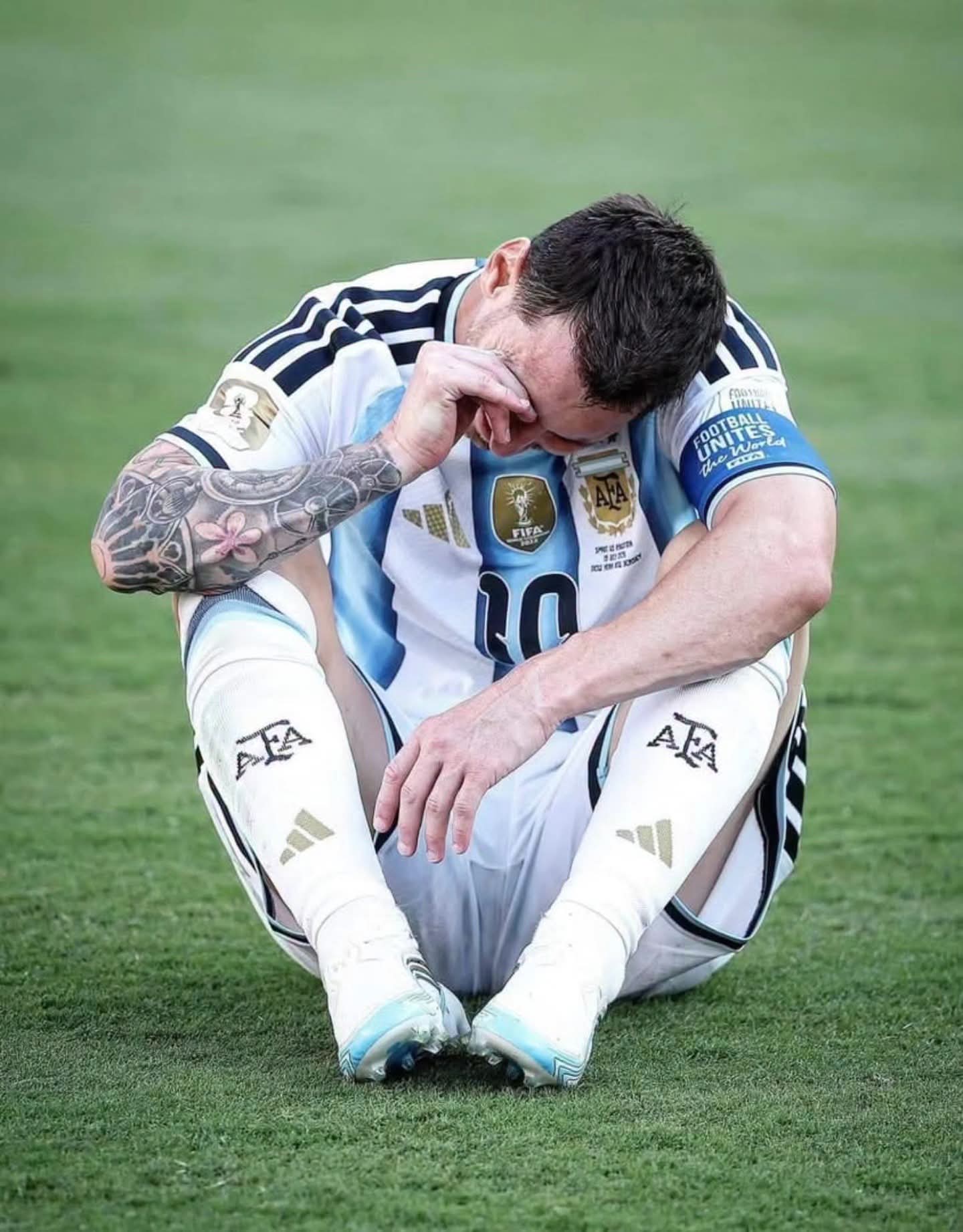
Argentina’s journey through the knockout rounds was filled with drama. They survived an extra-time battle against African debutants Cabo Verde before recovering from a two-goal deficit to defeat Egypt 3-2 in the Round of 16.
They later produced another dramatic comeback against England in the semi-finals, scoring twice late in the contest to reach another World Cup final.
Spain, however, proved to be the obstacle Argentina could not overcome, denying Messi and his teammates the opportunity to become the first nation since Brazil in 1962 to successfully defend the men’s World Cup.
Mbappé Takes Golden Boot and World Cup Scoring Record
France captain Kylian Mbappé also left his mark on the tournament despite Les Bleus missing out on a medal.
Mbappé scored 10 goals to claim the Adidas Golden Boot and increased his career World Cup tally to 22, becoming the competition’s all-time leading scorer.
His 10-goal haul was one of the greatest individual scoring performances in World Cup history. According to FIFA, only France’s Just Fontaine, who scored 13 goals in 1958, and Hungary’s Sándor Kocsis, who struck 11 times in 1954, have scored more during a single edition.
Mbappé was also awarded the Adidas Bronze Ball.
France ultimately finished fourth after losing an extraordinary bronze-medal match 6-4 to England.
Bukayo Saka scored a hat-trick in the 10-goal encounter as the Three Lions recovered from the disappointment of their semi-final elimination to secure third place.
Ronaldo Closes World Cup Chapter With Another Record
The tournament also marked the end of Cristiano Ronaldo’s World Cup journey.
The Portuguese superstar announced following Portugal’s elimination by eventual champions Spain in the Round of 16 that the 2026 competition would be his final World Cup.
At 41, Ronaldo still managed to add another historic achievement to his extraordinary career.
After scoring twice against Uzbekistan during the group stage and converting a penalty against Croatia in the Round of 32, Ronaldo became the first male footballer to score at six different FIFA World Cups.
African Teams Make Historic Statement
Beyond the established superpowers, the tournament demonstrated the growing competitiveness of countries traditionally considered outsiders.
Nine African nations progressed beyond the group stage, while debutants Cabo Verde went through their group unbeaten.
The Blue Sharks even held eventual champions Spain to a goalless draw before later pushing Argentina into extra time during an entertaining 3-2 Round-of-32 defeat.
DR Congo also made an impression, drawing with Portugal during the group stage before giving England a difficult test in the opening knockout round.
Curaçao, meanwhile, entered history as the smallest nation ever to qualify for the World Cup. Although they were eliminated during the group phase, they earned a memorable 0-0 draw against Ecuador.
Goalkeeper Eloy Room produced an extraordinary 16 saves in that encounter, the most recorded during a 90-minute World Cup match and equal to Tim Howard’s overall record from the United States’ extra-time defeat to Belgium in 2014.
Expanded World Cup Smashes Records
The 2026 tournament represented a major departure from previous editions.
For the first time, 48 national teams participated, up from the 32-team format used since France 1998.
The tournament was also the first World Cup jointly hosted by three countries—the United States, Canada and Mexico—and introduced a Round of 32 to accommodate the expanded field.
A total of 104 matches were played across 39 days in 16 host cities.
FIFA recorded 308 goals, establishing a new World Cup record.
Attendance also reached unprecedented levels, with 6,810,966 spectators passing through stadium gates during the tournament.
That figure comfortably surpassed the previous World Cup attendance record of 3,587,538 set when the United States hosted the tournament in 1994.
The three host nations also gave their supporters reasons to celebrate, with the United States, Canada and Mexico all progressing through both the group stage and Round of 32 before eventually being eliminated in the last 16.
Egypt achieved a landmark of their own by recording their first World Cup victory 92 years after making their tournament debut, defeating New Zealand 3-1 in Vancouver.
Spain Stand Above Them All
When the 39-day football festival finally ended, however, Spain stood above the other 47 participating nations.
The champions combined defensive resilience, midfield control and attacking precision to produce one of the tournament’s most complete campaigns.
Rodri lifted the World Cup trophy as captain and walked away with the Golden Ball, while teammates Simón and Cubarsí collected the Golden Glove and Young Player awards respectively.
Argentina finished as runners-up, England claimed third place and France settled for fourth.=
From Messi’s remarkable performances at 39 and Ronaldo’s final World Cup appearance to Mbappé rewriting the tournament’s scoring record and emerging nations challenging established powers, the 2026 competition delivered several defining moments.
But after 104 matches, 308 goals and a record crowd of more than 6.8 million spectators, it was Spain who ultimately emerged from the biggest World Cup ever staged with football’s greatest prize.
Sixteen years after Iniesta delivered their first title in Johannesburg, another extra-time goal—this time from Ferran Torres—returned Spain to the summit of world football and completed a tournament FIFA described as one for the ages.