By Daniel Bampoe
The Minority in Parliament has sounded an urgent alarm over the increasing number of deaths resulting from illegal mining, popularly known as galamsey, describing the situation as a national tragedy that reflects the state’s failure to protect lives and natural resources.
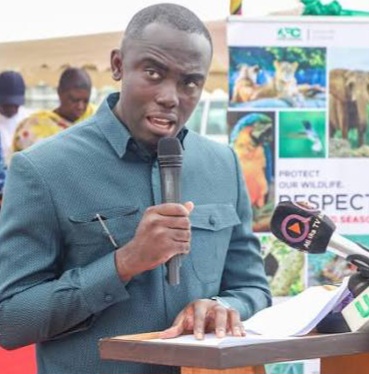
Making a statement on behalf of the Minority, the Member of Parliament for Manhyia North, Akwasi Konadu, painted a grim picture of the growing human cost of illegal mining and called for immediate, coordinated national action to address what he termed “a slow-motion disaster undermining Ghana’s environmental, social, and moral foundations.”
Konadu reminded the House that illegal small-scale mining was not a recent development.
Historically, gold mining formed part of local livelihoods before colonial times. However, in the 1980s, the adoption of structural adjustment programmes encouraged large-scale mining by multinational firms while neglecting local artisanal miners. “That policy gap,” he stated, “pushed thousands of Ghanaians into informal mining activities that have since spiraled out of control.”
According to the MP, the legacy of four decades of unregulated mining has now evolved into one of the most pressing national crises.
Between January and July 2025, the country recorded at least 17 deaths linked directly to galamsey operations. “These are not just numbers,” Akwasi Konadu emphasized. “They represent mothers, sons, daughters, and breadwinners — lives lost in preventable tragedies caused by institutional neglect.”
He cited several examples of recent fatalities that underscore the urgency of the problem.
On January 8, 2025, two young miners were buried alive after a pit collapse in Osino, Fanteakwa.
Twelve days later, a violent confrontation between armed illegal miners and security personnel of AngloGold Ashanti at Obuasi left eight people dead.
On April 1, 2025, another pit collapse at Mpasatia claimed two more lives, while on July 16, 2025, four persons died in a similar incident at Akyem Wenchi. Only two weeks later, on July 29, 2025, a 50-year-old woman fell into an abandoned galamsey pit and died shortly after being rushed to the hospital.
“These repeated tragedies,” the MP stressed, “reflect a disturbing pattern of weak enforcement, lack of political will, and, in some cases, the complicity of certain state and traditional actors. Even when illegal sites are shut down, they often resume operations within months, perpetuating a vicious cycle of impunity.”
The Minority further warned that the galamsey menace has evolved from an environmental issue into a national security threat, fueling local conflicts, destroying farmlands, contaminating water sources, and trapping young people in cycles of poverty and danger.
To address this, Akwasi Konadu urged the Mahama government to intensify the use of technology — particularly real-time drone surveillance and satellite imaging — to monitor high-risk mining zones.
He said such measures would align with the digitalization drive spearheaded by former Vice President Dr. Mahamudu Bawumia, adding that “technology provides a vital tool for precision monitoring, transparency, and accountability in our fight against galamsey.”
The Minority also called for the revitalization of community-based mining cooperatives, which were initiated under a previous government.
These cooperatives, Akwasi.Konadu explained, should be strengthened under a robust regulatory framework that ensures environmental protection and miner safety.
“If properly managed,” he noted, “these cooperatives can provide sustainable jobs for the youth and serve as a safer, legal alternative to illegal mining.”
In his closing remarks, he made an emotional appeal to the government and all stakeholders to act decisively to end the needless loss of lives.
“Every Ghanaian life matters,” he said. “We cannot continue to treat deaths in galamsey pits as collateral damage. These are not accidents — they are preventable tragedies resulting from policy failures and institutional inertia.”