BY DANIEL BAMPOE
The Ghanaian legal establishment has been thrown into an unusual public confrontation after the Ghana Bar Association (GBA) challenged the decision to continue certain part-heard criminal cases during the legal vacation, while Chief Justice Paul Baffoe-Bonnie and Deputy Attorney-General Dr Justice Srem-Sai have rejected the suggestion that the courts are barred from conducting substantive proceedings during the period.
At the centre of the dispute is a fundamental question with potentially significant consequences for several high-profile cases involving former government officials and persons associated with the opposition New Patriotic Party (NPP).
The disagreement has become politically sensitive because the cases at hand include proceedings involving figures linked to the previous administration.
The GBA has warned that forcing lawyers to appear during the vacation could undermine a long-standing legal tradition and create the appearance of bias or selective justice.
The Chief Justice, however, has taken a fundamentally different position, insisting that a lawyer cannot prevent a judge from hearing a case simply because counsel has made personal arrangements for the vacation.
GBA takes the battle to the Chief Justice
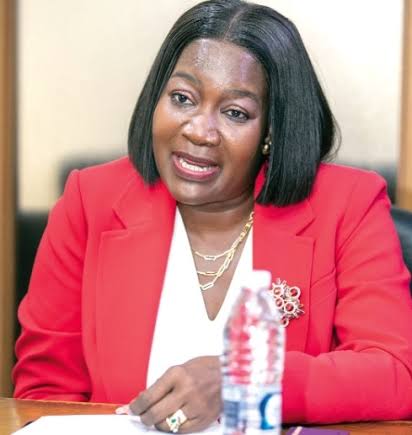
In a strongly worded letter dated August 10, 2026, the GBA President, Efua Ghartey, appealed directly to Chief Justice Paul Baffoe-Bonnie over notices served on lawyers requiring them to appear before judges authorised to continue with part-heard criminal cases during the legal vacation.
The letter followed petitions brought to the Association’s attention by Zoe, Akyea & Co, Dame & Partners and Sam Okudzeto & Associates.
According to the GBA, the lawyers had expressed concern about being required to participate in proceedings during a period traditionally reserved for vacation by lawyers, judges and judicial staff.
The Association cited Order 79, Rule 4 of the High Court (Civil Procedure) Rules, 2004, C.I. 47, which provides for three annual vacations of the High Court. It specifically pointed to the second and longest vacation, which runs from August 1 to September 30.
The GBA argued that the vacation was not created arbitrarily but reflected the need for lawyers, judges and judicial staff to recover from the demanding second term of the legal year.
The Association said that, over the years, the Judiciary and other stakeholders had developed a convention under which certain courts were designated as Vacation Courts to deal with urgent matters, particularly interlocutory applications.
It maintained that Vacation Courts traditionally did not conduct trials.
The Association further pointed to the emergence of Virtual Courts, which it said also operate during the vacation but generally perform the same limited function of dealing with urgent matters rather than conducting trials.
Lawyers say they cannot be forced to attend. The most contentious part of the GBA’s position concerns the availability of counsel.
The Association stated that the willingness and availability of lawyers have traditionally been a decisive consideration in determining whether a case should proceed during the legal vacation.
According to the GBA, once counsel on either side informs the court that they are unavailable during the vacation, the matter should not proceed and ought instead to be adjourned to a date proposed by counsel.
The Association went further, warning that an accused person in a criminal trial should not be placed in the position of having to represent himself or herself merely because the person’s lawyer is unavailable during the vacation.
It argued that the absence of counsel during the legal vacation should not be treated as wilful disobedience of a court process.
The GBA therefore cautioned that any attempt to proceed with cases despite counsel’s declared unavailability, “with or without a warrant”, could create an impression of bias or selective justice.
Chief Justice fires back
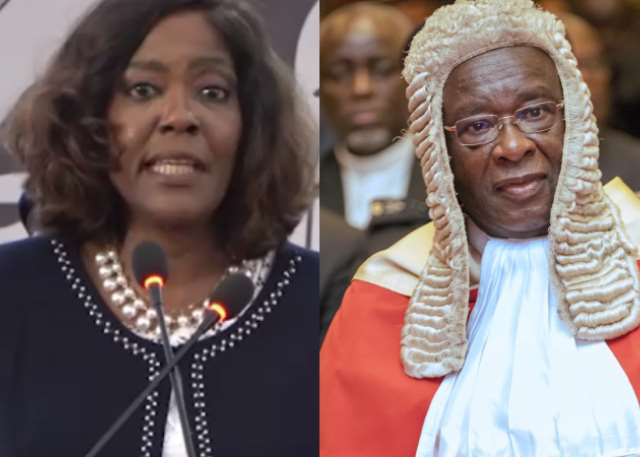
But Chief Justice Baffoe-Bonnie has rejected that interpretation.
Speaking at the Second Quadrennial Delegates Congress of the Senior Staff Association of the Judicial Service of Ghana in Sunyani, the Chief Justice said the existence of a legal vacation does not mean that a judge who is sitting and ready to hear a case is prohibited from doing so.
He rejected the proposition that lawyers could simply notify the Chief Justice that they had made personal arrangements and therefore would not attend court.
According to him, a lawyer’s entitlement to leave depends on arrangements with the lawyer’s client and cannot automatically override the judicial process.
The Chief Justice also stressed that the power to adjourn a case belongs to the judge hearing the matter and is not an administrative decision of the Chief Justice.
The position represents a significant departure from the interpretation advanced by the GBA and has brought the professional body and the head of the Judiciary into an unusually public disagreement.
Deputy Attorney-General enters the dispute
The controversy deepened when Deputy Attorney-General and Minister for Justice Dr Justice Srem-Sai also challenged the GBA’s interpretation.
Dr Srem-Sai argued that legal vacation reduces the workload of the superior courts but does not close the courts or impose a blanket prohibition on substantive proceedings.
He disputed the assertion that Vacation Courts “never” conduct trials, describing that position as unsupported by law, practice or the structure of Ghana’s judicial system.
According to him, judges authorised by the Chief Justice to sit during the vacation may hear both interlocutory and substantive proceedings in cases originating from their own courts.
Where a vacation judge takes over a case belonging to another judge who is on vacation, however, the scope of proceedings may be limited to interlocutory matters.
Dr Srem-Sai’s intervention has therefore provided the government with a legal interpretation that directly contradicts the GBA’s position.
He has maintained that courts have historically conducted trials during legal vacations and that the existence of a vacation should not be used as an automatic mechanism for stopping proceedings.
Why the dispute has become politically explosive
Although the disagreement is framed as a legal and professional question, its timing has inevitably given it a political dimension.
The Mahama administration has intensified prosecutions arising from its Operation Recover All Loot (ORAL) initiative, with the Attorney-General’s Office reporting that approximately 30 cases have been identified as prosecutable and between five and ten already at advanced stages before the courts. Dr Srem-Sai has also indicated that additional cases could be filed during the legal vacation.
Several of the high-profile cases being pursued involve former officials of the previous administration.
That has fuelled accusations from the NPP and its supporters that state institutions are being used disproportionately against political opponents. The government, however, has repeatedly maintained that prosecutions are driven by evidence rather than the political identity of suspects.
Dr Srem-Sai has specifically said that prosecutorial decisions under ORAL are based on whether a case is prosecutable, rather than the status or public profile of the accused.
The legal-vacation dispute has therefore landed in an already politically charged environment.
The question of fair trial rights
Beyond the political argument, the controversy raises an important constitutional question concerning the right of an accused person to adequate legal representation.
A criminal trial is not merely a contest between the State and an accused person. It is a process governed by constitutional guarantees, procedural safeguards and the fundamental principle that an accused person must have a fair opportunity to defend himself.
The GBA’s argument is that forcing defence lawyers to appear despite their declared unavailability could potentially place accused persons at a disadvantage.
The Association has consequently framed its objection not simply as a demand for lawyers’ holiday entitlement, but as an issue affecting the administration of justice itself.
Its letter specifically argued that innocent parties in criminal and civil proceedings should not be compelled to represent themselves because their lawyers are unavailable during a recognised legal vacation.
But can a lawyer’s vacation stop a criminal trial?
That is now the central fault line. The GBA says the established practice requires the court to respect counsel’s unavailability during the vacation.
The Chief Justice says the existence of a legal vacation does not strip a sitting judge of the authority to hear a case.
Dr Srem-Sai goes even further, arguing that substantive proceedings and trials can lawfully continue during the vacation.
The competing positions expose a question that goes beyond the immediate cases: Is legal vacation primarily a right belonging to lawyers and judicial officers, or is it a reduced court calendar that does not extinguish the court’s jurisdiction to conduct substantive proceedings?
The answer could have consequences for how Ghana’s courts handle part-heard criminal cases in future vacations.
The issue of judicial warrants
The GBA’s concern has also been intensified by the use of warrants authorising particular judges to continue with part-heard criminal cases.
According to the Association, two judges indicated openly in court that they were presiding over the matters despite having preferred to take their scheduled leave.
The GBA interpreted this as evidence that the judges were sitting pursuant to vacation warrants rather than voluntarily.
That development has added another layer to the controversy.
If judges themselves are entitled to vacation but are being directed to sit, the question becomes whether lawyers appearing before those judges should equally be required to suspend their vacation arrangements.
The Chief Justice’s position suggests that once a judge is properly sitting, the judicial process cannot simply be halted because counsel has made private arrangements.
The GBA, meanwhile, insists that the established vacation tradition must be respected and that counsel should not be compelled to appear.
A dispute that could test institutional boundaries
The confrontation is significant because the GBA is not an ordinary pressure group. It is the professional body representing Ghana’s lawyers and has historically worked with the Judiciary on the administration of justice.
For its leadership to publicly challenge the manner in which cases are being scheduled during the legal vacation—and for the Chief Justice and Deputy Attorney-General to publicly reject its interpretation—signals an unusually serious institutional disagreement.
It also comes at a moment when the courts are under intense public scrutiny over politically sensitive corruption prosecutions.