By Daniel Bampoe
What was conceived as a major response to persistent water shortages in parts of Accra has now become a multi-million-dollar legal dispute, with Ghana Water Limited (GWL) ordered to pay US$235 million over the termination of the agreement governing the Teshie-Nungua Desalination Plant.
The latest development has revived questions about the economics of the project, the contractual obligations entered into by the state and how a facility designed to provide reliable water to hundreds of thousands of residents ended up becoming the subject of an international arbitration award while remaining idle.
The International Chamber of Commerce (ICC) arbitration tribunal issued two final awards on September 17, 2026, relating to the desalination plant and its associated state guarantee. The awards followed a dispute between GWL and Befesa Desalination Developments Ghana Limited (BDDG) over the termination of the Water Purchase Agreement (WPA).
Spanish infrastructure group Cox Infrastructure Group currently controls 95 percent of BDDG. Cox announced the arbitration outcome on September 21, saying BDDG had been awarded US$235 million, net of taxes, in termination payments, together with interest running from April 1, 2026, until payment is made.
The tribunal also ordered GWL to contribute towards BDDG’s legal costs and substantially rejected counterclaims brought by the Ghanaian utility, including a US$144.5 million claim against the project company.
Under the state guarantee attached to the project, the Republic of Ghana has also been found liable for the amounts awarded, although the project company cannot recover the same amounts twice. Cox says the parties are still engaging in negotiations aimed at reaching an amicable settlement.
From Water Crisis Solution to Legal Crisis
The origins of the controversy go back to 2011, when Ghana Water Company Limited and Spain’s Befesa Agua signed a US$110 million agreement for the production of desalinated water for Teshie, Nungua, La, Tema, Burma Camp and surrounding areas.
At the time, the project was presented as a response to chronic water shortages affecting communities at the end of the Ghana Water distribution network.
The agreement provided for a desalination facility capable of producing 60,000 cubic metres of treated sea water daily, equivalent to approximately 13.2 million gallons.
One of the Ghanaian figures publicly associated with the project’s early development was businessman and politician Augustus “Goosie” Tanoh, who was identified at the time as Befesa’s legal adviser and consultant.
At the 2011 signing, Tanoh said Befesa would invest US$500,000 in a dedicated bulk electricity supply line for the project. He also said the company would finance a 1.5-kilometre pipeline connecting the facility to the Ghana Water grid.
The project was eventually commissioned in April 2015. Its total investment is reported at about US$126 million, and it was designed to supply water to as many as 500,000 people within the Teshie-Nungua catchment.
The facility was developed under a 25-year Build-Own-Operate-Transfer (BOOT) arrangement.
Under that structure, the private project company would build and operate the facility before eventually transferring it under the agreed contractual framework.
The Contract That Became the Problem
At the heart of the current dispute is the Water Purchase Agreement between Ghana Water and the project company.
The agreement required GWL to purchase treated water produced by the facility under specified contractual terms.
The economics of the arrangement subsequently became a major source of controversy.
According to Citi Newsroom, Ghana Water had reportedly been purchasing desalinated water at approximately GH¢6.75 per unit, while the approved tariff allowed the utility to sell it at about GH¢1.47. That created a substantial gap between the cost at which the utility acquired the water and the revenue it could recover from consumers.
The project therefore faced a fundamental commercial problem: the state utility was required to pay for relatively expensive desalinated water while selling it to consumers under regulated tariffs.
The Plant Goes Idle Again
The dispute did not remain confined to arbitration.
The Teshie-Nungua Desalination Plant has been idle since October 2025, after Ghana Water shut it down amid unresolved contractual issues and concerns about maintenance.
The consequences were felt directly by residents.
Teshie, Nungua, Spintex, parts of Sakumono, La and surrounding communities experienced worsening water shortages, forcing some households and businesses to rely on water tankers, boreholes and other alternative sources.
The shutdown consequently created an unusual situation: a major desalination facility designed specifically to provide water to communities suffering from shortages was itself sitting idle while residents struggled to secure reliable supplies.
Mahama Administration Steps Into the Dispute
By February 2026, the dispute had reached the level of the Presidency.
President John Dramani Mahama directed the Finance Minister, the Attorney-General and Ghana Water to negotiate with the plant’s shareholders with the aim of resolving the dispute and facilitating a return to operations.
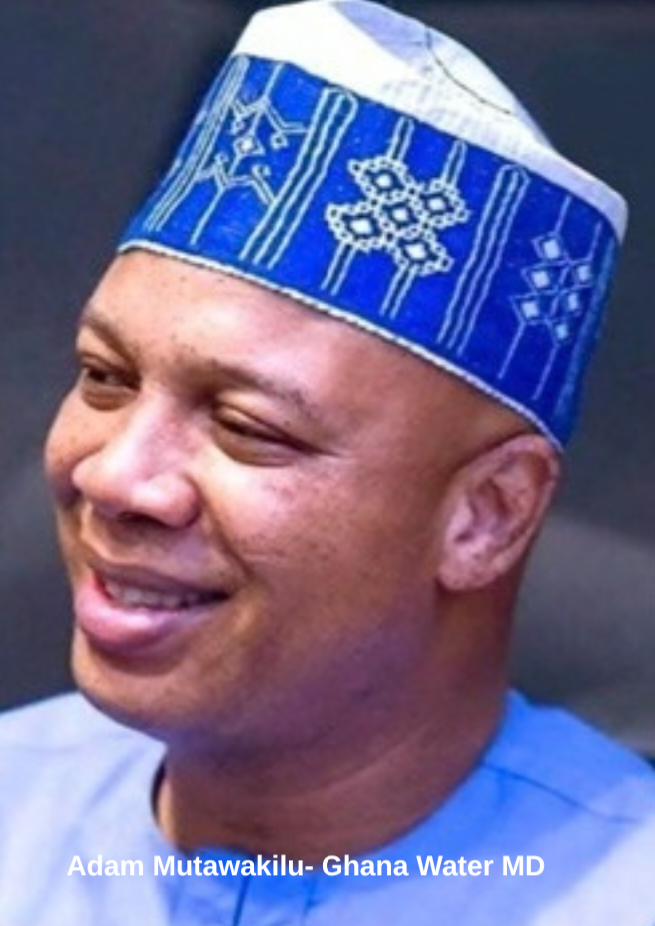
Ghana Water Managing Director Adam Mutawakilu subsequently indicated that the utility was working towards a settlement that could allow the plant to resume supplying water to communities in the affected areas.
Those negotiations have now taken place against the backdrop of the ICC’s final arbitration awards.
Where Goosie Tanoh Fits Into the Story
The name Goosie Tanoh has resurfaced because of his involvement during the project’s formative period.
Tanoh was identified in contemporary reports as Befesa’s legal adviser and consultant when the desalination agreement was signed in February 2011.
At the time, he publicly explained aspects of the company’s infrastructure commitments, including the dedicated electricity connection and the pipeline linking the facility to the Ghana Water network.
His historical association with the project is distinct from the current arbitration dispute.
Tanoh is now serving as Presidential Adviser on the 24-Hour Economy and Accelerated Export Development, having returned to government under the Mahama administration.
There is no evidence in the sources reviewed establishing that Tanoh was responsible for the later termination of the WPA or that his earlier advisory role caused the current US$235 million liability.
His connection is nevertheless noteworthy because he was involved on the private-sector side during the project’s early development and is now a senior government adviser under the administration confronting the consequences of the long-running contractual dispute.
What the Arbitration Tribunal Decided
The September 17 awards have substantially altered the financial stakes.
BDDG has been awarded US$235 million, net of taxes, as termination payments under the WPA, with interest accruing from April 1, 2026.
GWL must also partially reimburse the project company’s legal costs.
The tribunal substantially dismissed GWL’s counterclaims, including the US$144.5 million claim it had sought to recover from BDDG.
The Republic of Ghana’s state guarantee also means the state has an obligation to satisfy the amounts awarded, subject to the tribunal’s ruling against double recovery.
Cox has stressed that the US$235 million is a gross amount recognised within BDDG’s project financing structure and does not directly represent net cash that will accrue to Cox. The ultimate economic impact will depend on recovery, financing arrangements, third-party rights and accounting treatment.
A $235m Bill for a Plant That Is Not Producing Water
The latest development has transformed the Teshie-Nungua facility from a water infrastructure project into a major test of Ghana’s approach to public-private partnerships, sovereign guarantees and long-term utility contracts.
The project was intended to address water shortages affecting hundreds of thousands of residents.
Instead, the state now faces a US$235 million arbitration award plus interest, while the facility remains idle and communities within its intended service area continue to experience water-supply difficulties.