By Nadia Ntiamoah
The identity of the person behind the controversial “Ghana Jollof” TikTok account has become a fresh point of contention in the criminal proceedings involving Techiman-based nurse Salomey Awiti Bafoh, after court documents and a previously filed charge sheet appeared to associate the same social-media identity with different names.
The development has raised questions about the stage at which investigations should be considered sufficiently complete before suspects are prosecuted, particularly as the Ghana Police Service maintains that its latest investigations have identified Barbara Asantewaa Kodua as the person behind the account, Ghana Jollof.
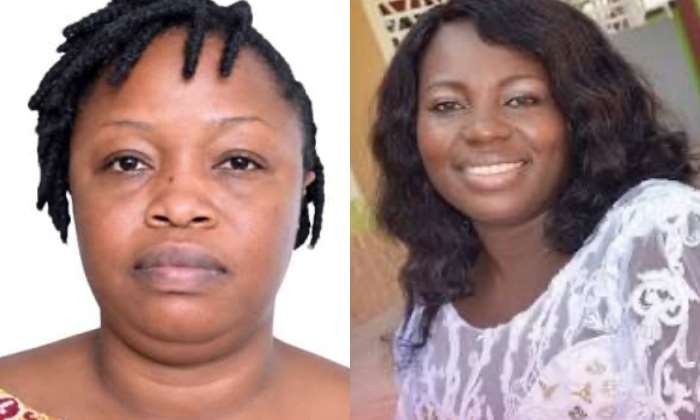
The latest controversy follows the circulation of a funeral poster bearing the name Barbara Asantewaa Kodua. The family associated with that poster has reportedly claimed that their relative, who travelled to the United Kingdom for healthcare, died there and was subsequently brought to Ghana for burial in 2023. That claim has not been independently established by the Police or a court. Some are alleging the poster is a social media prank or AI generated.
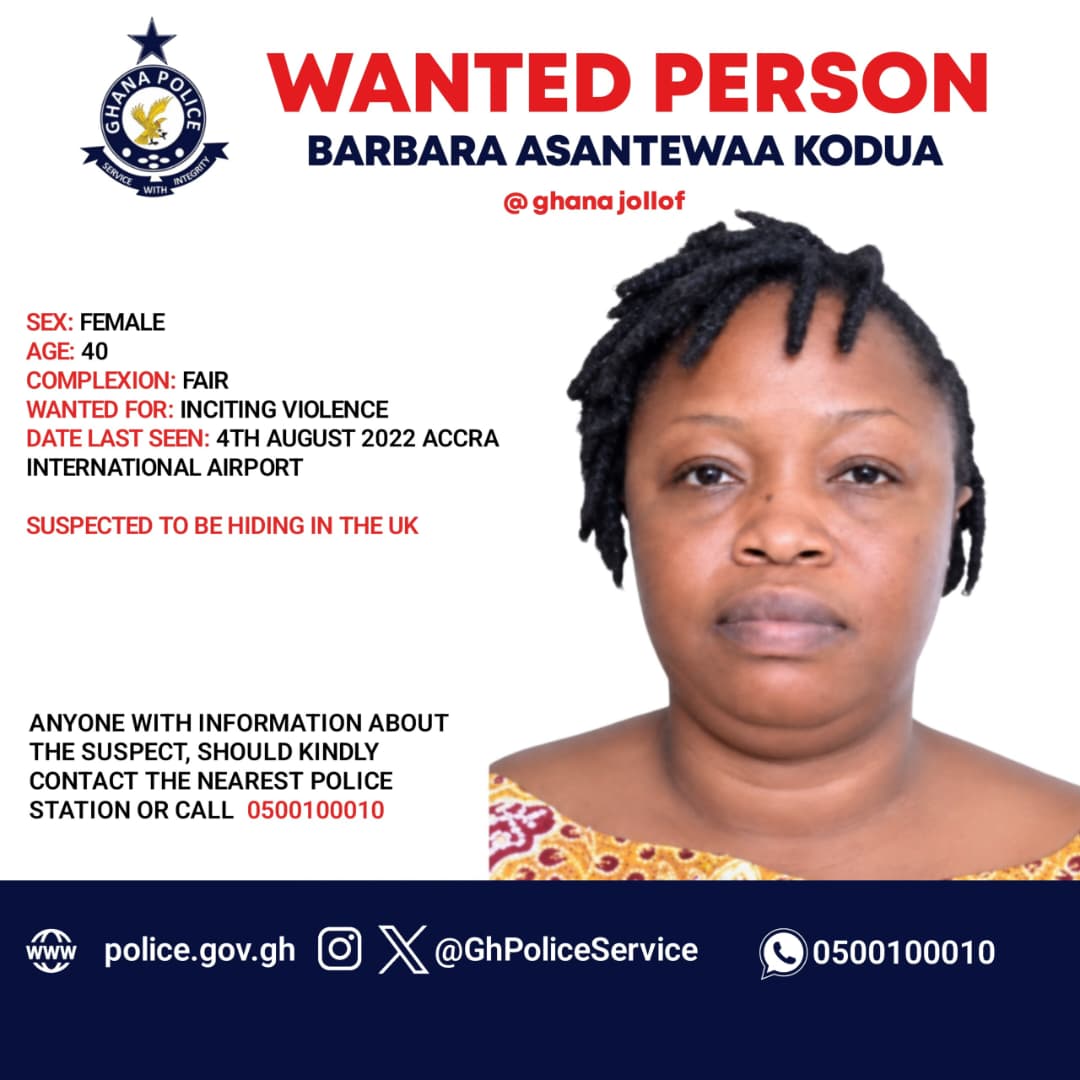
At the same time, the Police have publicly declared a 40-year-old Barbara Asantewaa Kodua, also known as “Ghana Jollof,” wanted over alleged incitement to violence. The Police said she was last seen at the Accra International Airport and was believed to be in the United Kingdom.
The identity question has become even more complicated because of an earlier charge sheet contained in the material surrounding another TikTok case.
That document, identified as CID/HQRS/SIU Case R.O. No. 310/2025, names Yayra Abiwu, alias AY, and Prince Ofori, alias Fante Comedy, while listing Alberta Okrah, alias Ghana Jollof, at large as another accused person.
The charge sheet alleges that AY, through a TikTok livestream in August 2025, facilitated, encouraged or promoted offensive conduct by Alberta Okrah, alias Ghana Jollof, and others. It alleges that threatening, abusive and insulting words were directed at the President, First Lady and other persons.
The significance of that document is that it shows that Alberta Okrah was previously identified in a Police charge sheet as “Ghana Jollof,” whereas the current prosecution involving Salomey Bafoh identifies Barbara Asantewaa Kodua as “Ghana Jollof.”
The issue has been raised publicly by Salomey Bafoh’s lawyer, Enoch Anhwere Afoakwa, who questioned why different individuals have been identified as the operator of the same social-media identity in different cases. The lawyer pointed to the earlier charge sheet naming Alberta Okrah and contrasted it with the current case naming Barbara Asantewaa Kodua on a newsfile show on Saturday.
In the current case, the amended charge sheet filed at the Adenta Circuit Court identifies Salomey Awiti Bafoh, 40, a nurse, as the accused and Barbara Asantewaa Kodua, alias Ghana Jollof, as being at large.
The charge is abetment of crime to wit publication of false news, contrary to Sections 20(1) and 208 of the Criminal Offences Act, 1960 (Act 29). The prosecution alleges that Bafoh, on or before September 13, 2026, in Accra, aided or abetted Kodua to publish and circulate false news on TikTok by allegedly serving as her liaison.
Bafoh has denied being connected to the Ghana Jollof account, and the allegations against her have not been established by a court.
The Police, however, have subsequently offered a more detailed explanation of its case.
At a CID press briefing on September 18, 2026, Director-General of the CID, COP Lydia Yaako Donkor, said police intelligence had identified Barbara Asantewaa Kodua as the owner of the account and that she was believed to be in the United Kingdom. The Police allege that the account had been used to publish offensive and inciteful comments and false information capable of causing fear and alarm.
COP Donkor also alleged that Bafoh assisted in disseminating videos produced by Kodua and recruited other people to redistribute the material across social-media platforms.
The Police went further, alleging that forensic examination of Bafoh’s mobile phone and mobile-money records revealed financial transactions involving people allegedly supporting the activities. Investigators also claim that Kodua sent money to Bafoh in Ghana, who allegedly distributed portions of the funds to others involved in circulating the videos. These remain allegations from the investigation and have yet to be tested in court.
The apparent discrepancy over the identity behind “Ghana Jollof” therefore presents a significant evidentiary question—not necessarily that the current Police identification is wrong, but whether the different identities appearing in separate case documents have been adequately reconciled.
It also raises a broader question about the relationship between investigation and prosecution. Where several security and intelligence institutions are involved in identifying the operator of an anonymous social-media account, establishing the correct identity is central to determining whether an alleged accomplice has any connection to that person.
The issue is particularly important in Bafoh’s case because the prosecution’s allegation against her is dependent, at least in part, on the claim that she acted as a liaison for Barbara Asantewaa Kodua.
Bafoh was arrested through a joint operation involving the Police and National Signals Bureau and was subsequently remanded to assist investigations. The Police say she is expected to reappear on September 30, 2026.
Her lawyers have since challenged her continued detention and filed a High Court bail application pending trial. The defence maintains that the allegations against her have not been established.
The dispute over identity has consequently shifted part of the national debate from the content allegedly published by Ghana Jollof to the more fundamental question of who actually operates the account and what evidence establishes that identity.
For the Police, the current position is that intelligence and forensic investigations have identified Barbara Asantewaa Kodua and uncovered an alleged network involving Bafoh and other individuals. For the defence, the appearance of different names in Police case documents raises questions that should be resolved before the criminal process proceeds further.
The issue now rests increasingly on evidence: establishing the identity of the account operator, demonstrating the alleged relationship between that person and Bafoh, and proving the alleged acts in court.
Until those matters are determined through the judicial process, the competing identities remain allegations and unresolved questions rather than established facts.