By Daniel Bampoe
The opposition New Patriotic Party (NPP) has escalated its attack on the John Dramani Mahama administration over a series of major narcotics seizures linked to Ghana, alleging that the country is increasingly being used as a transit point and, potentially, a processing base for illicit drugs.
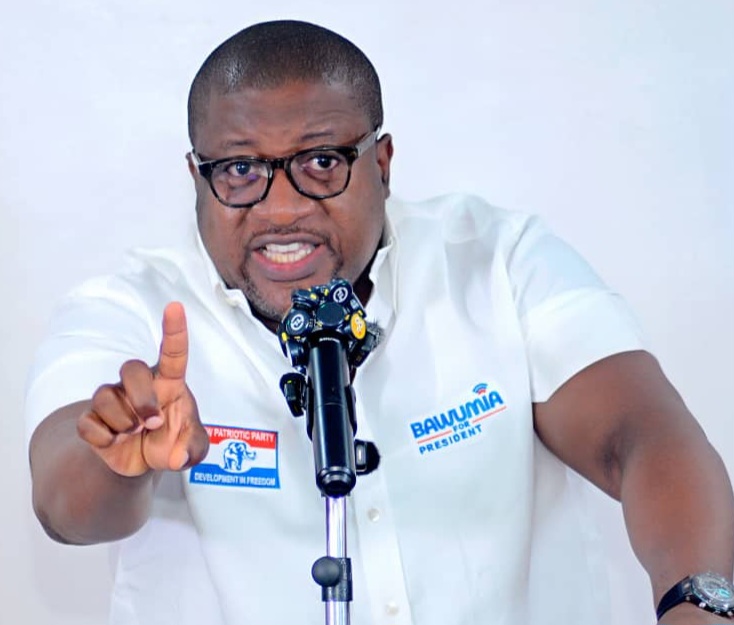
At a press briefing on Tuesday, September 22, 2026, NPP National Organiser Henry Nana Boakye alleged that the development was not occurring by chance but was being facilitated by officials within the ports and airports.
He claimed the party’s intelligence indicated that international drug traffickers had established bases and clandestine laboratories in Ghana to process narcotics before exporting them.
“Our information is that our country has become a major transit point for illicit drugs, for narcotics. And it’s not by accident, but because of the complicity of officials at our port and our airports,” he said.
Nana Boakye further alleged that some government officials were assisting traffickers to move narcotics out of the country, linking the claims to recent seizures involving consignments traced to Ghana and intercepted in Australia, France and South Africa.
He said the repeated appearance of Ghana-linked narcotics in international interceptions raised questions about whether Ghana was becoming an established transit corridor for international trafficking networks.
However, the allegations concerning clandestine laboratories and official complicity have not been publicly substantiated with evidence in the reports reviewed.
The French Cocaine Shipment
The NPP’s allegations come against the backdrop of the September 10, 2026 seizure in France of almost 3.9 tonnes of cocaine, with street value of $261million reportedly concealed in a container carrying plastic waste shipped from Ghana.
The seizure has become the latest and most politically consequential case in a series of narcotics investigations involving Ghana.
Four Ghanaian nationals have subsequently been charged in connection with the alleged export of the cocaine, while Dutch fugitive Jos Leijdekkers, also known as “Bolle Jos”, remains at large. In all 10 people according government communication have been arrested in connection with the bust.
The case has triggered investigations in Ghana into the shipment’s movement, the people allegedly connected to it and the systems through which the container passed before leaving the country.
NPP Demands Dismissals
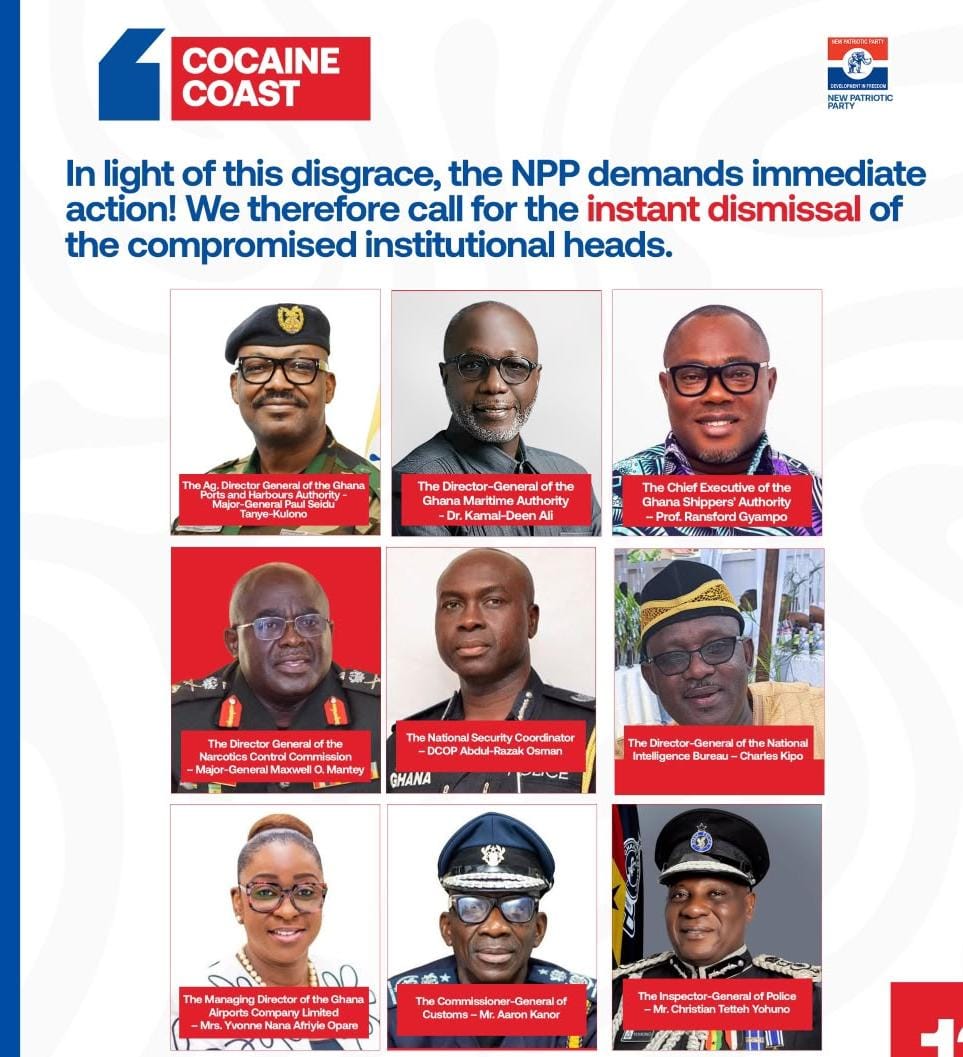
Nana Boakye went beyond calling for investigations, demanding the removal of officials he believes should be held responsible for failures within Ghana’s drug-interdiction and security chain.
He accused President Mahama of responding to the crisis with meetings rather than disciplinary action.
According to the NPP National Organiser, approximately nine officials should have been removed from office over the cases under investigation.
“They have relaxed on their duties. They must be sacked. Yet the president calls for a meeting. Nothing happens. We voted for leadership, not weak leadership,” he said.
He argued that the government had received sufficient evidence of repeated failures to justify stronger action.
Nana Boakye also criticised President Mahama’s September 17 meeting with security chiefs, during which the President ordered an inter-agency task force to develop a roadmap within two weeks for strengthening measures against narcotics trafficking through the borders. Even before the deadline series of arrests have been made in connection with narcotics leaving Ghana.
The NPP official described the government’s approach as evidence of what he characterised as weak leadership.
Pedu Junction Case Returns to the Spotlight
The NPP also revisited the massive cocaine seizure at Pedu Junction in Cape Coast on March 4, 2025.
According to Nana Boakye, the tipper truck intercepted in that operation was carrying more than 3.3 tonnes of cocaine, concealed beneath heaps of sand while travelling from the Western Region towards Accra.
He placed the estimated street value of the consignment at approximately US$350 million.
He also referred to another reported interception on the Takoradi-Cape Coast highway in March 2025, which he said involved about 120 slabs of cocaine valued at approximately US$150 million.
Nana Boakye argued that the two incidents alone represented approximately 4.5 tonnes of cocaine, describing the scale as a major national-security concern.
The figures and valuation cited by the NPP should be distinguished from independently established court findings, as estimates of narcotics value can vary according to the market and methodology used.
The Aircraft Controversy
The NPP National Organiser also resurrected the controversy surrounding two aircraft that landed at Kotoka International Airport in March 2025.
The aircraft — identified in the political debate as Air Med Flight N823AM and a Cavok Air Antonov 12B — became the subject of questions from the NPP Minority, then led in the matter by Assin South MP Rev. John Ntim Fordjour.
The Minority questioned the contents and circumstances surrounding the aircraft and demanded investigations.
Government officials rejected the allegations, maintaining that the aircraft had legitimate reasons for being in Ghana and that security checks did not uncover illegal items.
NACOC similarly stated that security checks conducted on the aircraft did not detect illicit substances.
Nana Boakye nevertheless accused the government of attempting to intimidate the MP who raised the concerns, including alleging that national security operatives had been dispatched to arrest him.
President Mahama had previously directed relevant investigative and security institutions, including NACOC, the Police Criminal Investigation Department, the National Intelligence Bureau and the National Security Coordinator, to work with Rev. Ntim Fordjour on investigations into the aircraft allegations.
From Ghana’s Ports To International Airports
The NPP’s argument is built around what it describes as a pattern rather than isolated incidents.
Nana Boakye pointed to the recent French cocaine seizure, reports of methamphetamine linked to Ghana being intercepted in Australia and a drug arrest in Johannesburg involving a passenger who had travelled from Accra.
He argued that the repeated appearance of Ghana-linked consignments abroad should prompt authorities to examine the country’s role in international trafficking routes.
But the existence of international seizures linked to Ghana does not by itself establish that the Ghanaian government or its officials facilitated them. Establishing such a connection would require evidence identifying the people responsible and demonstrating how they allegedly participated in the trafficking operations.
Government Response Comes Under Scrutiny
The political pressure comes after President Mahama took steps to strengthen the government’s response.
Following an urgent meeting with security chiefs on September 17, the Presidency announced that 10 individuals, including four officers of the Customs Division of the Ghana Revenue Authority, were being held while investigations continued.
The President also directed the creation of an inter-agency task force to submit a detailed border-security roadmap within two weeks.
The government’s actions have therefore included arrests, investigations and an institutional review of the country’s security systems.
The NPP, however, argues that these measures do not go far enough and wants specific officials held accountable for alleged failures.
The Laboratory Allegation
Perhaps the most serious allegation made at Tuesday’s press conference was the claim that drug traffickers had established clandestine laboratories inside Ghana.
Nana Boakye said the NPP had intelligence indicating that such facilities were being used to process narcotics for export.
“The intelligence that we have picked is that these drug lords, these traffickers, they have established laboratories here for processing of illicit drugs and narcotics under the watch of President Mahama,” he alleged.
However, he did not publicly identify any alleged laboratory, provide physical evidence of such facilities or name the individuals purportedly operating them.
That means the claim remains an allegation requiring verification through law-enforcement investigations.