By Nadia Ntiamoah
The Bank of Ghana (BoG) says Ghana’s economic recovery is gaining momentum, supported by falling inflation, stronger private-sector credit growth, improved banking-sector resilience and a strengthening external position.
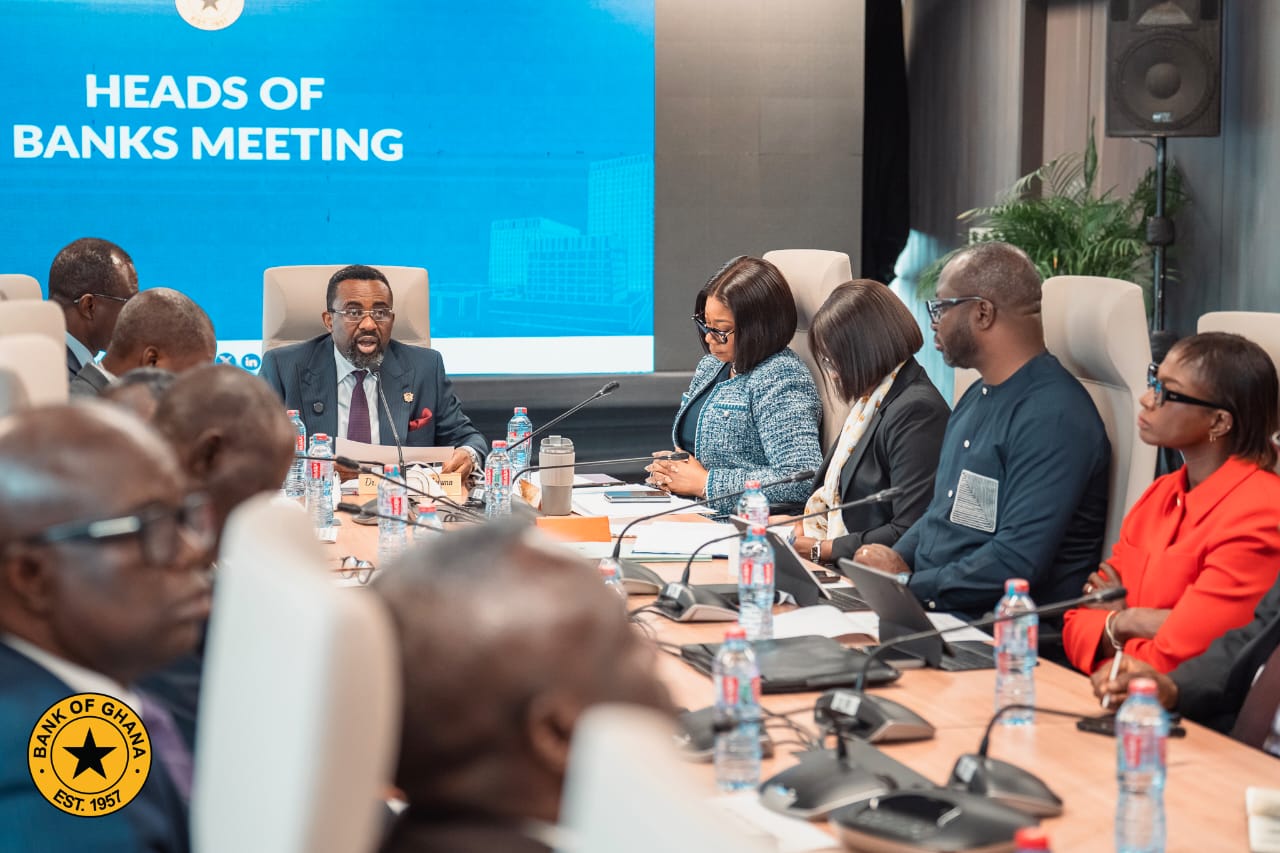
Speaking at a post-Monetary Policy Committee (MPC) engagement with heads of banks at Bank Square in Accra on Wednesday, August 12, 2026, the Governor of the Bank of Ghana, Dr Johnson Pandit Asiama, said the latest economic indicators pointed to sustained domestic resilience despite growing uncertainties in the global economy.
Dr Asiama said the MPC, at its 131st regular meeting in July 2026, assessed developments and risks to inflation and economic growth and concluded that the domestic economy continued to perform strongly.
He noted that the global outlook had become more complicated following the renewed escalation of conflict in the Middle East and the closure of the Strait of Hormuz, developments which had contributed to instability in energy markets and increased uncertainty around global trade and financing conditions.
Despite those external pressures, Ghana’s real Gross Domestic Product (GDP) expanded by 6.4 per cent in the first quarter of 2026, compared with 6.2 per cent during the corresponding period of 2025. According to the Governor, services and industry were the main drivers of the growth.
The Bank’s Composite Index of Economic Activity, he added, also pointed to sustained and broad-based economic momentum, while consumer and business confidence surveys remained positive amid optimism about growth, subdued inflation and declining lending rates.
Inflation has also continued to moderate. Headline inflation fell from 5.3 per cent in June to 4.6 per cent in July 2026, with the decline attributed largely to slower food inflation and relative stability in the exchange rate, which helped contain imported price pressures.
With inflation remaining below the lower boundary of the Bank’s medium-term target band of 8±2 per cent, the MPC unanimously decided to maintain the Monetary Policy Rate at 14 per cent.
Dr Asiama explained that the Committee considered the existing policy stance appropriate for guiding inflation towards the medium-term target while allowing the central bank to assess the potential consequences of the changing geopolitical environment on Ghana’s economy.
Credit to private sector surges
The Governor also pointed to significant easing in financial conditions, with interest rates across various segments of the money market continuing to moderate.
The easing, he said, was beginning to translate into stronger lending to businesses and other private-sector operators.
Private-sector credit growth reached 41.2 per cent in June 2026, compared with 8.6 per cent a year earlier. Real private-sector credit growth stood at 34.1 per cent, a development Dr Asiama described as significant.
He nevertheless urged banks to ensure that the improved financial conditions translate into productive economic activity, particularly by expanding access to finance for small and medium-sized enterprises.
BoG urges banks to support agriculture
Dr Asiama expressed concern that many SMEs, particularly those operating along agricultural value chains, continued to struggle to obtain financing because banks often considered such businesses relatively high-risk.
He urged banks to develop a deeper understanding of the sectors and businesses they finance and to design credit products that reflect the seasonal nature of agricultural activities.
He suggested that repayment schedules could be aligned with borrowers’ cash flows and the timing of agricultural production, arguing that such flexibility could help SMEs access finance while enabling banks to manage risks more effectively.
According to him, banks are not simply financial intermediaries but important partners in the economic transformation.
Banking sector strengthens
The Governor also highlighted improvements in the health of Ghana’s banking sector.
Total banking-sector assets increased by 30.7 per cent in June 2026, driven mainly by growth in deposits and shareholders’ funds.
The sector’s Capital Adequacy Ratio also improved significantly, rising from 10.6 per cent in June 2025 to 20.4 per cent in June 2026.
At the same time, the Non-Performing Loan ratio declined from 23.1 per cent to 16.1 per cent over the same period.
Dr Asiama attributed the developments partly to the collective efforts of banks and other institutions within the financial sector.
Trade surplus reaches US$8.8bn
The country’s external position has also strengthened, according to the Governor.
In the first half of 2026, the trade surplus increased to US$8.8 billion, up from US$5.8 billion during the same period in 2025.
The improvement was supported by strong earnings from gold and cocoa exports.
The current-account surplus also increased from US$4.1 billion to US$5.1 billion, while the overall balance-of-payments position benefited from the stronger external position and a larger capital-account surplus.
Gross international reserves stood at US$12.9 billion at the end of June 2026, equivalent to 5.0 months of import cover.
Dr Asiama said the cedi had also continued to show relative stability on the foreign exchange market.
BoG warns banks over dud cheques and illegal digital lenders
The Governor used the engagement to raise concerns about regulatory compliance, including an increase in incidents involving dud cheques.
He urged banks to properly utilise approved overdraft facilities or available funds in linked accounts, where permitted, before returning cheques unpaid.
Banks were also encouraged to strengthen monitoring systems and increase customer education to reduce repeat offences and maintain confidence in cheque-based payments.
The central bank is also intensifying efforts to clamp down on unlicensed digital lending operators.
Dr Asiama disclosed that the Bank had begun publishing weekly lists of entities providing digital credit services without the required approval from the BoG.
He urged banks to conduct enhanced due diligence before establishing relationships with Digital Credit Service Providers and to verify their licensing status with the central bank.
BoG targets diaspora investment
Another area identified by the Governor was the mobilisation of funds from Ghanaians living abroad.
He disclosed that a recent Bank of Ghana survey of diaspora investment products across the banking industry showed that banks generally did not have dedicated, ready-made investment products specifically designed for the Ghanaian diaspora.
As a result, remittances continue to enter Ghana largely through traditional transfer channels rather than being channelled into structured savings, bonds and other investment products.
Dr Asiama urged banks to explore opportunities in the remittance market by developing bank-led investment products, mobile-money solutions and digital remittance platforms.
He said the Bank of Ghana remained committed to working with relevant stakeholders towards developing a national remittance strategy aimed at strengthening remittance flows and ensuring that a greater share of those inflows is directed towards savings, investment and broader economic development.
The Governor concluded by describing the current economic environment as both an opportunity and a responsibility, arguing that the gains recorded so far provide a foundation for sustainable economic growth.
He assured the banking industry that the Bank of Ghana would continue providing the regulatory and policy environment needed to support a sound, resilient and growth-oriented financial sector while maintaining engagement with banks to address emerging challenges.