By Daniel Bampoe
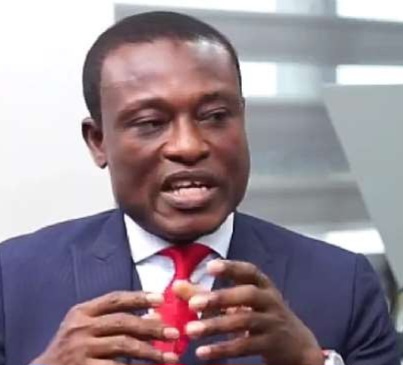
Ghanaian legislator and Pan-African Parliament committee chairman, Frank Annoh-Dompreh, has challenged African leaders and continental institutions to end the cycle in which the continent possesses enormous strategic resources but struggles to translate that wealth into tangible improvements in the lives of its people.
The Member of Parliament for Nsawam-Adoagyiri argued that Africa’s critical minerals, expanding continental trade architecture and environmental assets should become instruments for industrialisation, job creation and shared prosperity rather than resources whose greatest economic value is captured outside the continent.
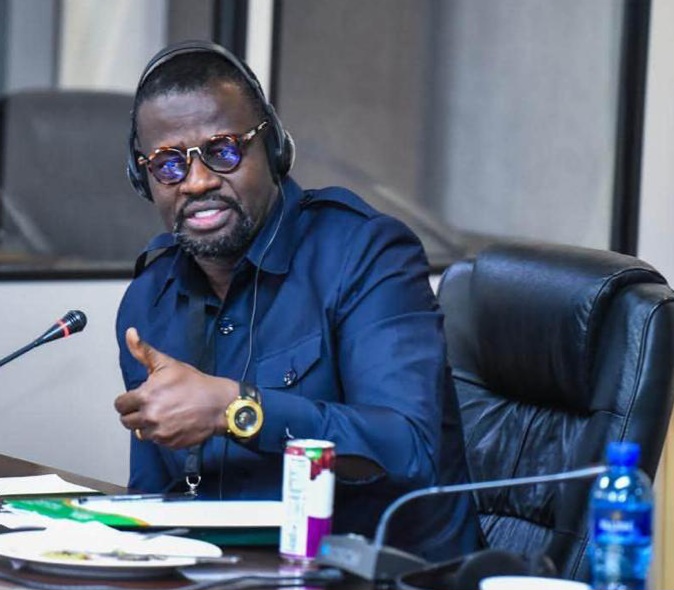
Annoh-Dompreh made the intervention during a high-level working lunch between the Pan-African Parliament (PAP) and the South African Institute of International Affairs (SAIIA), where discussions centred on South Africa’s G20 legacy and Africa’s place within a changing global economic and political order.
The engagement brought together the PAP Bureau and Chairpersons of Permanent Committees to assess the achievements of South Africa’s G20 Presidency, Africa’s participation in the forum and what the succeeding United States Presidency could mean for the continent, particularly regarding debt, international trade, climate finance and BRICS.
While commending the policy briefing and the presenters’ understanding of the issues, Annoh-Dompreh said Africa had spent considerable time defining the position it believed it should occupy within the global system.
He maintained that the bigger challenge was now converting continental positions, strategies and agreements into coordinated action that produces measurable benefits for ordinary Africans.
Mineral Wealth Must Work For Africans
At the centre of Annoh-Dompreh’s intervention was Africa’s vast supply of critical minerals, which have assumed greater global importance due to their role in renewable-energy technologies, thereby intervening towards cleaner sources of energy.
“Africa has some of the world’s largest deposits of these critical minerals. That should give us considerable leverage in the global energy transition,” he said.
However, he questioned whether African countries had developed a sufficiently coordinated position governing how those resources should be extracted, processed and commercialised.
His concern was that without a common strategy, the continent could remain trapped in the historical pattern of exporting raw and unprocessed resources while countries elsewhere undertake refining, manufacturing and technological production and consequently capture a much greater share of the economic value.
Annoh-Dompreh’s position effectively placed beneficiation and value addition at the heart of the debate over Africa’s natural-resource future. Rather than measuring the continent’s mineral strength solely by the size of its deposits or exports, he argued for a development approach that utilizes those resources to establish industries, create employment, and increase Africa’s participation in global value chains.
Responding to the concerns, Ms Jordan McLean of Southern Transitions pointed to the African Green Minerals Strategy and the work of the African Minerals Development Centre as important foundations for building a coordinated continental approach.
She indicated that Africa possesses approximately 30 per cent of global reserves of key minerals, giving the continent an important negotiating position that could be used to secure better partnerships, encourage domestic value addition and ensure African participation at several stages of production.
McLean nevertheless cautioned that the global rush for African minerals should be viewed beyond the stated objective of supporting the energy transition.
“External partners are not approaching Africa’s minerals only through the prism of the energy transition. They are also seeking to secure access to those resources,” she said.
The discussion therefore underscored the danger of Africa continuing primarily as a supplier of raw materials while foreign economies dominate the more profitable stages of processing, manufacturing and technology.
Annoh-Dompreh Questions Global Climate Finance
Annoh-Dompreh also turned his attention to what he described through his questions as inequalities within the international climate-finance architecture.
He recalled commitments by developed economies to mobilise substantial financial resources to help developing countries respond to climate change but noted that the promised support had repeatedly fallen below expectations.
“In the face of the vulnerabilities confronting our continent, how do we position ourselves when the polluter-pays principle is globally accepted, yet the promised support does not arrive?” he questioned.
He further highlighted what he sees as a historical imbalance in the global climate debate: industrialised economies were able to develop through carbon-intensive activities, while African countries seeking their own industrial transformation are being encouraged to pursue cleaner development pathways.
“The developed world industrialised through pollution at a time when there was no comparable international climate regime. Africa is now moving towards industrialisation, but the global message is that we must rely on renewable and clean energy,” Annoh-Dompreh stated.
His intervention did not reject renewable energy. Instead, it raised the question of whether the available technologies, financing arrangements and power-generation capacity are sufficient to meet Africa’s enormous industrialisation and development needs while countries simultaneously fulfil climate obligations.
McLean responded by advocating a climate conversation built around risk, preparedness and adaptation while maintaining equity as an important principle. She observed that African economies remain highly vulnerable to climate shocks despite the continent’s relatively small contribution to historical global emissions.
She also pointed to climate-adaptation finance promoted under South Africa’s G20 Presidency, including financing for resilient infrastructure, climate-responsive agriculture and measures intended to protect vulnerable populations.
Falling solar and wind-energy costs, she explained, could also provide significant opportunities if international partnerships lead to local manufacturing, technology transfer and African participation in renewable-energy value chains rather than simply increasing dependence on imported equipment.
Carbon Credits Come Under Scrutiny
Another major issue raised by the Nsawam-Adoagyiri MP was the operation of carbon-credit schemes across Africa.
Annoh-Dompreh acknowledged that Africa’s forests, ecosystems and relatively low emissions could give the continent significant economic opportunities in international carbon markets. However, he expressed concern about questions surrounding the credibility, transparency and fairness of some carbon-credit projects.
“How do we position ourselves as a continent when questions are being raised about the credibility of carbon-credit declarations and arrangements?” he asked.
The issue goes beyond the existence of carbon markets. His intervention highlighted the need for common African standards that protect communities, improve transparency and ensure that revenues generated from the continent’s environmental resources contribute meaningfully to national and local development.
Without effective safeguards, the discussion suggested, carbon markets could risk reproducing the same extractive relationships Africa is attempting to overcome in the minerals sector, with control or benefits associated with African environmental resources flowing elsewhere without corresponding gains for affected communities.
‘AfCFTA Still Not Being Felt By The People’
Annoh-Dompreh also challenged African governments and institutions over the pace at which the African Continental Free Trade Area (AfCFTA) is translating into economic opportunities for citizens.
Despite the enormous promise attached to the agreement, he argued that its practical benefits remained insufficiently visible to ordinary Africans.
“We have signed the African Continental Free Trade Area Agreement, one of the largest trade arrangements beyond the World Trade Organization, but it is still not being felt by the people,” he said.
He consequently questioned what fundamental steps governments and continental institutions must take to move AfCFTA beyond declarations and agreements into an effective mechanism for increasing intra-African trade, industrialisation and economic integration.