By Daniel Bampoe
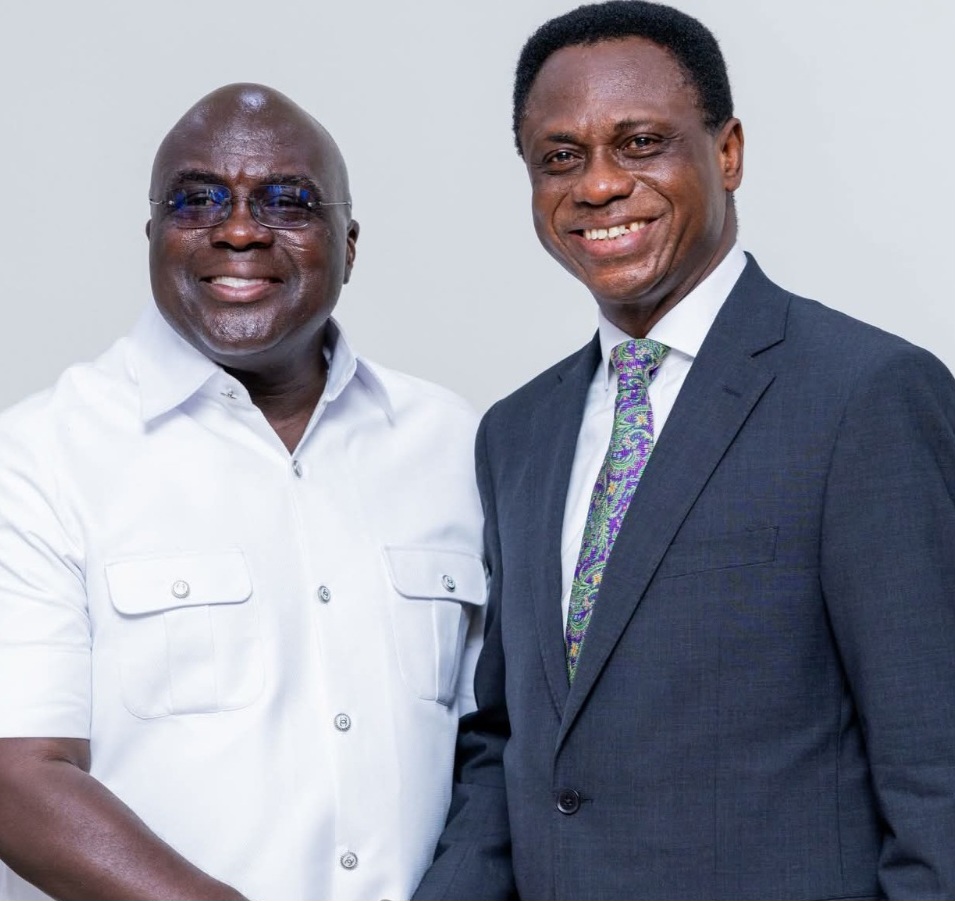
A dramatic turn in the ongoing controversy surrounding remarks by Dr. Mary Awusi unfolded at the Pentecost International Worship Centre (PIWC) Trasacco, where Chief of Staff Julius Debrah publicly appealed to the Church of Pentecost for forgiveness, following days of national outrage over what many have described as “uncultured” conduct by a senior government appointee.
The emotional moment, witnessed by top state officials including President John Dramani Mahama and the Vice President, has since triggered mixed reactions across the country.
The thanksgiving service, held in honour of Debrah’s 60th birthday, became more than a celebratory gathering.
It turned into a stage for public contrition after the Church’s Chairman, Apostle Eric Kwabena Nyamekye—whose recent comments on illegal mining sparked the controversy—mounted the pulpit as the main preacher for the day.
His presence symbolically tied the service to the unresolved tensions that had gripped both religious and political circles over the past week.
Addressing the congregation, Debrah acknowledged the offensive remarks made by Mary Awusi and attempted to distance the government from any perceived disrespect toward the Church.
In an emotional appeal, he stated: “But the chairman of our church, you know, myself, Elder Ofosu Ampofo, our Local Government Minister, and several others are members of your church.
A few days ago, one of our colleagues, Dr. Mary Awusi, slipped a bit against you… and I want on this occasion… to let the whole church forgive us. It was just a slip. It wasn’t intentionally done to malign our church. I believe sincerely that you will forgive her and forgive us and accept us as your children.”
His plea comes on the back of a controversy that began when Mary Awusi, Chief Executive of Ghana Free Zones Authority speaking on Accra Fm on Thursday, warned Apostle Nyamekye against “behaving like a politician” in his criticism of illegal mining, adding that he would be “dealt with as a politician” if he persisted.
The remarks were widely condemned as threatening and disrespectful, igniting public backlash and drawing calls for disciplinary action.
Although Dr. Mary Awusi later issued a lame apology—stating, “if I said things that didn’t come out well, I retract and apologise”—many critics dismissed it as inadequate and poorly framed.
The apology, widely described as conditional and lacking sincerity, failed to calm tensions, with sections of the public insisting it did not reflect genuine remorse.
Julius Debrah’s intervention, however, has opened a new front in the controversy.
While some have praised his humility and willingness to seek reconciliation, others have sharply criticised the gesture, describing it as misplaced and ineffective.
Critics argue that the Chief of Staff’s emotional display does not substitute for concrete action, particularly when the President himself has yet to enforce the code of conduct governing his appointees.
In strongly worded reactions, some commentators dismissed Mr. Debrah’s tears.
One critique noted that “the tears you shed… were nothing but fake ones,” insisting that the apology should have come directly from Dr. Awusi rather than through an intermediary.
Others argued that true accountability would require her to personally appear before the Church leadership to offer an unqualified apology.
Interestingly Awusi was conspicuously missing at the event that attracted ‘who’s who’ in government.
The backlash further extended into calls for dismissal. Critics contend that allowing Dr. Awusi to remain in office despite the controversy undermines standards of public conduct.
Some have gone as far as demanding that she be removed from her position, arguing that anything short of that would signal tolerance for misconduct within government ranks.
The opposition New Patriotic Party has also maintained pressure on the government, reiterating calls for decisive action.
They argue that the Chief of Staff’s public plea, while symbolic, does not address the core issue of accountability and risks being seen as an attempt to manage optics rather than enforce discipline.
Meanwhile, the broader context of the controversy remains rooted in Apostle Nyamekye’s longstanding advocacy on illegal mining. As far back as 2022, he described galamsey as a “human problem” requiring collective national effort, a position he reiterated in his recent address.
Supporters insist that his comments were consistent and non-partisan, further questioning why they attracted such a sharp response from a government official who has made radio stations her second office.