BY Daniel Bampoe
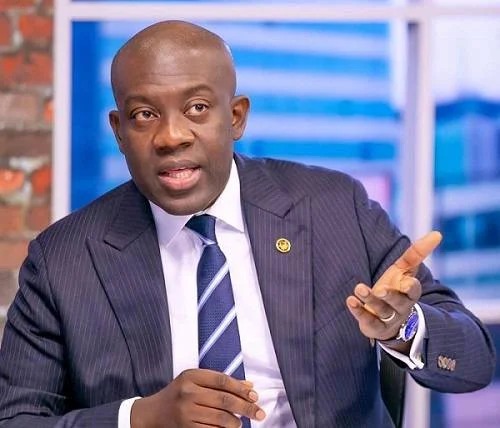
The Member of Parliament for Ofoase-Ayirebi and Ranking Member of the Economy and Development Committee, Kojo Oppong Nkrumah, has cautioned that the recent drop in inflation could prove short-lived if policymakers fail to address the rising cost of production, particularly electricity tariffs affecting businesses.
Speaking in an interview with Joy News, the former Information Minister argued that the current decline in inflation is largely being driven by strict monetary controls implemented by the Bank of Ghana, rather than real improvements in productivity or reductions in the cost of doing business.
His remarks follow the latest data released by the Ghana Statistical Service, which showed that inflation fell to 3.3 percent in February 2026, the lowest level recorded in several years. While acknowledging the decline as a positive development, Oppong Nkrumah warned that the figure may not reflect deeper economic realities.
“I submit respectfully that when you are not doing much about the cost-push side, that is when the Bank of Ghana will come in to do heavy sterilisation to suck out the money,” he said. “So there’s very little money for people to demand.”
According to him, the central bank’s policy of mopping up excess liquidity through open market operations has reduced the amount of money circulating in the economy. This, he explained, has weakened consumer purchasing power, leading to reduced demand for goods and services and consequently slowing price increases.
“In plain terms, people don’t have purchasing power,” he said. “Products are still in the market, but buyers cannot afford them.”
Oppong Nkrumah noted that inflation is influenced by two major forces: demand and production costs.
However, he believes current policy measures have focused heavily on restricting money supply while doing little to tackle underlying cost pressures faced by businesses.
He pointed to rising electricity tariffs as a key example, warning that producers across several sectors are already reporting significant increases in their utility bills.
According to him, many manufacturers and service providers have experienced electricity cost hikes ranging between 24 and 28 percent, adding pressure to operating expenses.
“The question we should be asking ourselves is, has anything been done to arrest or contain it?” he asked.
The Ofoase-Ayirebi MP argued that these rising production costs will eventually translate into higher prices for consumers. Once monetary tightening measures are relaxed and liquidity returns to the economy, he said inflation could quickly rebound if the underlying structural issues remain unresolved.
“In economics, if you reverse the method and the substantive issues have not changed, you will get a reversal of the scenario,” he cautioned.
Oppong Nkrumah therefore urged policymakers to complement monetary controls with broader structural reforms aimed at lowering the cost of production. Such reforms, he suggested, should focus on areas including electricity tariffs, transportation costs, and the price of production inputs.
Without such measures, he warned, the recent progress in reducing inflation could prove fragile, as the fundamental drivers of rising prices remain largely unaddressed.