BY Issah Olegor
A fresh storm of controversy has erupted following the disclosure that the government, under President John Dramani Mahama second term, plans to acquire two executive jets, four military helicopters, and two offshore patrol vessels at a combined cost of US$1.2 billion.
The announcement, revealed in the 2026 Budget Statement by the Minister for Finance, Cassiel Ato Forson, has sparked sharp criticism from the opposition New Patriotic Party in Parliament, who described the initiative as extravagant, ill-timed, and out of touch with the current economic realities.
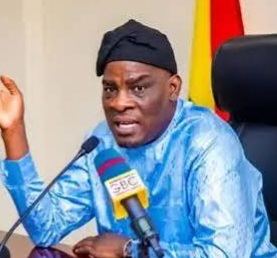
Former Finance Minister, Dr Mohammed Amin Adam and MP for Karaga said at a press conference in reaction to the budget statement that the planned acquisition of the aircraft at the cost of US$1.2 billion is a misplaced priority, pointing out that one of the pressing issues facing the country is youth unemployment.
“They have forgotten about you after getting power from you. That is why their priority has shifted to the use of the recent helicopter accident involving some of our gallant citizens as cover to procure two jets, four helicopters, and two offshore patrol vessels. This is going to cost our country US$1.2 billion. Government must come clear why the purchase of two Executive Jets is a priority at the time it is asking Ghanaian workers to sacrifice more.”
Playback of Kufuor Era
The plan to procure new presidential jets is not unprecedented. The history dates back to former President John Agyekum Kufuor’s administration in 2007. Kufuor initiated negotiations for two aircraft: the French-built Dassault Falcon 900 EX-Easy, intended to replace the then aging presidential jet, and a larger Boeing Business Jet (BBJ) capable of carrying over 100 passengers in VVIP settings.
While the Falcon was delivered in 2010 at a cost of approximately US$40 million, the BBJ was cancelled under the subsequent John Evans Atta Mills administration.
Critics at the time, including the National Democratic Congress (NDC) and civil society actors, argued that the cost of the two-aircraft plan was unnecessary, labelling it a misuse of public funds.
During the John Evans Mills administration, John Mahama served as Vice President and chairman of the Armed Forces Council.
Reports and later revelations from former Attorney General Martin Amidu alleged that John Mahama engaged in secret negotiations for the acquisition of multiple jets, including expensive aircraft and hangars from Brazilian Aircraft Company, manufacturers of Embraer without the full knowledge of President Mills.
Martin Amidu maintained that President Mills, upon learning of these dealings, established a committee—including officials such as William Aboah, then Interior Minister, George Amoah, and Brig. Gen. Allotey (Rtd), a former Judge Advocate General of the Ghana Armed Forces—to investigate the alleged irregularities in the aircraft procurement process.
The committee’s mandate was to examine the selection, negotiation, and pricing of the aircraft, as well as the level of economic due diligence conducted.
However, the investigation was reportedly obstructed, and never took off before President Mills died.
Fast forward to 2025, and the NDC is now in power, reviving plans to expand the presidential and military aviation capabilities.
Minister for Finance, Ato Forson, in his budget presentation, announced the government’s intention to procure four modern helicopters for the Ghana Armed Forces (GAF), alongside two new offshore patrol vessels for the Navy.
In addition, two executive jets are slated to replace the Falcon 900 EX-Easy aircraft, which currently serves as the main presidential transport.
The Falcon just returned from eight months servicing in France at an undisclosed colossal amount.
Deputy Minister of Defence Ernest Brogya Genfi provided further insight into the Falcon jet’s condition, noting that it had undergone a mandatory 24-month, 16,000-flight-hour inspection in France.
During this process, corrosion was discovered in the aircraft’s fuel tanks, requiring extensive repairs. Subsequent fuel leakages in the right-hand wing further delayed its return.
Brogya Genfi explained that the Falcon, while technically airworthy, is inadequate for long-haul trips due to its limited passenger capacity of 11 plus crew.
As a result, chartered aircraft have often been used for official trips, increasing costs and logistical complexity.
The NDC Government officials justify the new jets as “fit-for-purpose” solutions, capable of carrying larger delegations, handling long-range flights without mid-air refueling stops, and providing strategic lift capabilities for both presidential and military operations.
However, critics argue that these justifications mask a more pressing issue: the US$1.2 billion price tag appears excessive given Ghana’s economic challenges.
Over the past two years, the country has faced high inflation, rising debt obligations, and repeated calls from authorities for wage restraint and cost containment measures.
The opposition MPs have expressed outrage and contend that the purchase of luxury jets, military helicopters, and naval vessels is politically and morally tone-deaf, especially when juxtaposed with government appeals for public-sector sacrifices.
The Minority in Parliament has demanded a detailed procurement plan, transparency in tendering, and justification for the priority given to these acquisitions over critical domestic needs such as healthcare, education, and delayed salary payments.
They point out a striking pattern of controversy surrounding presidential aircraft acquisitions in Ghana. From the aborted BBJ order under Mills to Mahama’s alleged secret dealings, and the subsequent Airbus bribery scandal linked to contracts during the 2009–2015 period, successive administrations have faced accusations of opaque procurement practices.
Minority Rejects US$1.2 Price Tag
The opposition New Patriotic Party (NPP) has warned that the current US$1.2 billion proposal risks repeating historical mistakes, suggesting that undisclosed financial interests or “shares” may be involved in the procurement process.
In terms of cost comparison, the current US$1.2 billion proposal dwarfs the John Kufuor-era Falcon purchase of US$40 million, even accounting for inflation and technological upgrades.
They argue that Ghana could secure modern, long-range aircraft at significantly lower costs if procurement procedures were competitive and transparent.
Recent jumbo and luxury plane donated to US President, Donald Trump by the Qatari Royal Family was valued at US$400 million, raising questions about the cost of the Ghanaian presidential fleet.
However, as Parliament begin to debates on the 2026 Budget this week, the NDC government will face pressure to provide a comprehensive explanation of the necessity, cost, and procurement methodology for the new presidential jets and accompanying defence equipment.