
BY ISSAH OLEGOR
Parliament has approved the Ghana Cocoa Board (COCOBOD) Bill, 2026, ushering a new legislation establishes a modern legal framework to govern the country’s cocoa industry, introduces a new domestic financing model, guarantees a minimum share of cocoa revenues for farmers, and seeks to boost local value addition and strengthen institutional accountability.
The Bill, which was passed under a certificate of urgency, repeals the fragmented legal regime that has governed COCOBOD for several decades and replaces it with a single legislative framework aimed at regulating, supervising and promoting activities across Ghana’s cocoa value chain.
The passage of the legislation comes after months of intense national debate over the future of the cocoa industry.
Throughout the 2025/2026 crop season, cocoa farmers, Licensed Buying Companies (LBCs), purchasing clerks and industry stakeholders repeatedly complained about delayed payments, funding constraints, declining cocoa production and financial difficulties confronting COCOBOD.
Those concerns prompted calls for comprehensive reforms to restore confidence in one of the most important economic sectors.
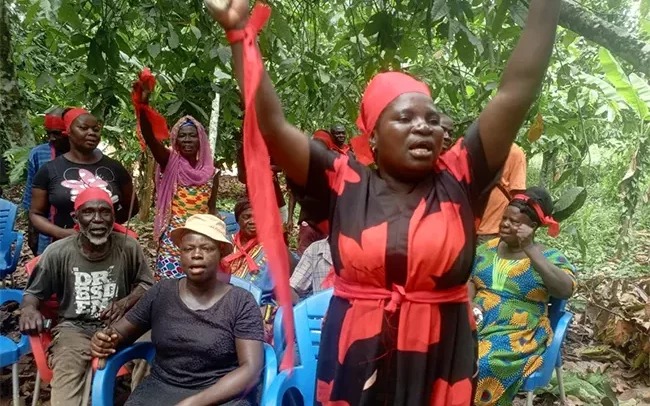
The issue also became a major political subject after the Minority Caucus in Parliament embarked on nationwide engagements with cocoa farmers across several cocoa-producing regions, where farmers appealed for prompt payments, improved producer prices and reforms within the cocoa purchasing system.
The Minority subsequently urged Parliament to allow broader stakeholder consultation before passing the new COCOBOD legislation, arguing that the Bill would fundamentally reshape the cocoa industry.
Despite those concerns, Parliament proceeded to approve the legislation.
One of the most significant provisions in the new law is the statutory guarantee that cocoa farmers will receive not less than 70 percent of the Free-On-Board (FOB) price of cocoa. While previous governments operated the policy administratively, the new law elevates it into a legal obligation that future governments must observe.
Presenting the Bill during the second reading, Deputy Minister for Finance Thomas Nyarko Ampem explained that the objective was to permanently protect cocoa farmers from future reductions in their share of cocoa export earnings.
“We should legislate this so that it becomes binding and no one can decide tomorrow to reduce the farmers’ share from 70 to 60 percent,” he told Parliament.
He further argued that the provision provides legal certainty for cocoa farmers and secures their incomes regardless of future policy changes.
The legislation also introduces a major shift in how COCOBOD finances cocoa purchases. For more than three decades, the Board relied primarily on syndicated international loans backed by forward cocoa sales to finance annual cocoa purchases. However, following Ghana’s debt restructuring programme and changing international financial conditions, government says that financing model has become increasingly unsustainable.
According to the Deputy Finance Minister, the new law establishes a domestic financing framework that will enable COCOBOD to mobilise local capital to finance cocoa purchases from farmers.
“This Bill introduces a new funding model that will enable COCOBOD to source financing locally to purchase cocoa beans from our hardworking farmers,” he explained.
Another major feature of the legislation focuses on expanding local cocoa processing. For years, industry stakeholders have argued that Ghana exports too much raw cocoa while capturing only a limited share of the value generated from chocolate and other finished cocoa products.
To address that challenge, the new law requires that at least 50 percent of the cocoa production be reserved for domestic processing.
Government believes the measure will stimulate investment in chocolate manufacturing, create jobs, promote industrialisation and increase value addition within the cocoa sector.
The legislation also reforms COCOBOD’s scholarship programme. While children of cocoa farmers will continue to benefit from educational support, future scholarship awards will increasingly prioritise programmes that directly contribute to research, innovation and the long-term development of the cocoa industry.
Although the Minority acknowledged the need to modernise Ghana’s cocoa legislation, Members expressed reservations about aspects of the governance structure proposed under the new law.
Speaking during the debate, Member of Parliament for Effia, Isaac Yaw Boamah, agreed that consolidating the numerous amendments made to COCOBOD legislation over the years was necessary to reflect current realities.
“When you have so many fragmented pieces of legislation, it is important to consolidate them to reflect contemporary realities, including the registration and licensing regimes,” he stated.
However, he argued that COCOBOD should operate with greater institutional independence and reduced external interference while maintaining transparency, accountability and sound corporate governance.


