
BY Daniel Bampoe
The New Patriotic Party (NPP) has rejected the approach being adopted by the National Democratic Congress (NDC) government towards the proposed review of Ghana’s 1992 Constitution, arguing that changes of such magnitude should not be drafted and advanced solely by the government of the day.
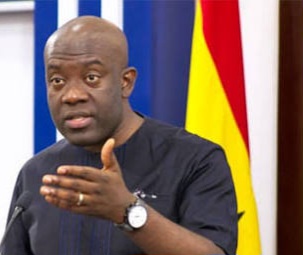
The party’s position was announced on Thursday, September 17, 2026, by the NPP’s Policy Coordination Committee Chairman, Kojo Oppong Nkrumah, at a press conference in Accra on the ongoing constitutional review process.
Oppong Nkrumah said the NPP supports the amendment of aspects of the 1992 Constitution but disagrees with what it considers an overly government-driven process for implementing the recommendations of the Constitution Review Committee.
The former Information Minister said the NPP believes the scale of the proposed changes goes far beyond an ordinary constitutional amendment and requires a broader national deliberative process involving political parties, organised labour, professional associations, traditional authorities, civil society, religious bodies, youth, women, persons with disabilities, the private sector and other identifiable groups.
The party’s position follows the completion of work by the independent Constitution Review Committee chaired by Professor H. Kwasi Prempeh. According to the NPP statement, the committee was appointed by President John Dramani Mahama in January 2025, inaugurated later that month and subsequently undertook consultations across the country, including engagements with political parties.
The NPP said it participated in that process and submitted its Peduase Report to the committee.
The party said the committee presented a summary of its recommendations to the President in December 2025 and submitted its full report in February 2026.
According to the NPP, the full report, which runs to more than 500 pages, was not made public until July 30, 2026, when the Attorney-General, Dominic Ayine, also presented the government’s Position Paper on the recommendations.
The government subsequently established an 11-member Constitution Review Implementation Committee chaired by former Attorney-General and Minister for Justice Marietta Brew Appiah-Oppong. The committee has been tasked with preparing the proposed constitutional amendments.
The NPP argues that the timetable raises concerns because the implementation process has proceeded quickly after the publication of the review committee’s report, with the government targeting the introduction of the first amendment Bills by November 2026 and a referendum on entrenched provisions alongside the 2027 District Assembly elections.
Oppong Nkrumah described the scale of the proposed changes as unprecedented under the Fourth Republic.
According to the NPP’s analysis of the government’s Position Paper, the Constitution Review Committee proposed amendments affecting 147 of the 299 existing Articles of the 1992 Constitution, alongside approximately 59 new provisions.
The party therefore puts the total number of propositions at 206.
On the NPP’s calculation, the proposed amendments would affect approximately 49 per cent of the existing Constitution.
Oppong Nkrumah argued that such extensive changes should not be treated as routine amendments to an existing constitutional framework.
“Amendments to 147 of the 299 Articles, together with 59 new provisions, 206 propositions in all, reaching into the executive, the legislature, the judiciary, the independent institutions and local government, are not adjustments to a constitution,” he said.
He argued that the scale of the proposals was closer in substance to an overhaul of the constitutional order and should therefore attract a process comparable to previous major constitutional exercises in Ghana.
NPP challenges government’s treatment of review recommendations.
The party’s analysis records 22 recommendations as fully accepted by the government and 25 as accepted in principle but subject to modification. It regards the remaining 100 recommendations as areas where the government’s position differs from the recommendations of the committee.
On that methodology, the NPP says the government differs from the committee on 100 of the 147 recommendations, representing approximately 68 per cent.
The party acknowledged that other organisations have arrived at different percentages depending on how recommendations accepted in principle are classified. The NPP’s statement specifically referenced a Trades Union Congress assessment that placed the government’s rejection rate at 54 per cent.
Oppong Nkrumah argued that the difference in methodology does not alter what he considers the central issue: that a substantial number of the independent committee’s recommendations have been altered or rejected by the government.
He consequently questioned whether the proposed reforms would ultimately represent the recommendations generated through the nationwide consultation or the preferences of the government currently in office.
“The first question the country must ask is: whose views are we therefore amending the Constitution to reflect?” he asked, framing the issue as one of ownership and legitimacy rather than merely drafting.
NPP wants wider deliberation before referendum
The party is therefore calling for the establishment of a Constituent or Consultative Assembly before the proposed amendments are finalised.
According to Oppong Nkrumah, such a body would provide a platform where disagreements between the government’s Position Paper and the independent committee’s recommendations could be debated and resolved before any final constitutional text is presented to Parliament or the electorate.
The NPP says the proposed assembly should include representatives from political parties, organised labour, professional bodies, the National House of Chiefs, religious organisations, women’s groups, persons with disabilities, students and youth groups, the private sector, civil society organisations and the regions.
Oppong Nkrumah argued that this approach would help ensure that the final constitutional text is the product of broad national agreement rather than the policy preference of the governing party.
The call comes amid similar concerns raised publicly by other stakeholders.
The Ghana Bar Association has called for a Constituent Assembly, with its President, Ms Efua Ghartey, arguing that the scale of the proposed constitutional changes could effectively amount to the creation of a new constitutional order and therefore requires extensive consultation.


