By Issah Olegor
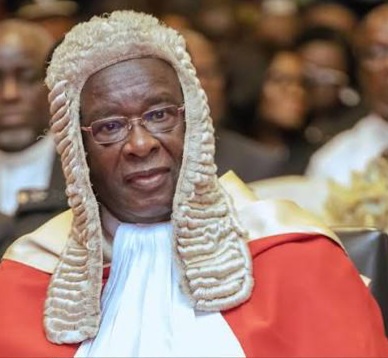
The New Patriotic Party (NPP) has launched a fresh ttack on Chief Justice Paul Baffoe-Bonnie, accusing him of presiding over what it describes as a selective judicial process targeted at persons associated with the opposition party.
In a statement issued on Tuesday, August 11, 2026, the NPP condemned the Chief Justice’s defence of warrants authorising two High Court judges, Justices Francis Apangabuno Achibonga and Audrey Kocuvie-Tay, to conduct full criminal trials during the ongoing legal vacation.
The party argues that the decision is unprecedented because, according to its account, all the cases affected by the warrants involve persons associated with the NPP.
The NPP has consequently questioned why only two courts out of 29 courts operating as vacation courts have allegedly been authorised to conduct full criminal trials requiring the physical attendance of accused persons and their lawyers.
The party contends that the development raises serious questions about the impartiality of the Judiciary and whether the legal vacation is being applied consistently to all accused persons.
NPP questions why only two courts were selected.
According to the NPP, 29 courts are currently operating as vacation courts under the established arrangements for the legal vacation.
The party cited General Jurisdiction 2 at the Law Court Complex as an example, saying the court is handling cases from General Jurisdiction 1 through 7. It also pointed to Tamale Court A, which it said is serving the High Courts in Tamale, Wa and Nalerigu, as well as the Goaso High Court, which it said is serving Sunyani, Wenchi, Goaso and Techiman.
The NPP maintains that the established practice among these vacation courts is to deal primarily with motions and urgent interlocutory applications, many of which are conducted virtually.
It further claims that vacation judges generally do not entertain substantive business and that even case management conferences are routinely declined during the period.
Against that background, the party argues that the decision to issue special warrants to two courts to conduct full criminal trials requires explanation.
The NPP’s central question is: Why were these two courts singled out, and why do the cases before them require exceptional treatment during the vacation?
‘Why pause murder trials but continue NPP cases?’
The party has also challenged what it describes as selective urgency in the judicial process.
According to the NPP, cases involving serious offences, including murder, rape, narcotics and armed robbery, have been adjourned until the end of the legal vacation.
It therefore questions why the legal vacation should be capable of delaying trials involving alleged serious crimes but should not similarly apply to cases involving political opponents of the government.
The party argues that the difference in treatment creates the perception that the objective is not simply the efficient administration of justice but the continued prosecution and possible incarceration of NPP personalities.
The statement specifically linked the controversy to the recent conviction of NPP Ashanti Regional Chairman Bernard Antwi-Boasiako, popularly known as Chairman Wontumi, describing his trial as having been conducted with what the party considers undue haste.
The NPP insists that the vacation warrants must therefore be viewed within the broader context of what it describes as intensified prosecutions against members and personalities associated with the previous administration.
GBA intervention fails to change the situation
The party also pointed to interventions by defence lawyers and the Ghana Bar Association.
It said counsel for the accused persons, including lawyers from Zoe, Akyea & Co. and Dame & Partners, wrote to the Chief Justice on August 5, 2026, informing him of their unavailability during the legal vacation and requesting that the warrants be withdrawn.
The NPP said the Ghana Bar Association subsequently wrote to the Chief Justice on August 10, expressing concerns about the conduct of trials during the vacation and reminding the Judiciary of what the Association considers the established practice governing vacation courts.
According to the NPP, the GBA’s position is that vacation courts traditionally do not conduct trials and that proceedings should not continue where counsel have formally indicated that they are unavailable.
The party said despite those interventions, the warrants remain in force.
It accused the Chief Justice of responding publicly by defending the warrants rather than reconsidering the concerns raised by the legal profession.
NPP cites courtroom incident
The party’s criticism intensified following what it described as an incident in court on Tuesday involving one of the two judges authorised to conduct vacation trials.
According to the NPP, the judge was aware that defence counsel had notified the court of their unavailability but nevertheless adjourned the matter for less than a week.
The party claims that the accused person was subsequently given what it described as an impossible choice: find a new lawyer within days or personally conduct the cross-examination of a prosecution witness.
The NPP further alleges that the judge indicated that he would continue sitting until the Chief Justice revoked the warrant.
The party argues that the development raises serious questions about the accused person’s constitutional right to legal representation.
It invoked Article 19 of the 1992 Constitution, which provides fair-trial protections to accused persons, including the right to defend themselves personally or through a lawyer of their choice.
The NPP described the incident as more than ordinary case management, arguing that it potentially threatens the accused person’s ability to mount an effective defence.
Chief Justice’s appointment comes under attack
The NPP has also revived political controversy surrounding the appointment of Justice Paul Baffoe-Bonnie as Chief Justice.
The party referred to the circumstances surrounding the removal of former Chief Justice Gertrude Torkornoo, which the NPP maintains was politically orchestrated and remains the subject of litigation.
It further pointed to the confirmation process for Justice Baffoe-Bonnie, which it said was conducted amid opposition from the Minority in Parliament, including a walkout.
The party argued that although it expected the new Chief Justice to demonstrate strict independence after assuming office, his handling of the vacation warrants has reinforced its concerns about the political neutrality of the Judiciary.
The NPP alleged that the Chief Justice’s actions appear to be working in concert with what it described as the Attorney-General’s agenda against NPP personalities.
It warned that the Judiciary must never become an extension of the Office of the Attorney-General.
‘Justice emanates from the people’
The party also invoked Article 125(1) of the Constitution, which states that judicial power is vested in the Judiciary and that justice emanates from the people.
The NPP argued that those entrusted with judicial authority must remain conscious of the responsibility attached to the exercise of that power.
The party warned that decisions taken by public officials, including judicial officers, would ultimately be judged by history and, where applicable, by law.
It therefore urged the Chief Justice to reconsider the vacation warrants and restore what it describes as the established practice governing court proceedings during the legal vacation.
NPP demands withdrawal of warrants
The party has outlined a number of demands in response to the controversy.
It is calling on the Chief Justice to immediately withdraw the warrants authorising the vacation trials and allow the affected cases to resume when the legal term reopens.
It is also demanding that the concerns raised by the Ghana Bar Association be given serious consideration and that the established practice governing vacation courts be restored.
The NPP further wants the courtroom ultimatum allegedly given to an accused person to be rescinded, arguing that no accused person should be compelled to conduct his or her own defence because counsel is unavailable during the legal vacation.
The party has also urged the Chief Justice to refrain from publicly defending decisions that are the subject of legitimate professional protest and instead allow his actions to be judged by their conformity with the Constitution and the law.
A widening confrontation over the Judiciary
The NPP’s latest statement adds another layer to an increasingly heated national debate over the independence of Ghana’s Judiciary and the prosecution of political figures.
The party insists that it supports the rule of law and judicial independence but says it will resist what it describes as the weaponisation of the courts against its members.
The Chief Justice, however, has maintained that a legal vacation does not prevent a properly constituted court from sitting and that lawyers cannot automatically stop proceedings simply because they have made personal arrangements during the vacation.
Deputy Attorney-General and Minister for Justice Dr Justice Srem-Sai has similarly argued that substantive cases and trials can be conducted during the legal vacation under the applicable judicial arrangements.
The competing positions have therefore transformed what might ordinarily have been an administrative disagreement over court scheduling into a broader constitutional and political controversy.