
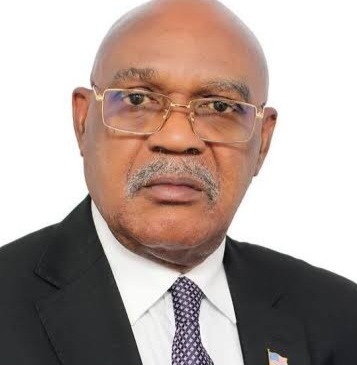
By Nadia Ntiamoah
Renowned diplomat and humanitarian peace mediator, Amb. Prof. Dean Roberts Jnr., has urged Africans on the continent and in the diaspora to confront the enduring legacy of the trans-Atlantic slave trade by strengthening unity, preserving their history and rebuilding their communities around a shared identity.
Prof. Roberts, who is High Commissioner and Continental Vice President of the U.N.I.P.G.C.-USA, as well as a security and conflict-resolution expert and ordained minister, said Africans must move beyond viewing their history solely through the lens of victimhood and instead recognise the resilience of generations who survived one of the darkest chapters in human history.
He made the call while speaking at the Internationally acclaimed Ibiaku Clan Development Association family retreat at the Plush Villa Hilton Hotel in Uyo, Akwa Ibom State, Nigeria, held under the theme, “Reclaiming Our Story — Ibiaku History, Identity and Heritage.”
His remarks were linked to the global debate surrounding the historical consequences of the trans-Atlantic slave trade and comments attributed to President John Dramani Mahama during an address to the United Nations General Assembly in New York commemorating the International Day of Remembrance of the Victims of Slavery and the Transatlantic Slave Trade.
According to Prof. Roberts, the slave trade should be understood not only as a historical tragedy but also as an event that fundamentally altered African families, communities, identities and systems of social organisation.
He described himself not merely as a “victim of history” but as a survivor and beneficiary of the resilience of Africans who endured the consequences of slavery and displacement and whose descendants now live across different parts of the world.
Prof. Roberts said the trans-Atlantic slave trade employed a brutal strategy that fractured African communities, separated families and weakened traditional structures before millions of Africans were forcibly transported to the Americas, the Caribbean and other parts of the world.
He argued that the consequences of that history remain visible today, particularly in the loss of ancestral names, family connections, cultural identity and knowledge among Africans in the diaspora.
He maintained that Africans must begin to see themselves as members of one extended family rather than communities competing against one another.
Referencing President Mahama’s remarks on the slave trade, Prof. Roberts said the recognition of the historical crime against humanity should serve as an opportunity for Africans to reflect on what can be done to rebuild connections rather than allowing the painful history to become another source of division.
The diplomat further called for stronger efforts to preserve African history and heritage, arguing that communities must document their stories and pass them on to younger generations so that future generations understand where they came from.
He said the same spirit should guide the Ibiaku community in Akwa Ibom, insisting that the community must harness the talents and resources of its people both at home and abroad rather than allowing its human capital to remain disconnected from its ancestral roots.
In his closing remarks, Prof. Roberts pledged to promote the name and heritage of Ibiaku on international platforms.
He called for collective cooperation among the people of Ibiaku and Mkpat in Akwa Ibom State, including those living outside Nigeria, to support initiatives aimed at advancing the community’s development.
He also highlighted the role of Amb. Dennis Ufot, whom he described as a United Nations Peace Ambassador, saying his diplomatic experience, integrity and leadership qualities could contribute to efforts to position the community for greater international recognition.
Prof. Roberts ultimately challenged Africans to transform the painful legacy of slavery into a motivation for unity, development and cultural renewal.
He said Africa’s future should not be determined by the divisions created by its past, stressing that communities must reclaim their history, protect their identity and develop their own destiny rather than continuing to “export” their future.


