
BY Grace Zigah
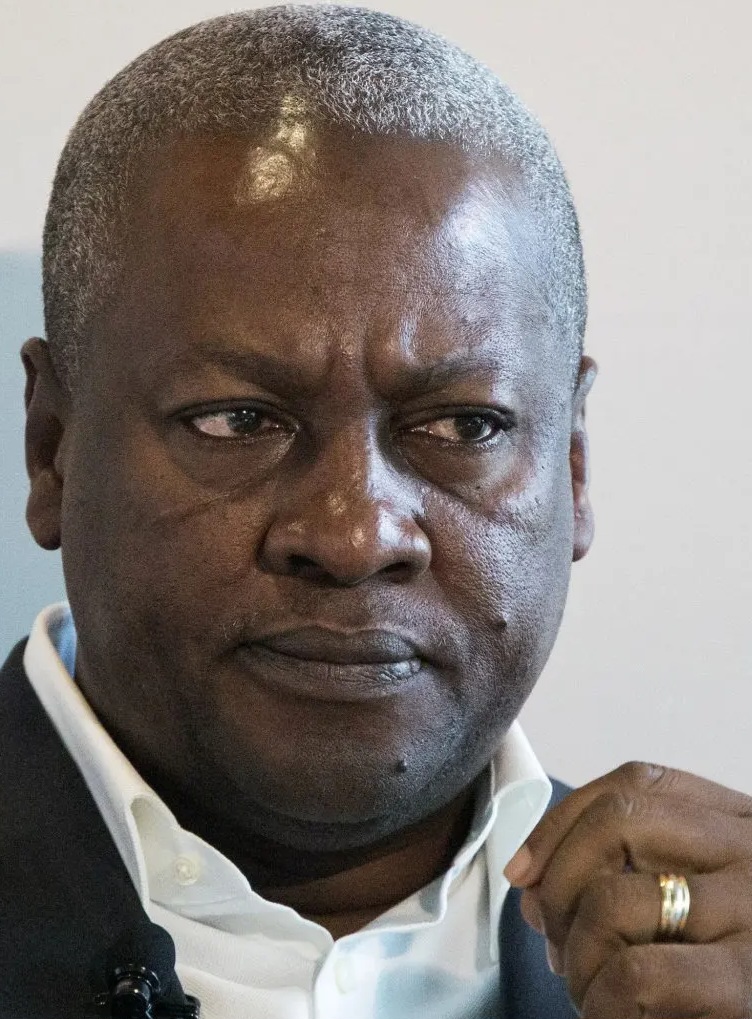
President John Dramani Mahama is facing mounting pressure over his government’s approach to fighting illegal mining, widely known as galamsey, as civil society groups, religious leaders, academics, and policy experts intensify calls for decisive action.
The president appears to be helpless as the galamsey canker surges, calling for a crunch meeting today at the Jubilee House with stakeholders on the way forward.
Old Battles, New Promises
The fight against galamsey has plagued successive governments for nearly two decades but Mahama had promised to root it out within four months of assuming office.
In 2017, then-President Nana Addo Dankwa Akufo-Addo made a dramatic pledge to put his presidency on the line to eradicate illegal mining after declaring suspension of small scale mining for over a year.
Despite military crackdowns, special task forces, and the creation of Inter-Ministerial Committees, the problem only deepened.
Water bodies were polluted, farmlands destroyed, and forests depleted, while mining communities resisted government interventions that threatened their livelihoods.
John Mahama, in his 2024 election campaign, sought to distance himself from what he described as Akufo-Addo’s “militarised failure.”
He promised a “humane approach” that would integrate small-scale miners into the formal economy instead of brutalizing them.
He said he will grant amnesty to those workers arrested and go after the kingpins when he gets power.
This message resonated with many rural communities, particularly in mining regions, and contributed to his electoral comeback.
Interestingly, after assuming power, he has made a U-turn on his campaign promise, and rather than continuing to arrest the workers on the pit, which the previous government was doing, he recently justified it by stating that his government is making an effort to fight the menace.
OccupyGhana’s Renewed Petition
But 10 months into his second administration, critics argue that Mahama’s softer stance has backfired.
OccupyGhana, one of the country’s most vocal pressure groups, has revived its petition against illegal mining.
In a strongly worded letter dated September 29, 2025, the group reminded Mahama that it had, exactly three years earlier, petitioned Akufo-Addo over the same issue — a letter that went unanswered despite eight follow-up reminders.
“Ghana cannot afford to repeat the mistakes of the past,” OccupyGhana declared, insisting that the government must enforce existing laws under the Minerals and Mining Act, 2006 (Act 703).
The Christian Council Pressure
The Christian Council of Ghana (CCG) has also waded into the debate. In a September 28 statement, the Council called for a total ban on galamsey and warned of “grave and irreversible damage” to the country’s rivers, farmlands, and forests.
The clergy joined earlier calls by the Ghana Catholic Bishops’ Conference, the National Catholic Laity Council, and the Ghana Coalition Against Galamsey for the government to consider declaring a state of emergency.
“Our children and future generations deserve a Ghana where rivers run clean, farms flourish, and communities thrive,” said Rev. Dr. Cyril Fayose, General Secretary of the CCG.
Critics Within Mahama’s Own Party
Perhaps most strikingly, criticism is emerging from within Mahama’s own political family.
Dr. Cadman Atta Mills, economist and brother of the late President John Evans Atta Mills, has publicly condemned the government’s approach, warning that short-term economic gains from gold sales cannot justify long-term ecological destruction.
“I refuse to pay for the accolades President Mahama and the NDC are receiving for the cedi’s recovery with my health or life,” he wrote on social media, vowing not to remain silent on galamsey.
Mahama’s Dilemma
At a recent media briefing last Month, President Mahama acknowledged the devastation caused by illegal mining but insisted that his government must also consider the livelihoods of the estimated four million Ghanaians who depend on small-scale mining.
He rejected calls for a state of emergency, arguing that existing laws are sufficient for enforcement if applied consistently.
In a controversial move, he suggested that the newly restructured Ghana Gold Board (GoldBod) could purchase gold from all miners — legal and illegal — to boost state reserves.
Critics, including former Tourism Minister Andrew Egyapa Mercer, warned that such policies risk legitimizing an illegal trade and further undermining environmental protection.
What Next?
John Mahama has convened a high-level dialogue scheduled for today, October 3, 2025, bringing together civil society organisations, academics, journalists, and faith leaders in what many see as a last-ditch effort to salvage public confidence.
The meeting is expected to shape the next phase of Ghana’s anti-galamsey strategy, though doubts remain about whether consensus can translate into action.
For now, the President finds himself caught between competing pressures: environmentalists demanding a crackdown, miners seeking survival, and a public weary of endless promises.


