-BY Grace Zigah
Fresh controversy has erupted over the recently established committee by President John Dramani Mahama to investigate allegations against the Chief Justice of Ghana, Her Ladyship Justice Gertrude Araba Esaaba Sackey Torkornoo.
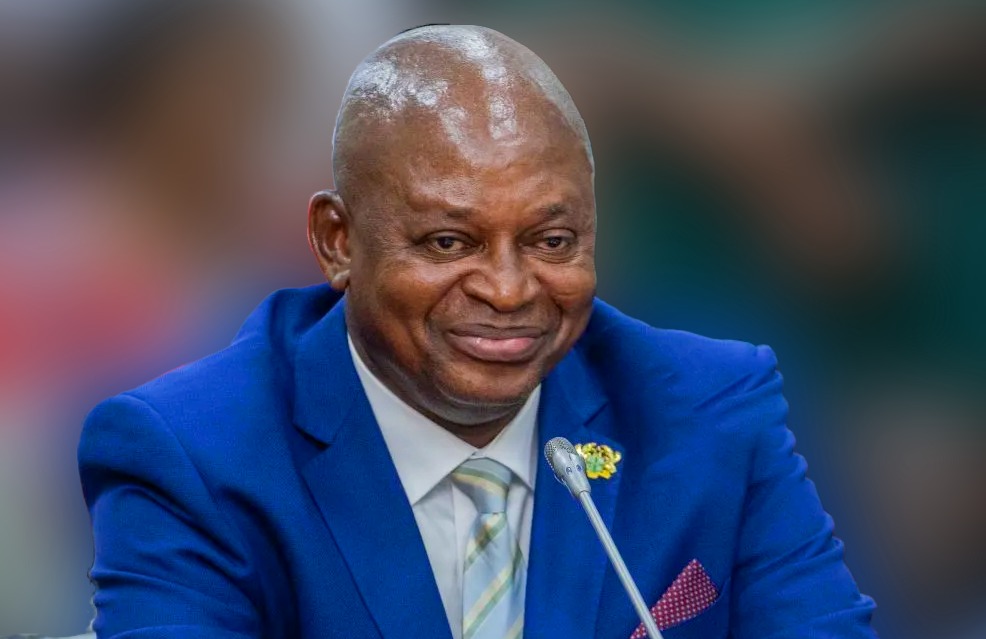
At the center of the storm is the inclusion of Supreme Court Justice Gabriel Pwamang on the panel—a move that critics say undermines the credibility and fairness of the process due to an unresolved petition lodged against him.
According to credible reports, a formal petition over a land dispute at Teshie and other related matters has already been submitted to the Chief Justice, seeking the removal of Justice Pwamang from the bench.
Per constitutional procedure, it is the Chief Justice herself who holds the mandate to make a prima facie determination on whether the claims against Pwamang merit further investigation or removal.
Yet, despite the unresolved nature of that petition—and the Chief Justice’s role in adjudicating it—President Mahama’s administration has appointed Justice Pwamang to serve on the very committee tasked with reviewing allegations against her.
Legal observers and civil society voices are raising serious ethical concerns about the apparent conflict of interest.
“This is a textbook case of conflict,” said one legal analyst familiar with the matter. “Justice Pwamang’s fate is literally in the hands of the Chief Justice. How can he now sit in judgment of her, objectively and impartially, when she has the power to determine whether he should remain on the bench?”
Critics argue that Pwamang’s involvement compromises the entire process, creating a perception that fairness and objectivity are being sacrificed in favour of political maneuvering.
One observer described the situation as “giving a better gun to an enemy to shoot at his target,” suggesting that Torkornoo’s right to a fair hearing is now at serious risk.
The controversy has further intensified opposition claims that President Mahama is orchestrating a politically motivated effort to remove or weaken key institutional figures.
“John Mahama has assembled people who will never make fairness a cardinal principle in the determination of the CJ’s case,” a concerned legal practitioner noted. “Pwamang must step down from the committee with immediate effect if this process is to have any credibility.”
Justice Torkornoo, appointed as Chief Justice in 2023, has been widely regarded as a symbol of judicial integrity and one of the few women to have ever ascended to the top of Ghana’s judiciary.
Her suspension, announced earlier this week, has already drawn fire from advocacy groups like the International Federation of Women Lawyers (FIDA) Ghana, which issued a scathing critique of the move, calling it a threat to judicial independence and gender equity.
Now, with growing pressure to remove Justice Pwamang from the investigative panel, legal experts say the situation threatens to further erode public confidence in Ghana’s constitutional processes.
“The appearance of justice is just as important as justice itself,” said a retired judge who spoke on condition of anonymity.
“If citizens believe that investigations are tainted from the start, the legitimacy of our institutions suffers deeply.”
However, as the debate continues, all eyes are now on President Mahama and the Office of the Chief Justice.
Whether Pwamang will recuse himself, or be removed from the panel, remains to be seen.
But for now, the controversy adds another layer of complexity to an already sensitive and high-stakes constitutional standoff.