By Daniel Bampoe
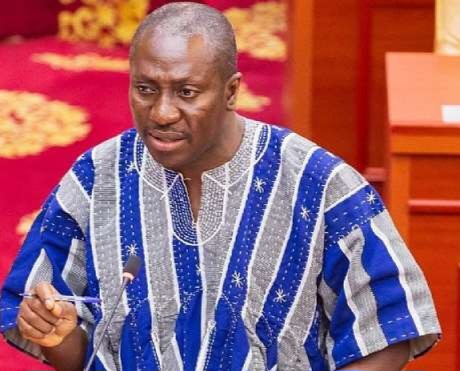
Minority Chief Whip and Member of Parliament for Nsawam-Adoagyiri, Frank Annoh-Dompreh, has challenged the Ghana Cocoa Board (COCOBOD) to publicly release the list of purchasing clerks and Licensed Buying Companies (LBCs) allegedly paid by the government, following widespread complaints from cocoa farmers over non-payment.
Addressing cocoa farmers at New Edubiase on the fourth day of the Minority Caucus’s tour of cocoa-growing communities in the Ashanti Region, Annoh-Dompreh questioned the government’s claim that funds had been released to purchasing clerks to pay farmers after the recent cocoa price “haircuts.”
According to him, if indeed such payments have been made, then transparency demands that the list of beneficiaries be made public to verify the claims.
The Minority Chief Whip noted that many farmers have complained that they have not received payment for their cocoa produce since October, raising serious concerns about the credibility of government assurances.
He insisted that publishing the list of purchasing clerks and the relevant LBCs would help establish the truth and restore confidence among increasingly frustrated farmers.
His comments come amid growing tension in the cocoa sector following a reduction in producer prices, which the Minority has strongly criticised as harmful to farmers’ livelihoods.
Annoh-Dompreh warned that reports suggesting a further reduction in cocoa prices would only worsen the situation for farmers already struggling with rising input costs and delayed payments.
The Minority’s engagement with farmers in the Ashanti Region forms part of a broader nationwide tour that began weeks earlier in the Eastern Region.
The exercise aims to gather firsthand information from cocoa farmers and assess the impact of recent policy decisions on the sector.
Earlier during the tour, Annoh-Dompreh also explained that the government had directed Licensed Buying Companies to suspend cocoa purchases across the country, a move he said has left many farmers unable to sell their produce.
He argued that such a directive, if true, would exacerbate the financial difficulties of farmers who heavily depend on cocoa for their livelihoods.
According to him, while fluctuations in global cocoa prices are not new, successive governments have historically implemented mechanisms to cushion farmers from severe shocks.
He accused the current administration of failing to effectively deploy such measures, thereby exposing farmers to avoidable hardship.
The tour has seen the Minority Caucus visit several cocoa-producing communities, engaging directly with farmers and local stakeholders.
Members of the delegation, including those from parliamentary committees on agriculture, economy, and development, say the concerns gathered will be presented in the Parliament of Ghana to push for policy reforms in the cocoa sector.
Traditional authorities have also weighed in on the matter. During a visit to Offinso earlier in the tour, the Offinsomanhene, Nana Dwamena Akenten II, acknowledged the challenges facing cocoa farmers and urged policymakers to prioritise their welfare, while cautioning against excessive politicisation of the issues.