By Nadia Ntiamoah
Somali referee Omar Abdulkadir Artan has revealed that no amount of money can replace the opportunity he lost after being denied entry into the United States for the FIFA World Cup 2026, insisting that his biggest disappointment was missing the chance to officiate on football’s grandest stage rather than any financial compensation.
Artan’s comments have added a new chapter to a story that has generated global attention and sparked debate about visa restrictions, international sporting events and the treatment of officials appointed to major tournaments.
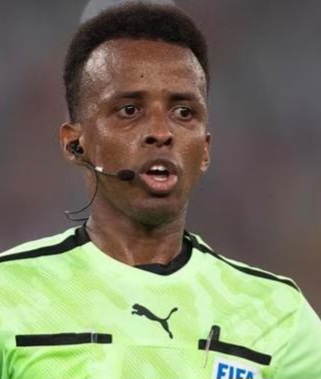
The 34-year-old referee, who was named the Confederation of African Football (CAF) Men’s Referee of the Year in 2025, was selected by FIFA to officiate at the 2026 FIFA World Cup, a historic achievement that would have made him one of Somalia’s most prominent representatives at the global showpiece.
However, his dream came to an abrupt halt when he arrived at Miami International Airport ahead of the tournament and was denied entry into the United States.
Reports indicated that U.S. Customs and Border Protection officials rejected his visa and diplomatic passport over what authorities described as vetting concerns.
The decision immediately drew criticism from football observers and triggered discussions about the responsibilities of host nations in ensuring access for players, officials and tournament personnel participating in global sporting events.
Despite being unable to take part in the competition, FIFA moved quickly to support the referee.
The world football governing body announced that Artan would receive his full World Cup salary and tournament assignment fees of $100,000, even though he was prevented from officiating any matches.
Many viewed the move as a gesture of solidarity and recognition of the circumstances that had deprived the Somali official of his opportunity.
Yet Artan made it clear that financial compensation was never the issue.
Speaking publicly after returning home, he rejected suggestions that the payment could make up for what had happened.
“I don’t want compensation. I wanted to referee at the World Cup,” Artan stated, underscoring the emotional significance of the opportunity he had lost.
Following the World Cup controversy, UEFA selected Artan to officiate the UEFA Super Cup between Paris Saint-Germain and Aston Villa in Salzburg, a prestigious assignment that further highlights the respect he continues to command within international football circles.
In another remarkable gesture of support, a Somali businessman reportedly presented Artan with a gift of $50,000 as a symbol of solidarity and appreciation.The donation was intended to recognize his achievements and the disappointment he endured after being unable to participate in the tournament.
For the Somali referee, the World Cup assignment represented the culmination of years of hard work, sacrifice and professional development. Rising through the ranks of African football, he had become one of the continent’s most respected match officials and earned international recognition for his performances.
His appointment to the World Cup was viewed as a milestone not only for his career but also for Somali football, which has faced decades of challenges due to political instability and limited sporting infrastructure.
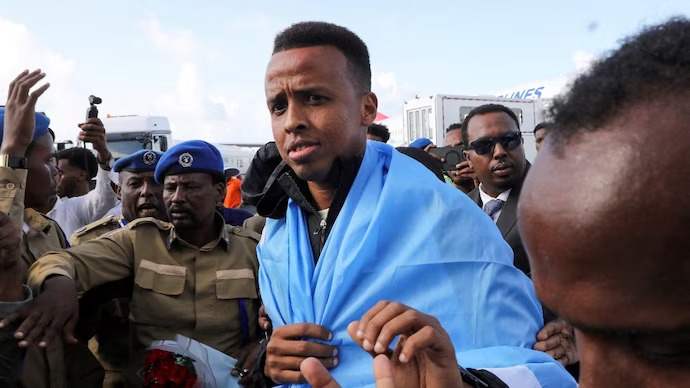
Upon his return to Mogadishu, Artan was welcomed as a national hero.Hundreds of supporters, football officials, government representatives and members of the public gathered at Aden Adde International Airport to receive him.The emotional homecoming demonstrated how deeply his story had resonated across the country.
In another remarkable gesture of support, a Somali businessman reportedly presented Artan with a gift of $50,000 as a symbol of solidarity and appreciation.The donation was intended to recognize his achievements and the disappointment he endured after being unable to participate in the tournament.
Yet even amid the public sympathy and financial support, Artan remained focused on what he had lost rather than what he had gained.Friends and colleagues say the referee’s greatest regret remains the missed opportunity to officiate at a World Cup after dedicating much of his life to reaching that level.
Rather than dwelling on the setback, however, Artan has already begun looking toward the future.He has publicly declared his ambition to officiate at the 2030 FIFA World Cup and remains determined to ensure that the events surrounding the 2026 tournament do not define his career.